
How Salesforce Development Companies Build AI-Powered CRM Workflows
Customer expectations have changed. Today, people want quick responses, personalized recommendations, and smooth communication across every channel. To meet these expectations, businesses are turning to Artificial Intelligence (AI) and Customer Relationship Management (CRM) systems.
Salesforce is already one of the most powerful CRM platforms available. When AI is added to Salesforce, businesses can automate repetitive tasks, understand customer behavior, and make better decisions with less effort.
This is where Salesforce development companies play an important role. They don’t just build a CRM—they create intelligent workflows that help sales, marketing, and customer support teams work more efficiently.
In this blog, we’ll explain how Salesforce development companies build AI-powered CRM workflows, the benefits they offer, and why more businesses are investing in AI-driven Salesforce solutions.
What Is an AI-Powered CRM Workflow?
An AI-powered CRM workflow is a business process that combines Salesforce automation with artificial intelligence to perform tasks automatically and provide smarter recommendations.
Instead of manually updating customer records or sending follow-up emails, AI can handle many of these tasks while also analyzing customer data to improve business decisions.
For example, an AI-powered workflow can:
- Assign leads to the right sales representative.
- Predict which leads are most likely to convert.
- Send personalized follow-up emails.
- Recommend the next best action for the sales team.
- Alert support teams about high-priority customer issues.
These workflows save time while helping teams focus on building stronger customer relationships.
How Salesforce Development Companies Build AI-Powered Workflows
1. Understanding Business Requirements
Every business has different goals. A healthcare company, for example, has different CRM needs than an eCommerce business.
Salesforce developers begin by understanding the company’s existing sales process, customer journey, and business challenges. This helps them create workflows that match real business needs instead of using a one-size-fits-all solution.
2. Organizing Customer Data
AI performs best when it has clean and accurate data.
Salesforce development companies organize customer information from different sources such as websites, contact forms, emails, marketing platforms, and customer support systems.
Once the data is structured correctly, AI can identify trends, customer preferences, and buying behavior more accurately.
3. Automating Routine Tasks
Many daily CRM activities are repetitive and time-consuming.
Developers build automated workflows that handle tasks such as:
- Lead assignment
- Email notifications
- Follow-up reminders
- Opportunity updates
- Case routing
- Appointment scheduling
Automation reduces manual work and improves team productivity.
4. Adding AI Features
After automation is in place, AI capabilities are integrated into Salesforce.
These features may include:
- Lead scoring
- Sales forecasting
- Customer sentiment analysis
- AI-generated email suggestions
- Smart recommendations
- Predictive analytics
These tools help employees make faster and more informed decisions.
5. Connecting Third-Party Applications
Businesses often use multiple software platforms.
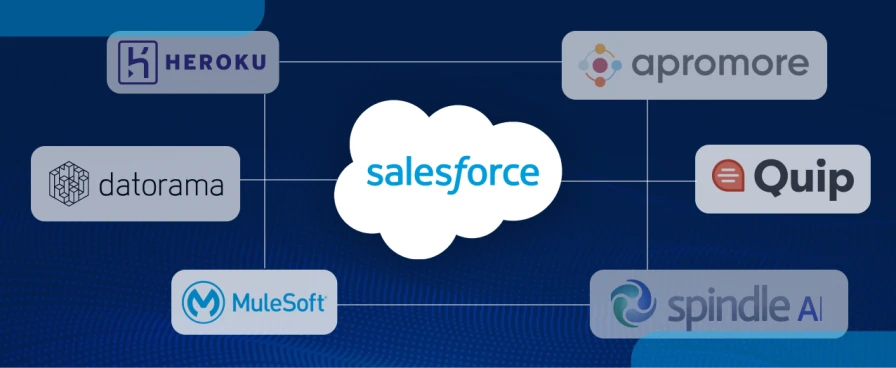
Salesforce developers connect CRM with applications such as:
- Marketing automation tools
- ERP systems
- Payment gateways
- Customer support software
- WhatsApp Business
- Email platforms
This allows customer information to flow smoothly between different systems without manual data entry.
6. Testing and Improving Workflows
Before deployment, every workflow is tested carefully.
Developers check whether:
- Automations run correctly
- AI recommendations are accurate
- Notifications reach the right users
- Reports display correct information
After launch, workflows are continuously improved based on user feedback and business growth.
Benefits of AI-Powered Salesforce Workflows
Faster Lead Management
AI can instantly identify high-quality leads and assign them to the appropriate sales representative. This reduces response time and increases conversion opportunities.
Better Customer Experience
Customers receive faster responses, personalized communication, and timely follow-ups, creating a more satisfying experience.
Improved Productivity
Employees spend less time on repetitive administrative work and more time focusing on sales, customer relationships, and business growth.
Smarter Business Decisions
AI analyzes customer data to identify patterns, helping businesses make informed decisions based on real insights rather than assumptions.
Higher Sales Performance
Sales teams receive recommendations on which opportunities to prioritize, improving their chances of closing more deals.
Industries Using AI-Powered Salesforce Workflows
Many industries are already benefiting from AI-enabled Salesforce solutions, including:
- Healthcare
- Real Estate
- Finance
- Insurance
- Manufacturing
- Retail
- Education
- Travel
- Logistics
- SaaS companies
Each industry uses AI differently, but the goal remains the same—improve efficiency and deliver better customer experiences.
Common AI Features Used in Salesforce
Some of the most useful AI features include:
- Predictive lead scoring
- Automated email generation
- Customer behavior analysis
- Smart dashboards
- Sales forecasting
- Opportunity recommendations
- Customer service automation
- Intelligent reporting
These features help businesses reduce manual effort while improving accuracy.
Why Businesses Work with Salesforce Development Companies
Implementing Salesforce is more than installing software. Every company has unique workflows, approval processes, reporting needs, and customer journeys.
Experienced Salesforce development companies customize the platform according to business goals, integrate existing tools, automate repetitive tasks, and ensure everything works together smoothly.
Instead of relying on standard CRM features, businesses receive a solution that matches the way they actually operate.
Companies like M40Tech help organizations customize Salesforce workflows, integrate AI capabilities, and build CRM solutions that support long-term business growth. By understanding each client’s requirements, they create practical automation that improves productivity without making processes complicated.
Best Practices for Building AI-Powered CRM Workflows
To get the best results, businesses should:
- Keep customer data clean and updated.
- Start with simple automation before adding advanced AI features.
- Regularly monitor workflow performance.
- Train employees to use Salesforce effectively.
- Review AI recommendations instead of depending on them completely.
- Continuously improve workflows based on business needs.
Following these practices helps businesses achieve better results while keeping CRM processes efficient.
Conclusion
AI is changing how businesses manage customer relationships, and Salesforce is one of the best platforms for building intelligent CRM workflows. With the right development strategy, businesses can automate routine work, improve customer engagement, and make smarter decisions using real-time data.
Salesforce development companies play a key role in designing these workflows, integrating AI features, and customizing the platform to match business goals. Whether it’s lead management, customer support, or sales automation, AI-powered CRM workflows help businesses become more productive and customer-focused.
As more organizations adopt AI, investing in a well-designed Salesforce CRM solution will become increasingly important. Working with an experienced Salesforce partner like M40Tech can help businesses build scalable, efficient, and future-ready CRM workflows that support long-term success.