
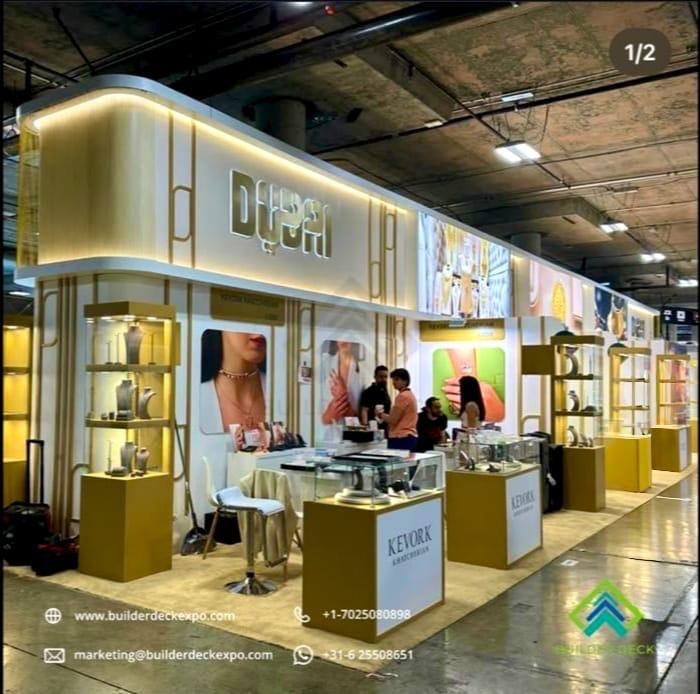
A pavilion can be one of the most cost-effective ways to exhibit at an international trade fair. Shared structure, shared design and shared logistics mean each company pays for a fraction of what a standalone stand would cost, while still appearing as part of a strong, coordinated presence.
But “shared” is also where the arguments start. Who pays for the central lounge? Does a company with a small corner pay the same as one with a prime frontage? What happens if the final bill is higher than the quote? Most disputes in group exhibiting are not about the stand itself. They are about money, and they could have been avoided with clearer rules at the start.
This guide is written for decision makers who are weighing up a place in a pavilion, or who are helping to organise one. It explains how pavilion exhibition stands are typically budgeted, the main ways costs are divided, how to read a quote, and the questions that protect you before you sign.
What counts as a pavilion exhibition stand?
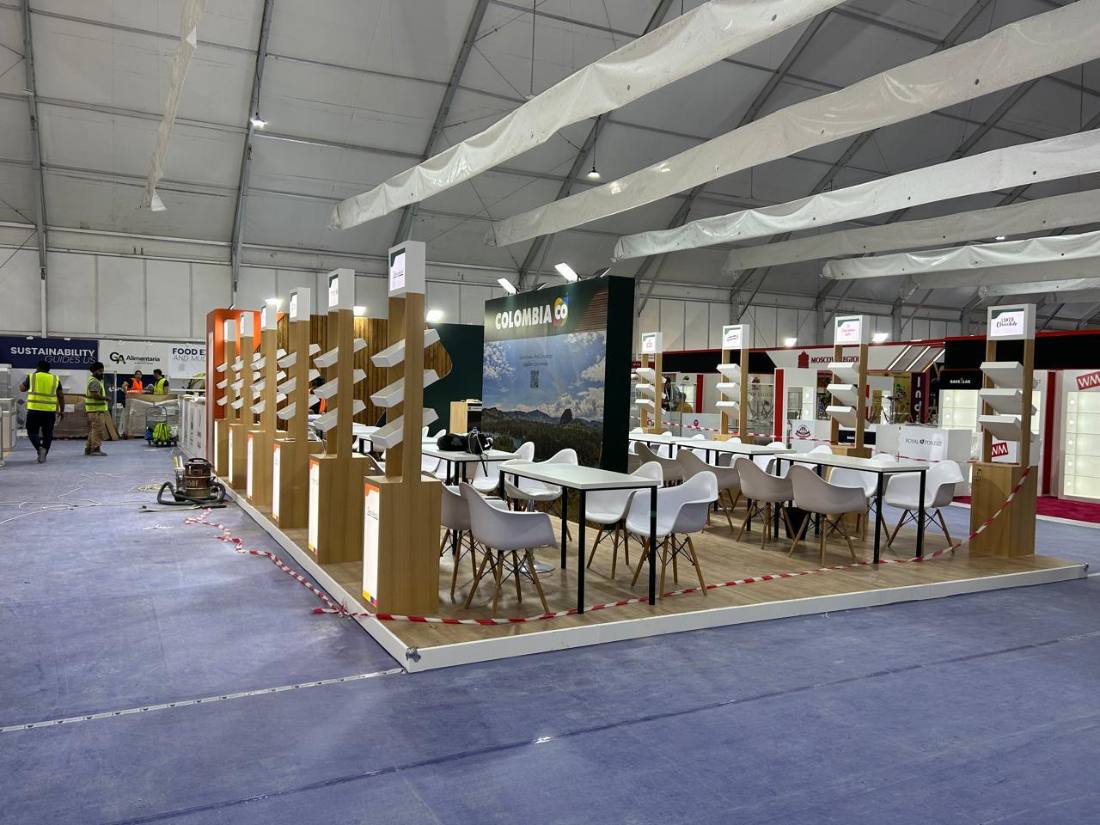
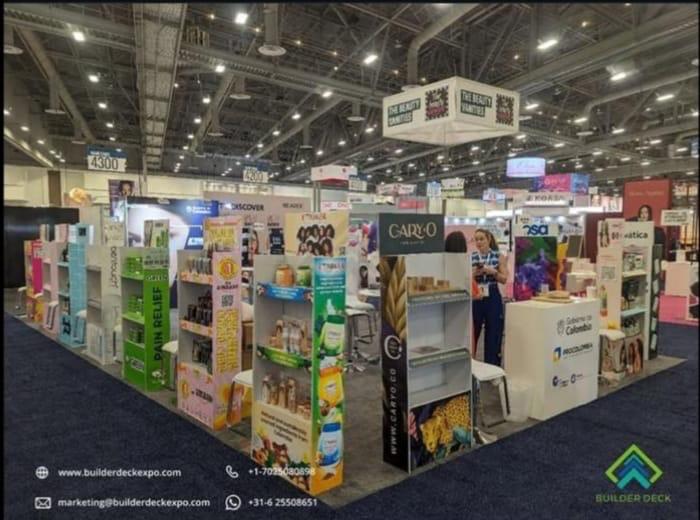
Pavilion exhibition stands are large, shared structures in which several exhibitors, often from the same country, region, industry cluster or trade body, show together under a unified identity. Each participant usually has an individual area or booth within the pavilion, while the common elements (entrance, branding, meeting areas, wayfinding and services) belong to the group.
They are commonly organised by export promotion councils, industry associations, regional agencies or specialist organisers, and built by a contracted team. The budget therefore has two layers: what the group pays for together, and what each exhibitor pays for individually.
The two layers of a pavilion budget
Understanding this split is the foundation of fair budgeting.
Shared (common) costs benefit everyone and are difficult to attribute to one company. They typically include:
- Overall pavilion stand design, engineering and technical drawings
- Main structure, flooring, ceilings and lighting
- Pavilion branding, signage, entrance features and wayfinding
- Common areas such as a lounge, reception or meeting rooms
- Project management and coordination
- Freight, installation and dismantle of the shared structure
- Show-related fees, permits, insurance and cleaning
Individual costs are specific to each exhibitor. They typically include:
- The size and position of the individual booth or plot
- Custom graphics, product displays and furniture within the booth
- Extra electrical, internet or water connections
- Shipping of your own products and samples
- Staff travel, accommodation and hospitality
- Marketing, invitations and promotional material
A good budget makes it very clear which items fall into which layer. Confusion between the two is the most common source of surprise invoices.
Four ways to split shared costs
There is no single correct method. The right one depends on how different the participants are in size and in what they receive. Here are the four most common approaches.
-
Pure per-square-metre allocation
Each exhibitor pays in proportion to the area they occupy. It is simple, transparent and easy to explain.
Works well when participants take similar types of space and receive similar benefits.
Watch for: it can unfairly burden larger exhibitors for services they do not use more of, such as the entrance or shared lounge, and can overcharge small exhibitors if there are fixed costs that do not scale with size.
-
Equal share
Every exhibitor pays the same amount for shared costs, regardless of size.
Works well when participants are all very similar in size. Watch for: small exhibitors subsidise the big ones, and may drop out.
-
Hybrid (fixed fee plus area-based fee)
Part of the shared cost is divided equally (for items everyone uses equally, such as the entrance, branding and coordination), and the rest is divided by area (for items that scale with space, such as flooring and lighting).
Works well when participants vary in size, which is the usual case. Watch for: it needs a clear, written formula that everyone agrees to in advance.
-
Tiered or location-weighted pricing
Plots are priced by category, such as corner, island, inline or back-wall, since visibility differs. Shared costs are then divided within or across tiers.
Works well when some positions are clearly more valuable than others. Watch for: the definition of each tier must be fixed before bookings open, or it will be contested.
A worked example
The numbers below are illustrative only, in simple cost units, to show how the method changes the outcome. They are not a price guide.
Suppose a pavilion has five exhibitors and total shared costs of 90,000 units. The occupied area is 90 square metres.
| Exhibitor | Area | Per-sqm split | Equal split | Hybrid (40% equal, 60% by area) |
| A | 9 sqm | 9,000 | 18,000 | 12,600 |
| B | 9 sqm | 9,000 | 18,000 | 12,600 |
| C | 18 sqm | 18,000 | 18,000 | 18,000 |
| D | 18 sqm | 18,000 | 18,000 | 18,000 |
| E | 36 sqm | 36,000 | 18,000 | 28,800 |
Under the equal split, the smallest exhibitors pay twice as much as they would per area, while the largest pays half. Under pure per-square-metre allocation, the largest pays four times what the smallest does, even though all five use the same entrance, branding and coordination. The hybrid sits in between, and many organisers find it the easiest to defend.
The lesson is not that one formula is correct. It is that the formula should be chosen deliberately, written down, and shown to every participant before they commit.
How to read a pavilion quote
When a pavilion exhibition stand builder or organiser sends you a quote, look for the following before comparing it with anything else.
- What is included in the space price. Is it bare space, a shell scheme, or a fully fitted booth? Fixtures, lighting, power points, carpet, furniture and a fascia name board are often handled differently.
- Which costs are shared and which are yours. Ask for a line-by-line breakdown, not a single package number.
- What is excluded. Typical exclusions include electricity consumption, cleaning, rigging, storage, additional furniture, freight of your goods, and local taxes.
- The allocation method. Ask which formula is used, and see the calculation applied to your own plot.
- Currency and exchange rate terms. Know who carries the risk if rates change between quote and payment.
- Validity and escalation clauses. Understand whether the price is fixed or may rise.
Also ask who the pavilion exhibition stand builder is, and whether they are contracted directly by the organiser or by each exhibitor. The contractual chain affects who is accountable if something goes wrong.
Hidden costs that catch exhibitors out
Experienced exhibitors build a contingency for items that rarely appear in headline prices:
- Show organiser charges for electricity, compressed air, water, internet and waste removal
- Freight and customs for products, samples and literature, including duties and temporary import paperwork
- Material handling or drayage at venues that charge for moving goods onto the floor
- Overtime labour if build or dismantle windows are tight
- Late changes to graphics, layout or numbers of participants
- Insurance for exhibits, liability and cancellation
- Currency fluctuation on contracts paid in another currency
A common rule of thumb in project planning is to hold a contingency of around 10 to 15 percent of the controllable budget. Treat that as a starting point rather than a rule, and adjust it for the complexity of the show and your own risk tolerance.
What happens when a participant drops out?
This is the question that most often goes unanswered, and it can affect everyone. If a company withdraws after the budget has been set, the fixed shared costs still need to be covered. Before you commit, ask:
- Are the shared costs fixed, or do they re-divide among the remaining exhibitors?
- Is there a cancellation schedule, and how much of your payment is refundable at each stage?
- Can the organiser resell the space, and does a successful resale reduce your liability?
- What happens if the total number of participants is lower than planned?
A transparent organiser will have these rules written down already.
Questions to ask before you join a pavilion
A short list for your decision meeting:
- What is the total budget, and how much is shared versus individual?
- Which allocation method is used, and can I see it applied to my plot?
- What does the pavilion stand design include, and can I see drawings or renders before I pay?
- What is not included in the price?
- What is the payment schedule, and which milestones trigger each payment?
- What is the cancellation and refund policy?
- Who is the builder, and what is their experience at this venue and show?
- How are plot positions assigned, and is there any additional cost for a premium location?
- Who is the single point of contact if there is a problem on site?
- Will there be a post-show cost reconciliation, and what happens to any surplus or shortfall?
Tips for organisers splitting costs among members
If you are the one responsible for the pavilion, fairness and clarity protect your reputation.
- Publish the formula before taking bookings. It prevents disputes later.
- Separate fixed and variable costs in the budget so changes in participation can be explained.
- Provide a written, itemised statement to each exhibitor.
- Hold a reserve for unforeseen costs, and be clear about how it will be returned if unused.
- Reconcile after the show. Sharing the final accounts builds trust and makes repeat participation easier.
- Consult participants early. A short call before finalising the budget catches problems that spreadsheets miss.
Is a pavilion the right choice for you?
A pavilion tends to be a strong fit when you want to enter a new market with lower upfront investment, when you benefit from being seen as part of a national or industry group, or when your team is small and prefers not to manage a full stand build. It can be less suitable if you need highly distinctive branding, a very large footprint, or full control over layout and schedule. In that case, compare a pavilion place against an individual custom stand on total cost and on strategic value, not on price alone.
Frequently asked questions
How are costs usually split in a pavilion? Costs are divided into shared and individual items. Shared items are allocated by area, equally, through a hybrid formula or by location tier, depending on the organiser’s policy.
Is a pavilion cheaper than a standalone stand? Often, because the structure, design and logistics are shared, but not always. A larger, customised plot may cost the same or more, and extra services are usually charged separately. Compare total cost, including extras.
What should a pavilion stand design include? At minimum: a unified identity, entrance and wayfinding, individual booth layouts, common meeting or hospitality space if planned, lighting, flooring, and technical drawings approved for the venue.
What is the role of a pavilion exhibition stand builder? The builder designs, engineers, fabricates, transports and installs the structure, and usually dismantles it after the show. Some also provide project management and on-site supervision.
Can I negotiate my share? Sometimes. Flexibility is more likely on plot position, payment timing or optional services than on the shared formula itself, which must treat all participants consistently.
When should I start planning? As early as the pavilion opens for registration. Early booking often gives better plot choice, and gives time to plan budget approvals internally.
The takeaway
Fair budgeting in a pavilion comes down to three habits: separating shared from individual costs, choosing an allocation formula on purpose and putting it in writing, and asking about exclusions, contingencies and cancellations before you pay. Do those three things, and the pavilion is far more likely to deliver what it promises: a strong presence at a share of the cost, without the awkward conversations afterwards.
One thought on “Splitting Costs Fairly: A Practical Guide to Pavilion Exhibition Budgeting”
Pingback: Kitchen Remodeling Ideas for a Functional Modern Home