
Paint Finishes Explained: Matte, Eggshell, Satin & Semi-Gloss
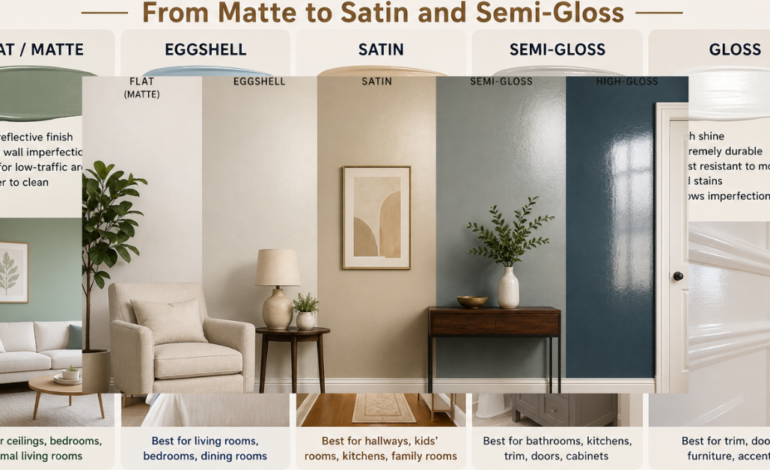
Choosing a paint color is only one part of creating the right look for your home. The paint finish, also called sheen, can affect how a color appears, how easily the surface can be cleaned, and how well it handles everyday wear. Different rooms have different needs, so using the same finish throughout the entire house may not always be the best approach.
From Flat Paint Finish vs. Eggshell Paint to satin and semi-gloss, each finish offers a different balance between appearance, durability, and maintenance. Understanding these differences can help homeowners make a more practical choice before starting an interior painting project.
What Is Paint Finish?
Paint finish refers to the amount of light a painted surface reflects. A flat finish has very little reflection, while satin, semi-gloss, and gloss finishes reflect progressively more light.
Lower-sheen finishes generally do a better job of hiding minor wall imperfections, while higher-sheen finishes tend to be easier to clean and more resistant to everyday wear. However, higher sheen can also make dents, patches, and uneven textures more noticeable.
That is why the best finish depends not only on the color you like but also on the room’s purpose, traffic level, moisture exposure, and condition of the walls.
Flat Paint for Ceilings and Low-Traffic Areas
Flat paint has a soft, non-reflective appearance and is particularly useful when you want to minimize the appearance of minor surface imperfections. Because it produces very little glare, it is commonly used on ceilings and in rooms that do not experience heavy traffic.
Flat paint can work well in formal dining rooms, adult bedrooms, and other areas where frequent cleaning is not a major concern. Its main drawback is that traditional flat finishes are generally less resistant to stains and repeated scrubbing than higher-sheen options.
Eggshell for Living Rooms and Bedrooms
Eggshell offers a subtle sheen while maintaining a relatively soft appearance. It provides more cleanability than a traditional flat finish without producing as much reflection as satin or semi-gloss.
For many homeowners, eggshell is a practical choice for living rooms, bedrooms, and other moderate-use spaces. It can provide an attractive balance between appearance and everyday maintenance.
If you are deciding between flat and eggshell, consider how much cleaning the walls will need and whether hiding surface imperfections is a priority.
Satin for High-Traffic Rooms
Satin has more sheen than eggshell and is generally better suited to areas that experience frequent activity. Its increased durability and easier cleaning make it a popular option for hallways, children’s rooms, kitchens, and other spaces where walls may encounter fingerprints, splashes, or scuff marks.
The trade-off is that satin can reveal more surface imperfections than lower-sheen finishes. Proper wall preparation is therefore especially important before applying satin paint.
Semi-Gloss for Kitchens, Bathrooms, and Trim
Semi-gloss provides a noticeably reflective finish and is known for its durability and cleanability. This makes it useful in areas exposed to moisture, frequent cleaning, or heavy use.
Kitchens and bathrooms can benefit from semi-gloss in appropriate applications, while trim, doors, and windows are also common places to use this finish. Because semi-gloss reflects more light, however, imperfections in the surface may become easier to see.
Choosing the Right Finish Room by Room
A simple way to narrow down your options is to consider how each space is used:
- Living room: Eggshell or satin
- Bedroom: Flat, eggshell, or satin depending on traffic
- Dining room: Flat or eggshell
- Hallways: Satin for better durability
- Children’s rooms: Satin for easier cleaning
- Kitchen: Satin or semi-gloss
- Bathroom: Satin or semi-gloss
- Ceilings: Flat
- Trim and doors: Semi-gloss
These are general recommendations rather than strict rules. Paint manufacturers offer different formulations, so the ideal finish can vary by product and surface.
Consider Lighting Before Choosing a Sheen
Lighting can significantly change how a paint finish looks. Natural sunlight, overhead fixtures, and accent lighting can all make a reflective finish appear more noticeable.
If a room receives a lot of natural light, a higher-sheen finish may create more visible reflection. Conversely, a low-light room may handle a slightly more reflective finish without appearing overly shiny.
Whenever possible, test a paint sample on the actual wall and observe it at different times of day. This gives you a better idea of how the color and finish will look under the room’s real lighting conditions.
Don’t Ignore Wall Preparation
The condition of the wall should also influence your finish selection. Low-sheen finishes can help disguise minor imperfections, while higher-sheen paints can draw attention to bumps, patches, dents, and uneven textures.
Before painting, repair cracks, fill holes, sand rough areas, and remove loose or peeling paint. A properly prepared surface will help almost any finish look better, but preparation becomes particularly important when using satin or semi-gloss products.
Think About Durability and Maintenance
A beautiful finish is not necessarily the best finish if it cannot handle the demands of the room. For example, a low-sheen finish may look excellent in a formal bedroom but may require more care in a busy hallway or children’s playroom.
Higher-sheen finishes generally offer better resistance to cleaning and everyday wear, making them useful in high-use areas. Lower-sheen options remain valuable where a softer appearance and better coverage of surface imperfections are more important.
For homeowners who are unsure which option fits their space, consulting interior painting services can make the decision easier. A professional can consider the room’s lighting, wall condition, traffic level, and desired appearance before recommending a finish.
Final Thoughts
Choosing the right paint finish is about finding the right balance between appearance, durability, and maintenance. Flat finishes work well for ceilings and low-traffic spaces, eggshell can provide a versatile option for living areas and bedrooms, satin is useful for busier rooms, and semi-gloss is often appropriate for trim and moisture-prone areas.
Instead of choosing one finish for every room, consider what each space needs. With the right combination of color, sheen, surface preparation, and application, you can create interiors that look attractive while stand