
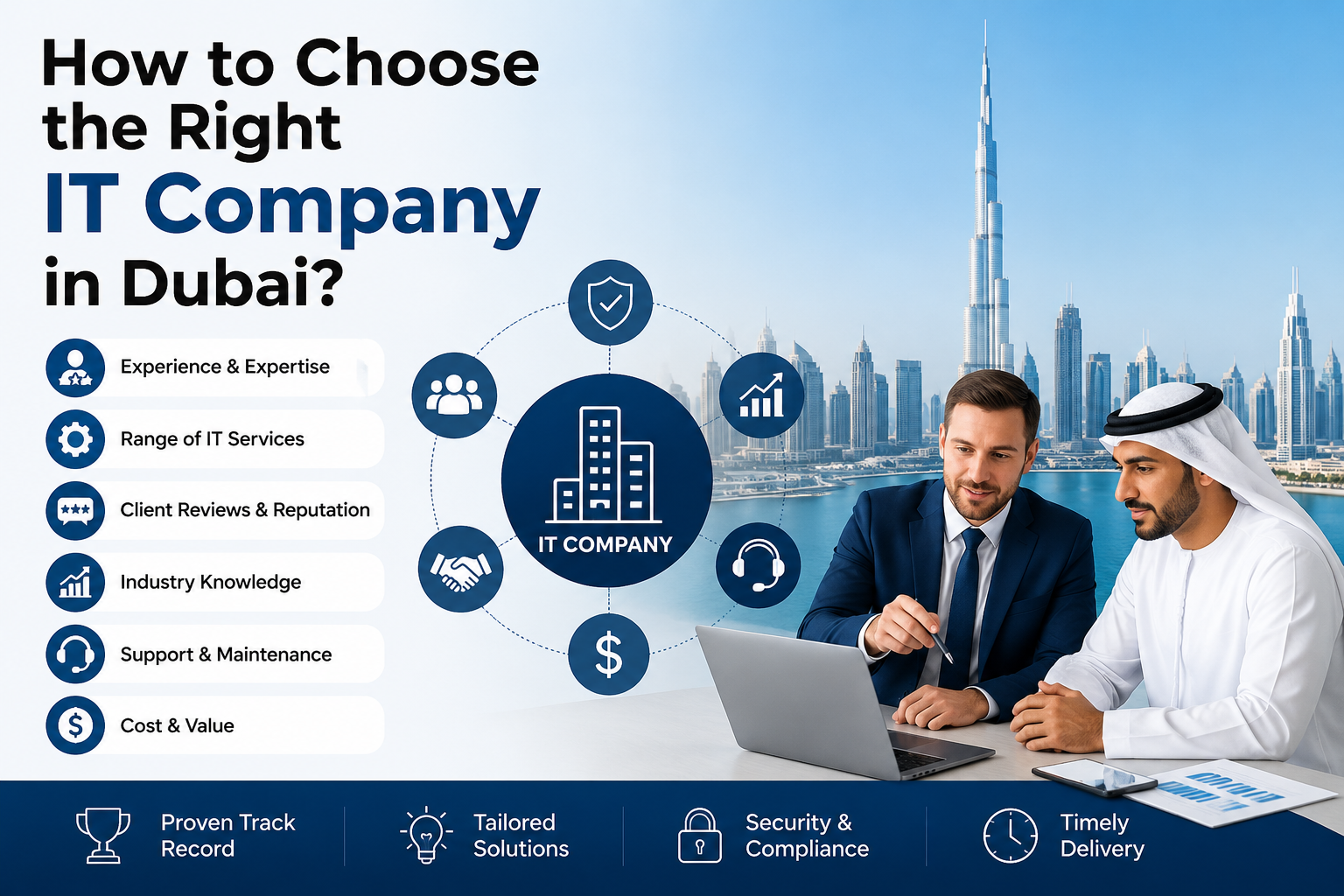
Dubai has grown into one of the most competitive technology hubs in the Middle East. From fintech startups to multinational retail chains, businesses across every sector now depend on robust IT infrastructure, cybersecurity, cloud services, and custom software to stay competitive. With this growth has come an explosion of IT service providers in the city, ranging from one-person freelance operations to full-scale enterprise consultancies.
This abundance of choice is both an opportunity and a challenge. Pick the right IT partner, and your business gains a reliable backbone for growth. Pick the wrong one, and you risk data breaches, downtime, wasted budgets, and stalled projects. This article breaks down exactly what to look for when selecting an IT company in Dubai, so you can make a confident, informed decision.
Why Choosing the Right IT Company Matters
Technology decisions are rarely one-off transactions. Whether you’re outsourcing network management, building a custom application, or migrating to the cloud, you are entering a long-term relationship with a vendor who will have access to sensitive business data, critical systems, and your operational continuity.
A poor choice doesn’t just cost money — it can cost reputation, customer trust, and regulatory compliance, especially in a market like the UAE where data protection laws are becoming increasingly strict. On the other hand, the right IT partner acts almost like an extension of your own team, proactively solving problems before they escalate and aligning technology decisions with your business goals.
1. Define Your IT Needs Before You Start Searching
Before evaluating any company, get clarity on what you actually need. IT services in Dubai typically fall into a few broad categories:
- Managed IT Services – ongoing support, monitoring, and maintenance of your systems.
- Cybersecurity Services – threat detection, firewalls, penetration testing, and compliance.
- Cloud Solutions – migration, hosting, and management of cloud infrastructure (AWS, Azure, Google Cloud).
- Custom Software Development – web apps, mobile apps, ERP, or CRM systems built for your business.
- IT Infrastructure Setup – networking, servers, hardware procurement, and data centers.
A company that excels at cybersecurity may not be the best fit for custom app development, and vice versa. Knowing your priority list narrows the field considerably and prevents you from being swayed by a generic sales pitch that doesn’t match your actual requirements.
2. Check Industry Experience and Local Market Knowledge
Dubai’s business environment has its own regulatory landscape, cultural nuances, and infrastructure realities. An IT company with strong local market knowledge will understand:
- UAE data protection and cybersecurity regulations
- Free zone versus mainland compliance differences
- Local telecom and connectivity providers
- Government e-services and digital transformation initiatives (such as Dubai’s Smart City programs)
Ask potential vendors how long they’ve operated in the UAE, which industries they’ve served, and whether they have case studies or client references from businesses similar to yours. A company that has supported healthcare, logistics, or financial firms in Dubai specifically will bring insights that a generic overseas vendor simply won’t have.
3. Evaluate Technical Expertise and Certifications
Credentials are a quick, objective way to verify competence. Look for:
- Vendor certifications — Microsoft Gold Partner, AWS Advanced Partner, Cisco Certified, Google Cloud Partner, etc.
- Security certifications — ISO 27001 compliance, CISSP-certified staff, or SOC 2 alignment.
- Development expertise — proficiency in the technologies relevant to your project, such as .NET, Python, React, or specific ERP platforms like SAP or Odoo.
Certifications alone don’t guarantee quality, but their absence is often a red flag. Ask to see the qualifications of the actual team that will work on your account, not just the company’s marketing materials.
4. Review Their Portfolio and Client Testimonials
A trustworthy IT company should be able to show tangible proof of past work. Request:
- Case studies relevant to your industry or project type
- Live examples of software, websites, or systems they’ve built
- References you can actually contact, not just quotes on a website
Pay attention to how long they’ve maintained relationships with existing clients. Long-term retention is often a stronger signal of reliability than flashy portfolios, since it shows clients keep coming back rather than switching providers after a single project.
5. Assess Communication and Support Responsiveness
IT issues rarely wait for business hours. Before signing any contract, clarify:
- What are the guaranteed response times in their Service Level Agreement (SLA)?
- Is support available 24/7, or only during UAE business hours?
- Will you have a dedicated account manager or a rotating support queue?
- What channels are available — phone, email, live chat, on-site visits?
During initial conversations, notice how quickly and clearly they respond to your questions. A company that’s slow or vague before you’ve signed a contract is unlikely to improve once you’re a paying client.
6. Compare Pricing Models Transparently
IT companies in Dubai typically offer a few different pricing structures:
- Fixed-price contracts for well-defined projects
- Hourly or time-and-materials billing for ongoing or evolving work
- Monthly retainer/managed services plans for continuous support
Request itemized quotes from at least three vendors so you can compare apples to apples. Be cautious of quotes that seem unusually low — they often signal hidden costs, offshore subcontracting, or corners being cut on security and quality. Equally, the most expensive option isn’t automatically the best; focus on value relative to your specific needs.
7. Prioritize Cybersecurity and Data Compliance
With cyber threats increasing globally and the UAE tightening data protection laws, security should never be an afterthought. Ask potential partners:
- How do they handle data encryption, both at rest and in transit?
- Do they conduct regular vulnerability assessments and penetration testing?
- How do they ensure compliance with UAE data residency requirements where applicable?
- What is their incident response protocol in case of a breach?
A company that treats security as a core competency — rather than a bolt-on service — is far better positioned to protect your business long-term.
8. Consider Scalability and Future-Proofing
Your business needs today may look very different in two or three years. The right IT partner should be able to scale services alongside your growth, whether that means expanding cloud infrastructure, adding cybersecurity layers, or integrating new software modules.
Ask vendors how they’ve helped previous clients scale, and whether their infrastructure and team capacity can realistically support your growth trajectory without requiring a full vendor switch down the line.
9. Look for a Consultative, Not Just Transactional, Approach
The best IT companies act as strategic advisors rather than order-takers. During your initial consultations, notice whether they:
- Ask detailed questions about your business goals, not just technical specs
- Offer recommendations even if it means a smaller initial contract
- Explain trade-offs clearly instead of just pushing the most expensive package
- Show genuine curiosity about your long-term roadmap
This consultative mindset is often the clearest differentiator between a vendor that will nickel-and-dime you and one that will genuinely help your business grow.
10. Request a Trial Project or Pilot Phase
Where possible, start with a smaller, well-defined project before committing to a long-term contract. This lets you evaluate:
- Actual project management and delivery quality
- Communication consistency
- Whether the final output matches what was promised
- How they handle unexpected issues or scope changes
A pilot project significantly reduces risk and gives you real evidence to base your bigger decision on, rather than relying solely on sales presentations and proposals.
Final Thoughts
Choosing the right Web Design Company Dubai is not just about finding a vendor — it’s about finding a long-term technology partner who understands your business, respects your budget, and takes security seriously. By clearly defining your needs, verifying technical credentials, checking real client feedback, and starting with a smaller trial engagement, you can significantly reduce the risk of a poor fit.
Take your time during the evaluation process. The extra weeks spent vetting potential partners are far less costly than the months — or years — spent recovering from a bad IT decision. With the right company by your side, technology becomes a genuine growth driver for your business rather than a recurring headache.