Most people lose money on off-plan property in Dubai not because the market crashed, but because they never asked the developer basic questions before signing. The glossy brochure and the sales agent’s charm do the selling. The paperwork does the damage later.
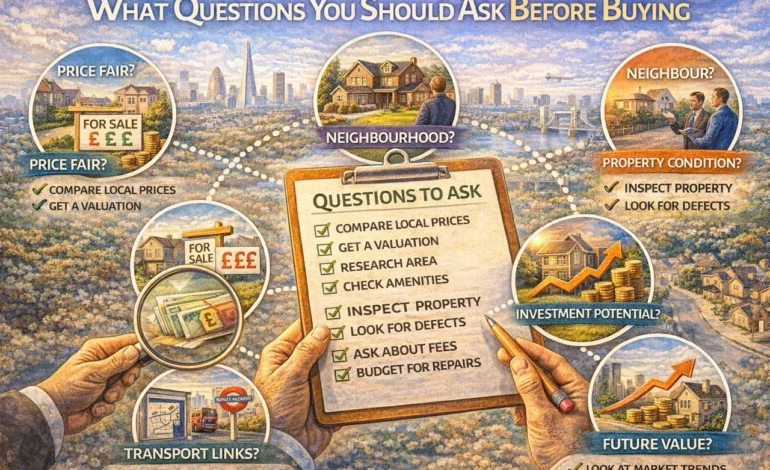
If you’re browsing houses for sale in Dubai and a developer’s booth at an expo has you reaching for your card, slow down. A five-minute conversation before you sign can save you years of frustration and a chunk of your deposit. Here’s what actually matters.
- Is the developer registered with RERA and DLD?
This is non-negotiable, not a formality. Every legitimate developer selling houses for sale in Dubai must be registered with the Real Estate Regulatory Agency (RERA) and the Dubai Land Department (DLD). Ask for their registration number and check it yourself on the DLD’s website rather than taking the sales rep’s word for it.
Unregistered developers do exist, especially for smaller or newer projects. If a developer hesitates to share this number, walk away.
- Where does your money actually go?
Dubai requires developers to hold buyer payments in an escrow account tied specifically to that project. Funds are only released as construction milestones are hit, not whenever the developer feels like it. Ask for the escrow account number and confirm it with the bank if you’re putting down a serious amount.
Some smaller developers try to route payments through a general company account instead. That’s a red flag worth walking away from, no matter how good the unit looks.
- What’s the developer’s actual delivery track record?
Every developer will tell you their next project is different. Check their last three completed buildings instead of taking that at face value. Search the project names plus “handover delay” and see what comes up on property forums like Dubizzle or PropertyFinder discussions.
A developer who delivered Business Bay towers six months late, twice, is likely to do it again. That’s useful information a brochure will never give you.
- What happens if the handover date slips?
Ask directly what compensation the Sale and Purchase Agreement (SPA) provides if the building isn’t ready on time. Some contracts include a penalty clause, often a small daily percentage of the property value. Many contracts are vague on purpose, giving the developer a grace period of six months or more before any penalty kicks in.
Get this in writing before you sign, not as a verbal promise from the sales agent.
- What’s actually included in the quoted price?
The advertised price rarely tells the full story. Ask specifically about:
- Parking spaces (one included, or an extra AED 30,000 to 50,000?)
- Kitchen appliances and fittings
- Storage units
- DEWA connection and registration fees, typically around 4% of the property value plus admin charges
A studio listed at AED 650,000 can easily run AED 40,000 to 60,000 higher once these are factored in.
- What are the service charges after handover?
Service charges vary wildly across Dubai, from around AED 8 per square foot in older buildings to AED 25 or more in premium waterfront towers with pools, gyms, and full-time concierge. On a 1,000 square foot apartment, that’s the difference between AED 8,000 and AED 25,000 a year.
Ask for the projected service charge before you buy, not after. Developers usually have an estimate ready even for off-plan units, since it’s based on the building’s amenities and size.
- Does this property qualify under the investor visa in Dubai new rules?
This one changed significantly in 2026, and it’s worth understanding before you buy. Dubai removed the AED 750,000 minimum property value for the two-year Property Investor Visa for sole owners. Under the investor visa in Dubai new rules, joint ownership now has a lower AED 400,000 per-investor threshold instead.
There’s a catch that trips people up: off-plan units generally don’t qualify for the two-year investor visa route, since it requires a completed, registered property. If residency is part of your plan, ask the developer directly whether the unit will be handover-ready in time, and confirm the visa eligibility details with a licensed adviser rather than the sales team.
- Can you resell or transfer before handover?
Off-plan buyers sometimes want out before the building is even finished. Ask what the developer charges for an assignment or transfer, since fees typically run 4% of the sale price plus an administrative charge, sometimes with restrictions on how much construction progress needs to be completed first.
Some developers block resale entirely until 30% or 40% of the purchase price has been paid. That detail matters if your plan depends on flexibility.
- Who manages the building once it’s handed over?
A well-built tower with poor facilities management turns into a headache fast. Ask whether the developer runs its own property management arm or outsources it, and look up reviews of that management company specifically. Elevators that stay broken for weeks and pools that shut down every summer are common complaints in buildings where this wasn’t checked upfront.
Comparable houses for sale in Dubai with the same specs can have very different resale value simply because one building is managed well and the other isn’t.
- What does the fine print say about defects and disputes?
Every new unit comes with a defects liability period, usually 12 months, during which the developer is meant to fix structural or fitting issues at no cost. Read the SPA to see how that process actually works: who you contact, what the timeline is, and what happens if the developer disputes the defect.
Also check the dispute resolution clause. Most SPAs route disagreements through DLD’s Rental Dispute Settlement Centre or arbitration rather than regular courts, and that process can take months.
None of these questions are complicated, and no honest developer will dodge them. Whether you’re comparing houses for sale in Dubai across three developers or you’ve already picked a favorite, the ones who dodge these questions are telling you something important before you’ve even paid a deposit.