40×40 Trade Show Booth Cost Breakdown: What Exhibitors Actually Pay in 2026
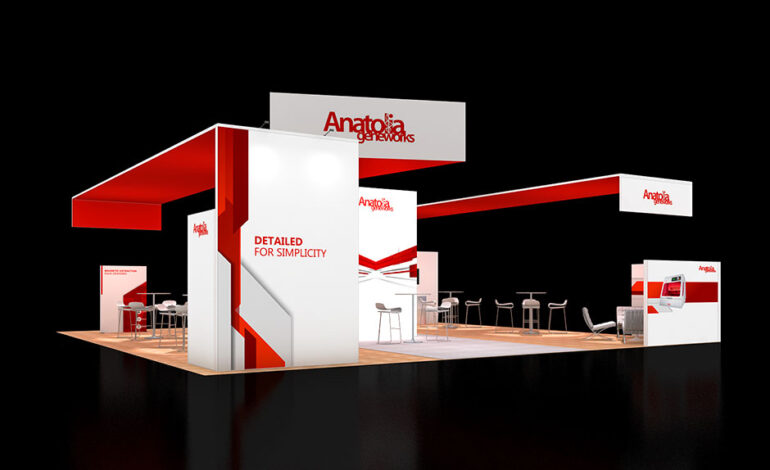
If you’re stepping up from a 20×20 or 20×40 space into a 40 x 40 trade show booth, the first question every exhibitor asks is the same: what does this actually cost? At 1,600 square feet, a 40×40 island isn’t a display anymore, it’s a temporary headquarters, complete with meeting rooms, demo zones, and sometimes a second deck. That scale comes with a price tag most exhibitors underestimate until the invoices start arriving.
This breakdown pulls together current 2026 industry pricing data so you know what to budget for, not just the sticker price, but every line item that adds up behind it.
The Short Answer: What a 40×40 Booth Costs in 2026
Industry pricing guides put a fully designed and built 40×40 island exhibit at roughly $80,000 to $140,000 per show, with a common planning benchmark of about $120 per square foot for design and build alone, before show services or organizer fees are added. In premium markets or venues with tighter labor jurisdictions, turnkey pricing can run notably higher: one exhibit rental provider quotes fully turnkey 40×40 packages in San Diego at $97,900 to $181,300 per show, citing labor rules, freight distance, and venue-specific drayage tiers as the reason costs exceed Las Vegas pricing for the same footprint.
At the enterprise end, bespoke architectural environments with multiple AV installations, VIP spaces, and dedicated install crews, total costs for 30×30 and 40×40+ exhibits can reach $100,000 to $300,000+. For context, a general industry rule of thumb for custom island construction sits at $100–$250 per square foot, depending on how much structure, technology, and finish detail the design carries.
Why 40×40 Booths Don’t Scale Linearly With Cost
A common exhibitor misconception is that a 40×40 costs roughly double a 20×40. It doesn’t, and understanding why helps explain the invoice. Industry analysis of booth sizing notes that costs don’t scale in a straight line: some fixed costs, like drayage, electrical hookups, and staff travel, stay relatively flat regardless of footprint, while island-class booths jump 3–4x over smaller formats because they require taller structures, custom fabrication, and rigging approval for hanging signage. In other words, the real cost “cliff” in exhibiting isn’t between a 10×10 and a 10×20, it’s the jump from inline or peninsula booths into island territory, and a 40×40 sits firmly on the expensive side of that cliff.
What’s Actually Inside a 40×40 Footprint
At 1,600 square feet, exhibitors typically aren’t just buying floor space, they’re building a small venue. A well-programmed 40×40 island commonly includes:
- A four-sided hanging sign visible across the show floor
- A 25–30 seat theater or product-launch stage
- 10–14 demo stations
- Three to four enclosed meeting rooms (100–150 sq ft each, some sound-private)
- A hospitality bar seating 12–16 guests
- Integrated lead capture technology and dedicated back-of-house storage
That density of programming is exactly why 40×40 trade show displays cost several multiples of a standard island booth, every zone adds its own design, fabrication, AV, and labor line item.
Full Cost Breakdown: Where the Money Goes
-
Booth Space Rental
Exhibit hall space typically runs $100–$200 per square foot depending on the show and location, with premium corner or high-traffic locations commanding a 20–50% surcharge over standard rates. On a 1,600 sq ft footprint, space rental alone can represent a six-figure line item before a single wall is built.
-
Design and Construction
Custom exhibit design and construction commonly runs $100–$200+ per square foot, while custom 40×40 trade show booth rental packages can range from $125–$325+ per square foot depending on complexity, materials, and technology integration.
-
Graphics
Large-format graphics, fabric SEG systems, backlit panels, and vinyl wraps, typically cost $10–$25 per square foot, with backlit or specialty substrates pushing toward the higher end.
-
Drayage, Labor, and Show Services
This is the category exhibitors most consistently underbudget for. Drayage (material handling from the dock to your booth) runs $50–$200+ per shipment weight unit, electrical and internet hookups add $500–$2,000, and union labor for install/dismantle at large-format booths adds substantially more. Collectively, these “hidden” costs can add 15–25% to an exhibitor’s expected budget.
-
Staffing and Travel
Budget roughly one staffer per 50 square feet of booth space. Travel costs run $500–$1,500 per person, plus per diems of $75–$150 per day and training costs of $500–$2,000 if you’re bringing in brand ambassadors or product specialists at $250–$500 per day.
-
Typical Budget Allocation
According to EXHIBITOR Magazine’s benchmark data, a typical trade show budget breaks down roughly as: space (33%), booth construction and graphics (18%), travel and expenses (18%), show services like electricity and labor (12%), shipping (9%), promotion (8%), and miscellaneous costs (2%). For a 40×40 island, that means space rental and construction alone can account for over half of total spend.
40×40 Booth Rental vs. Custom Purchase
For exhibitors weighing a 40 x 40 trade show booth rental against buying a custom-built exhibit outright, the math generally comes down to frequency of use:
- Rental makes sense for exhibitors doing one or two major shows a year. Rental packages typically include install, dismantle, and freight bundled into a single turnkey quote, which simplifies budgeting even if the per-show cost is higher.
- Purchase becomes more cost-effective for exhibitors running three or more shows annually. Custom island builds typically last 5–7 years with periodic refresh cycles, meaning amortized per-show costs can drop below rental rates by the second or third year of use.
Modular rental systems also offer a middle ground, reconfigurable components that can scale from a smaller island up to a full 40×40 footprint depending on the show, which helps exhibitors avoid paying for a static structure they only use once a year.
Smart 40×40 Booth Design Choices That Control Cost
Because so much of a 40×40 budget is driven by structure and finish level, design decisions early in planning have an outsized effect on the final number:
- Hybrid construction: modular structural components with custom-designed graphic “skins”, is increasingly common because it captures most of the visual impact of full custom fabrication at a lower per-square-foot cost than bespoke architectural builds.
- Reusable components: reduce the multi-year cost curve significantly, since the same structural elements can be reconfigured and reskinned for different shows rather than rebuilt from scratch.
- Right-sizing your zones: matters more than square footage alone. At 40×40, exhibitors are choosing depth in a smaller number of experiences (a strong theater, a few well-designed meeting rooms) rather than breadth across many zones, spreading a fixed budget too thin across too many features is a common way costs balloon without adding proportional impact.
The ROI Reality Check
It’s worth remembering that booth size and spend don’t automatically translate into results. Industry surveys from CEIR and EDPA put average trade show ROI in the 3:1 to 5:1 range for B2B exhibitors who track it properly, and that return depends far more on pre-show outreach, booth staffing quality, and post-show follow-up than on the size of the structure itself. A well-run 20×20 with strong staffing and follow-up can outperform a poorly staffed 40×40. Before committing six figures to a 1,600 sq ft footprint, it’s worth confirming the audience size and lead volume at your target show genuinely justifies the jump to island-class real estate.
Final Takeaway
A 40×40 trade show booth in 2026 typically runs $80,000–$140,000 for a standard turnkey build, with premium markets and heavily programmed exhibits pushing well past $180,000–$300,000. The single biggest lever exhibitors have over that number isn’t the square footage, it’s the ratio of custom fabrication to modular/reusable structure, and how disciplined the design stays around a clear set of goals rather than trying to fit everything the budget could technically support.
Before signing off on a design, get itemized quotes that separate space rental, construction, graphics, drayage/labor, and staffing into distinct lines. That breakdown is the only way to know whether your 40×40 investment is actually sized to what your show, audience, and goals require.
Sources: AMW Trade Show Cost Guide 2026; Clarity Experiences 2026 Booth Cost Guide; Exhibit Rentals 40×40 Booth Pricing; Steadfast Displays 2026 Pricing; GES Exhibitor Budget Planning Guide; RH Visual 2026 Pricing Guide; ConventionGrid Booth Sizes Guide; ExhibitsUSA Trade Show Budget Data (EXHIBITOR Magazine benchmarks); Gloval Displays 2026 Cost Breakdown.