
Nine Checks Every Basingstoke Homeowner Should Make Before Hiring a Roofer
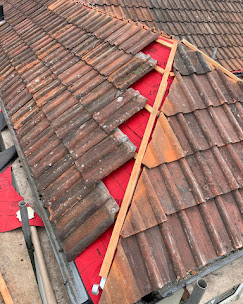
Roofing is one of the few trades where you cannot inspect the work you are paying for. The job happens six metres above your head, and by the time a problem shows itself, the contractor has often moved on. That asymmetry is exactly why the trade attracts opportunists — and why a handful of checks before you sign are worth more than any amount of complaint afterwards.
Basingstoke has a particular exposure here. The town expanded rapidly through the 1960s and 70s as a London overspill development, and a very large share of its housing stock was roofed with concrete interlocking tiles in that period. Those tiles have a working life of roughly fifty to sixty years. A significant number of Basingstoke roofs are now arriving at end of life simultaneously, which means demand is high — and where demand is high, doorstep callers follow.
Here is what to check.
1. Confirm they are a company, not a phone number. Ask for the registered company name and number, then look it up on Companies House. It takes ninety seconds and it is free. A contractor unwilling to give you a company number is telling you something.
2. Ask to see public liability insurance — and check the date. Roofing carries genuine risk to your property and to passers-by. Ask for the certificate, check the expiry date, and check the cover level. Anything below £2 million for domestic work is thin.
3. Ask which standard they work to. The answer you want is BS 5534. This is the British Standard for slating and tiling, and its 2014 revision changed the trade materially: mortar alone is no longer accepted as a fixing for ridge and hip tiles. They must be mechanically fixed. If a contractor quotes you for bedding ridge tiles in mortar and nothing else, they are quoting you a job that does not meet the current standard.
4. Ask about Building Regulations. If more than a quarter of a roof slope is being replaced, the work generally triggers a requirement to bring insulation up to current Approved Document L standards. This has a real cost implication, and a contractor who has not mentioned it has either not priced it or does not know about it. Neither is reassuring.
5. Check for trade body membership. The National Federation of Roofing Contractors is the main body in the UK, and membership involves vetting. Schemes such as Competent Roofer allow contractors to self-certify Building Regulations compliance, which saves you a separate building control application. Neither is a guarantee of good work, but both raise the floor.
6. Get the quote broken down. A single figure on a sheet of A4 is not a quote. You want materials specified by type and quantity, labour, scaffolding, waste removal and VAT shown separately. Scaffolding in particular is a common hiding place — some quotes exclude it entirely and it appears later as an extra.
7. Ask what the guarantee actually covers. “Ten year guarantee” means very little on its own. Ask whether it is insurance-backed, what it excludes, and whether it survives the company ceasing to trade. An uninsured guarantee from a sole trader is a promise, not a warranty.
8. Refuse large upfront payments. A deposit to cover materials is reasonable. A demand for half the job value before anyone has been on site is not. Reputable contractors have credit accounts with merchants and do not need your money to buy tiles.
9. Never buy from a doorstep caller. The pitch is always the same: they were working on a neighbour’s roof, they noticed slipped tiles, they can do it today at a discount. Slipped tiles are visible from the ground on almost any house. The offer is manufactured. Every legitimate roofer in Hampshire is booked weeks ahead and none of them need to knock.
One more thing worth knowing. If your roof has been damaged in a storm, photograph it from the ground before any work begins, and check the Met Office record for wind speeds on the date. Buildings insurance policies typically respond to storm damage but exclude gradual wear and tear, and the distinction usually turns on evidence. A contractor who understands insurance work will tell you this unprompted.
None of these checks are difficult. Together they take perhaps an hour, and they are the difference between a roof that lasts fifty years and one that needs redoing in five.
The Importance of Expert Waterproofing Services for Long-Term Property Protection
Author bio
Written for [Alex Ahsan]. For roofing advice across Basingstoke, Reading, Newbury and the wider Hampshire and Berkshire area, Smart Roofing LTD works on residential and commercial properties throughout the region — smartroofingltd.co.uk