How rechargeable cell works and why it is useful
- By laimthomas678
- May 5, 2026
A rechargeable cell has become an essential part of modern life, powering everything from small household gadgets to advanced electronic devices. Unlike disposable batteries, a rechargeable cell can be used multiple times, making it a cost-effective and environmentally friendly choice. As technology continues to evolve, these cells are becoming more efficient, durable, and widely accessible.
In this article, we will explore what a rechargeable cell is, how it works, its types, advantages, disadvantages, and practical applications. Whether you are a student, a tech enthusiast, or an everyday user, understanding rechargeable cells can help you make smarter energy choices.
What Is a Rechargeable Cell
A rechargeable cell, also known as a secondary cell, is a type of battery that can be recharged and reused multiple times. It stores electrical energy through chemical reactions and releases it when connected to a device. Once the stored energy is depleted, the cell can be recharged by passing an electric current through it.
This ability to reverse the chemical reaction is what makes rechargeable cells different from primary cells, which can only be used once and then discarded.
How Does a Rechargeable Cell Work
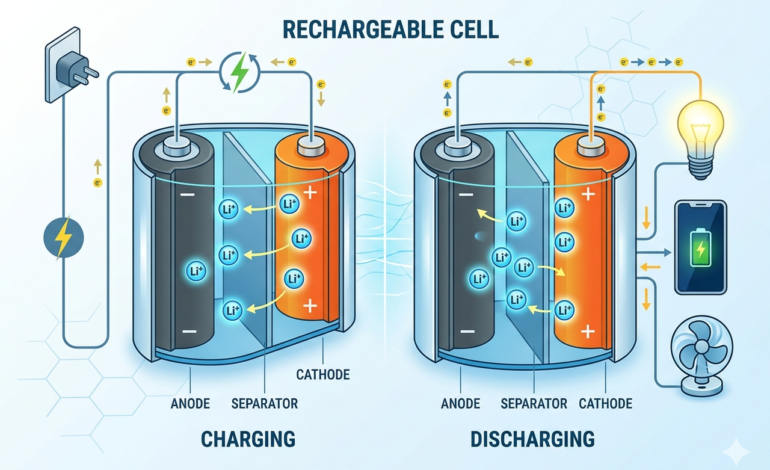
Rechargeable cells operate based on reversible electrochemical reactions. When the cell is in use, it converts chemical energy into electrical energy to power devices. During charging, the process is reversed.
Discharging Process
When a device is connected, the cell releases stored energy. Electrons flow from the negative terminal to the positive terminal, creating an electric current that powers the device.
Charging Process
When connected to a charger, an external power source pushes electrons back into the cell. This restores the original chemical state, allowing the cell to store energy again.
This cycle can be repeated hundreds or even thousands of times depending on the type and quality of the rechargeable cell.
Types of Rechargeable Cell
There are several types of rechargeable cells, each designed for specific applications. Understanding these types can help you choose the right one for your needs.
Nickel Cadmium Cells
Nickel Cadmium cells are one of the oldest types of rechargeable cells. They are known for their durability and ability to perform well under extreme conditions. However, they suffer from a memory effect, which can reduce their efficiency over time.
Nickel Metal Hydride Cells
Nickel Metal Hydride cells are more environmentally friendly than Nickel Cadmium cells. They offer higher capacity and are commonly used in devices like cameras and remote controls.
Lithium Ion Cells
Lithium Ion cells are widely used in modern electronics such as smartphones and laptops. They are lightweight, have high energy density, and do not suffer from memory effect.
Lithium Polymer Cells
Lithium Polymer cells are an advanced version of Lithium Ion cells. They are flexible, lightweight, and commonly used in slim devices like tablets and drones.
Advantages of Rechargeable Cell
Rechargeable cells offer several benefits that make them a popular choice among consumers.
Cost Effective
Although the initial cost of a rechargeable cell is higher, it becomes more economical over time because it can be reused many times.
Environmentally Friendly
Using rechargeable cells reduces the number of disposable batteries that end up in landfills, helping to protect the environment.
High Performance
Many rechargeable cells provide stable voltage and consistent performance, making them suitable for high-drain devices.
Convenience
With the ability to recharge, users do not need to frequently purchase new batteries, saving time and effort.
Disadvantages of Rechargeable Cell
Despite their advantages, rechargeable cells also have some limitations.
Higher Initial Cost
Rechargeable cells and their chargers can be more expensive initially compared to disposable batteries.
Limited Lifespan
Even though they can be recharged multiple times, they eventually wear out and need replacement.
Self Discharge
Some rechargeable cells lose their charge over time even when not in use.
Charging Time
Rechargeable cells require time to recharge, which may not be convenient in urgent situations.
Common Uses of Rechargeable Cell
Rechargeable cells are used in a wide range of applications across different industries and daily life.
Household Devices
They are commonly used in remote controls, flashlights, clocks, and toys.
Portable Electronics
Devices like smartphones, laptops, tablets, and cameras rely heavily on rechargeable cells.
Transportation
Electric vehicles and hybrid cars use large rechargeable battery packs for power.
Renewable Energy Systems
Rechargeable cells are used to store energy generated from solar panels and wind turbines.
Tips for Maintaining Rechargeable Cell
Proper care can extend the life of a rechargeable cell and improve its performance.
Avoid Overcharging
Overcharging can damage the cell and reduce its lifespan. Use smart chargers that stop charging automatically.
Store Properly
Keep rechargeable cells in a cool and dry place to prevent damage.
Use Regularly
Regular use helps maintain the efficiency of the cell.
Follow Manufacturer Guidelines
Always follow the recommended charging and usage instructions provided by the manufacturer.
Future of Rechargeable Cell Technology
The future of rechargeable cells looks promising with ongoing research and development. Scientists are working on improving energy density, reducing charging time, and making cells safer and more sustainable.
Emerging technologies such as solid-state batteries and advanced lithium-based systems are expected to revolutionize the way we store and use energy. These innovations will play a key role in supporting renewable energy and reducing dependence on fossil fuels.
Conclusion
A rechargeable cell is a reliable and efficient energy solution that offers numerous benefits over traditional disposable batteries. From cost savings to environmental advantages, it has become an essential component of modern technology.
By understanding how rechargeable cells work and how to use them properly, users can maximize their performance and lifespan. As technology continues to advance, rechargeable cells will become even more powerful, sustainable, and integral to our daily lives.
Choosing a rechargeable cell is not just a smart financial decision but also a responsible step toward a greener future.