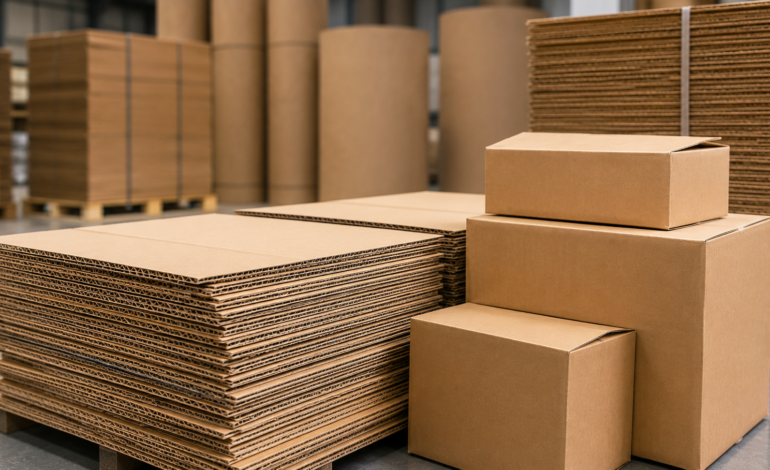
Cardboard Price Trend June 2026: What China and USA Rates Reveal
Cardboard prices moved again in June 2026, and the numbers are worth pausing on. China’s cardboard is priced at USD 615.00/MT on an EXW basis. USA cardboard? USD 812.86/MT, CIF. Almost USD 198 apart, on the same commodity, same month.
That’s a big gap. Bigger than most people expect from a material this basic. Cardboard sits underneath so much of the packaging world, e-commerce boxes, retail shipping, industrial crates, that even a modest swing changes cost structures fast for anyone buying at volume.
Packaging buyers feel this first. Freight forwarders notice it next. And by the time it hits retail shelf pricing, the cardboard price trend has already been baked into the system for weeks.
Current Cardboard Prices: China vs USA
| Product | Region | Incoterm Basis | Price | Last Updated |
|---|---|---|---|---|
| Cardboard | China | EXW | USD 615.00/MT | June 2026 |
| Cardboard | USA | CIF | USD 812.86/MT | June 2026 |
Inquire for Latest Market Prices :- https://www.procurementresource.com/resource-center/cardboard-price-trends/pricerequest
USD 197.86 apart per metric ton. That’s not a rounding error, that’s real money once you scale it to a full container load.
Quick breakdown of what’s actually behind that spread:
- China’s EXW price covers the factory gate only. No freight, no insurance, no import handling. Buyers pick it up themselves.
- USA’s CIF price bundles in freight and insurance all the way to destination, which naturally inflates the number.
- Both figures are June 2026 snapshots. Pulp costs and freight rates can shift the picture within a month, sometimes faster.
Comparing EXW to CIF isn’t a clean comparison. Different incoterms carry different cost baskets by definition. Still, side by side, they show buyers roughly what they’re up against depending on where they source from.
Why Is There Such a Big Gap Between China and USA?
Fair question. A few things stack up here.
Domestic production vs imports. China runs enormous paper and pulp capacity domestically. Local mills, local supply, minimal middlemen. USA cardboard, especially anything landed via CIF, often carries import costs baked in even when part of the supply chain runs domestically too.
Labor and manufacturing cost. Cardboard production in China still benefits from lower manufacturing overhead compared to North America. That gap shows up directly in the EXW quote.
Freight and insurance. CIF pricing means someone already paid for the ship, the fuel, the insurance policy. That’s not a small add-on. Ocean freight alone can shift a cardboard quote by dozens of dollars per ton depending on the route and season.
Pulp and recycled fiber costs. Cardboard is mostly kraft paper and recycled fiber. Fiber costs vary by region based on local recycling infrastructure and pulp mill output. Tighter fiber supply pushes prices up regardless of where the cardboard ends up shipping.
Quick Q&A: The Questions Buyers Keep Asking
Should I just buy from China because it’s cheaper?
Not automatically. EXW means you’re arranging your own freight, customs, and insurance. Once those costs get added, the final landed price might land closer to USA rates than the headline number suggests.
Is USD 812.86/MT high for cardboard right now?
Depends on the buyer’s history and contract terms. Compared to China’s EXW rate, yes, it looks steep. But CIF pricing already includes costs that EXW buyers pay separately later.
Will this gap shrink anytime soon?
Hard to say with certainty. Fiber supply, freight rates, and domestic manufacturing capacity all move independently. Nothing here points to a quick convergence.
What This Means for Packaging Buyers and Procurement Teams
Sourcing decisions rarely come down to headline price alone, and this is a good example why.
Buyers working with China’s EXW rate need to run full landed cost calculations before comparing anything to USA numbers. Freight, insurance, customs duties, port fees, add those up and the gap could shrink considerably, or in some cases disappear entirely.
USA buyers already paying CIF have less guesswork. The number on the invoice is closer to the real cost. Less flexibility, sure, but fewer surprises down the line too.
Procurement teams managing global packaging contracts should treat June 2026’s cardboard price trend as a planning input, not a locked-in forecast. Fiber costs shift. Freight rates shift faster. Reviewing supplier quotes monthly rather than locking annual contracts blind is generally the safer move here.
Looking Ahead
Nobody has a crystal ball on cardboard pricing, but a few things seem reasonably likely.
China’s manufacturing cost advantage isn’t disappearing overnight. Domestic pulp capacity and lower labor costs keep EXW rates competitive for the foreseeable future. USA’s CIF premium probably holds too, tied to freight economics and import structure that won’t shift quickly.
What could move things: a spike in ocean freight, a fiber supply crunch, or new trade policy affecting import duties. Any of those could reshape this spread within a quarter.
Conclusion
June 2026’s cardboard price trend puts China at USD 615.00/MT EXW and USA at USD 812.86/MT CIF, a gap of nearly USD 198 per metric ton. Part of that difference comes from the incoterm structure itself, part from real cost differences in labor, fiber, and freight. Buyers and procurement teams tracking packaging costs should treat this spread as a working reference point, and check pricing regularly rather than assuming it stays fixed.
FAQ Section
What is the current cardboard price trend for China and USA?
As of June 2026, China’s cardboard sits at USD 615.00/MT EXW, while USA cardboard runs USD 812.86/MT CIF. The nearly USD 198 gap reflects both the different incoterm basis and real cost differences in labor, fiber supply, and freight between the two regions.
Why is China’s cardboard price lower than the USA’s?
China benefits from strong domestic pulp and paper production, lower manufacturing labor costs, and an EXW quote that excludes freight and insurance entirely. USA’s CIF price already bundles shipping and insurance costs, which pushes the number higher by comparison.
Does buying cardboard from China actually save money?
Sometimes, but not automatically. EXW pricing means the buyer arranges freight, customs, and insurance separately. Once those costs get added on top, the final landed price can end up closer to USA rates than the headline EXW number suggests at first glance.
What causes cardboard prices to fluctuate month to month?
Fiber and pulp costs, freight rates, and regional manufacturing capacity all shift independently. Cardboard relies heavily on recycled fiber, so tighter recycling supply in a given region can push prices up even without any change in demand.
Will the China USA cardboard price gap close anytime soon?
Nothing points to a quick shift. China’s manufacturing cost advantage and USA’s freight-inclusive CIF structure are both fairly stable long term. A spike in ocean freight or a change in trade policy could move things, but that’s not guaranteed within any short timeframe.
Read Also :- Diethanolamine Price Trend