How to Install an Interior Door: Complete DIY Guide
Introduction
Learning how to install an interior door is a simple but highly rewarding home improvement project. Whether you are replacing an old door, upgrading to a new style, or finishing a new room, proper installation can instantly improve your home’s look and function. A well-fitted door enhances privacy, reduces noise between rooms, and adds a clean, finished appearance to your interior. At Highline Building Supplies, homeowners and contractors regularly choose doors that combine durability with style. This guide will help you choose the right door and install it with confidence.
What to Consider When Choosing an Interior Door
Before you pick up a door at your local building supply store, spend a few minutes thinking through the following factors. The right door for a bedroom is rarely the right door for a home office or a bathroom.
Privacy Some rooms need complete privacy — bathrooms, bedrooms, and home offices top that list. For these spaces, you want a solid, opaque door that closes tightly and latches securely. Other areas, like hallways or open-plan living spaces, can work beautifully with glass panel doors that keep light flowing through.
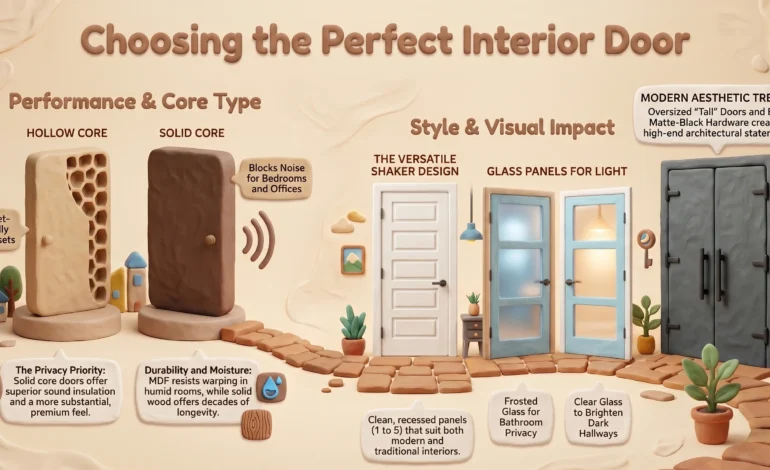
Sound Control If you work from home, have young children, or simply value quiet, sound insulation matters enormously. Solid core doors significantly outperform hollow core doors when it comes to blocking noise. However, if budget is a concern and sound control is less critical — say, for a linen closet — a hollow core door does the job perfectly well.
Material and Durability Interior doors come in wood, MDF (medium-density fibreboard), composite, and occasionally glass. Solid wood doors offer a premium, authentic feel and last for decades with proper care. MDF doors resist warping and are easier to paint. Your choice should reflect the humidity levels in the room, how much traffic the door will see, and how long you want it to last.
Style and Aesthetics The door style should feel like a natural extension of your home’s interior design. A Shaker-style door suits both contemporary and traditional homes. A flat-panel flush door keeps things modern and minimal. Glass panel doors suit bright, open living areas. Think about your existing trim, flooring, and color palette before you decide.
Budget Interior doors range widely in price. Hollow core doors are the most affordable and work well in low-traffic, low-noise areas. Solid core and solid wood doors cost more but deliver better performance and longevity. Always factor in hardware — hinges, handles, and latches — as these add to the total cost.
Popular Interior Door Types Explained
Hollow Core Doors
Hollow core doors contain a lightweight cardboard honeycomb structure inside a wood or MDF skin. They are the most budget-friendly option on the market and weigh far less than solid core alternatives, which makes them easier to hang and adjust.
Best use cases: Closets, pantry doors, utility rooms, and any space where privacy and sound isolation are not priorities. They work well in rental properties and new builds where cost efficiency matters.
Benefits: Affordable, lightweight, easy to install, available in a wide range of styles and finishes.
Limitations: They offer minimal sound insulation and can feel less substantial when you close them.
Solid Core Doors
Solid core doors feature a composite or wood core completely filling the door’s interior, wrapped in a veneer or MDF skin. They feel and sound like solid timber doors but typically cost less than full solid wood.
Best use cases: Bedrooms, bathrooms, home offices, and any room where you want genuine privacy and reduced sound transmission.
Benefits: Excellent sound dampening, a premium feel, better fire resistance than hollow core, and greater durability over time.
Limitations: Heavier than hollow core doors, which means installation requires a bit more care to ensure the hinges and frame can support the weight properly.
1 Panel, 2 Panel, and 5 Panel Shaker Doors
Shaker doors are defined by their clean, recessed panel design. The number of panels changes the visual weight and style of the door.
- 1 Panel Shaker: A single large recessed panel gives this door a bold, contemporary look. It suits modern homes and open-plan spaces beautifully.
- 2 Panel Shaker: Two horizontal panels offer a slightly more traditional feel while still keeping lines clean. A popular choice for bedrooms and hallways.
- 5 Panel Shaker: Five panels — typically arranged with two narrow side panels, one wide center panel, and two horizontal rails — create a classic, craftsman aesthetic. These doors feel at home in heritage properties, farmhouse-style interiors, and transitional designs.
Best use cases: Throughout the home. Shaker doors are one of the most versatile door styles available and complement virtually any interior design direction. Many homeowners at Highline Building Supplies choose Shaker doors for a full home refresh because they tie every room together with a consistent design language.
Glass Panel Doors
Glass panel doors incorporate one or more glass inserts into the door design. The glass can be clear, frosted, textured, or decorative.
Best use cases: Home offices where you want to maintain a visual connection to the rest of the house, dining rooms, living areas, and any space where natural light is important.
Benefits: They borrow and share light between rooms, make spaces feel larger and more connected, and add a sophisticated architectural detail.
Limitations: Clear glass panels offer no privacy. For bathrooms or bedrooms, always choose frosted or textured glass if you go this route.
Matching Door Types to Room Functions
Choosing the right door for each space removes a lot of guesswork. Here is a practical room-by-room guide:
- Bedrooms: Solid core doors work best. They provide the privacy and sound isolation you need for a restful environment. Choose a style that matches your bedroom’s aesthetic — a 2-panel or 5-panel Shaker works particularly well.
- Bathrooms: Again, solid core is the smart choice for privacy. Consider a frosted glass panel option if you want to add a spa-like feel while maintaining privacy.
- Closets: Hollow core doors are perfectly suited here. They are lightweight, affordable, and easy to operate, whether you choose a traditional hinged door or a bi-fold configuration.
- Home Offices: A solid core door with a glass panel insert gives you the best of both worlds — sound isolation when you need to focus, and a visual connection to the rest of the home when the door is open.
- Hallways and Living Areas: Hollow or solid core doors with a clean panel design work well here. If your hallway connects to a home library or formal sitting room, consider a glass panel door to keep the space feeling open and inviting.
Modern Interior Door Design Trends
Interior door design has evolved significantly in recent years, and several trends are now shaping what homeowners choose for their renovations and new builds.
Tall Doors Are In Floor-to-ceiling or oversized doors — sometimes reaching 2400mm or higher — create a dramatic, architectural statement. They make rooms feel taller and grander without requiring any structural changes.
Bold Colors While white and off-white remain the most popular interior door colors, bold choices like deep navy, charcoal, forest green, and even matte black are growing in popularity. A dark door against a light wall creates a striking focal point.
Minimalist Hardware Sleek, handle-less push-open doors and minimal lever handles in brushed brass, matte black, or satin nickel are trending. Hardware is no longer an afterthought — it completes the design of the door.
Shaker Doors Everywhere The Shaker door style continues to dominate because it suits such a wide range of interior aesthetics. Designers and homeowners love that a 5-panel Shaker works equally well in a farmhouse kitchen and a modern city apartment.
Natural Wood Finishes Raw timber veneers and natural wood finishes are making a comeback as homeowners seek warmth and texture to balance cooler, more industrial interior palettes.
Real Customer Testimonials
“We replaced all our interior doors with 5-panel Shaker doors from Highline Building Supplies and the quality is excellent. They feel solid, look great, and were easy for our contractor to install.” — Sarah M., Dallas, TX
“Switching to a solid core door for my home office made a huge difference in noise control. Now I can work without distractions. The team helped me choose the right option easily.” — James T., Plano, TX
“Our frosted glass panel door looks beautiful and adds great light to the space without feeling cheap. Very happy with the quality and service.” — Linda & Peter R., Garland, TX
People Also Ask
How do I know what size interior door I need?
Measure the door opening (rough opening) and subtract about 50mm from width and height; standard size is usually 810mm × 2040mm, but always measure your exact space.
Can I install an interior door myself with no prior experience?
Yes, a pre-hung door can be installed as a DIY project with basic tools if you follow careful leveling and alignment.
What is the difference between a pre-hung door and a slab door?
A pre-hung door comes with frame and hinges installed, while a slab door is just the door panel used with an existing frame.
How long does it take to install an interior door?
Around 2–4 hours for a pre-hung door and under an hour for a slab door in a standard setup.
Do interior doors need to be sealed or finished after installation?
Yes, unless pre-finished; raw doors should be sealed or painted on all sides to prevent moisture damage and warping.
Conclusion
Installing a new interior door can quickly improve both the look and function of a room. Choosing the right type — solid core for privacy, hollow core for closets, or glass panel for natural light — helps create a quieter, more comfortable, and more stylish home. The Shaker, glass panel, and solid core options from Highline Building Supplies offer reliable quality and variety for any project. Whether you’re replacing a single door or updating your entire home, careful measuring and the right guidance make all the difference.
Author Bio
About the Author — Highline Building Supplies Team
This blog is written by the team at Highline Building Supplies. Our contributors include home design specialists, product advisors, and installation experts who work closely with homeowners, architects, and builders every day. With years of hands-on experience in interior door selection, installation, and design, the team shares practical guidance to help you balance style, function, and budget. We regularly collaborate on in-store workshops, product demonstrations, and customer consultations, bringing real-world insights into every article we publish.
Click here to create your free guest post.