Car Wraps Prices vs Paint Jobs: Which Is Better in 2026?
Car wrapping has gone from a niche modification to one of the most discussed topics in Australian motoring. Ask around at any car meet in Sydney, Brisbane, or Melbourne and you will find owners who have wrapped everything from daily hatchbacks to prestige sports cars. One of the most common questions drivers ask today is how much to wrap a car and whether the investment is actually worth it compared to traditional paint jobs. This guide covers real Australian pricing, durability comparisons, benefits, limitations, and everything you need to know before choosing a vehicle wrap in 2026.
What Is a Car Wrap?
A car wrap is a layer of thin, flexible vinyl film applied directly over a vehicle’s exterior paintwork. It adheres to the surface without chemically bonding to the paint, transforming the vehicle’s colour or finish while leaving the original factory paint completely intact underneath.
The two primary formats are a full wrap — covering every exterior panel for a complete colour transformation — and a partial wrap, which targets specific areas. Partial applications are popular for roofs, bonnets, racing stripes, mirror housings, and chrome delete treatments. They deliver targeted styling at considerably lower cost than a full wrap and can create dramatic visual impact with the right execution.
Common Wrap Finishes
The variety of finishes available in vinyl is one of the most compelling reasons drivers choose wrapping over paint. In 2026, the catalogue from leading manufacturers includes:
Gloss — The closest vinyl equivalent to traditional automotive paint, producing a deep, mirror-like finish. High-gloss black, navy, and racing green remain consistently popular across Australia.
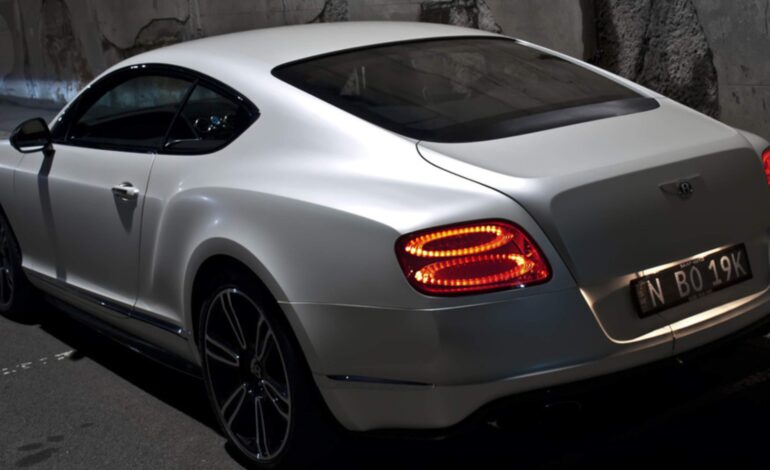
Matte — Flat and non-reflective, matte is the dominant finish in Australia’s prestige and performance car community. Matte charcoal, matte black, and matte midnight blue on a well-proportioned sports car or luxury SUV is genuinely extraordinary.
Satin — A subtle sheen that sits between gloss and matte. Enormously versatile, flattering across most colours, and one of the most consistently impressive results in wrapping when applied to European vehicles.
Chrome — A mirror-finish reflective vinyl that creates an effect impossible to achieve with standard paint at any equivalent price. Demands significant installation skill but produces unforgettable results.
Carbon fibre — Textured vinyl that replicates the woven appearance of genuine carbon fibre. Widely used as an accent finish on interior and exterior trim elements.
Typical Lifespan
A professionally installed premium cast vinyl wrap will typically last between five and seven years in Australian conditions. Vehicles that are regularly garaged, washed correctly, and protected with a compatible ceramic coating can perform at or beyond the upper end of that range. Budget calendered vinyl — the material used by studios competing on price — starts degrading at eighteen months to two years, particularly under Australia’s intense UV conditions.
How Much Does It Cost to Wrap a Car in Australia?
Average Car Wrap Prices
The following figures reflect current 2026 market pricing for professionally installed wraps using premium cast vinyl. These are not budget studio quotes — they represent the quality tier that produces results worth having.
| Vehicle Type | Standard Finish | Specialty Finish |
|---|---|---|
| Small car / hatchback | $2,500 – $3,500 | $3,500 – $5,000 |
| Sedan (mid-size) | $3,000 – $4,500 | $4,500 – $6,500 |
| SUV / 4WD | $4,000 – $5,500 | $5,500 – $8,500 |
| Ute / dual cab | $3,500 – $5,000 | $5,000 – $7,500 |
| Luxury / sports car | $6,000 – $10,000 | $10,000 – $15,000+ |
Partial wraps sit considerably lower — a roof wrap or bonnet change on a hatchback might start from $500 to $900, while a chrome delete treatment covering all trim elements ranges from $400 to $1,200 depending on the vehicle.
Factors That Affect Car Wrap Pricing
Vehicle size and shape is the primary cost driver. More surface area means more material and more installation time. A large SUV or van will always cost more than a small hatchback, regardless of the finish chosen.
Full wrap vs partial wrap creates the most immediate pricing difference. A full wrap requires every panel to be prepared and covered. A partial wrap limits that work to specific areas, reducing both material and labour cost significantly.
Vinyl material quality has a dramatic effect on both the upfront cost and the long-term outcome. Premium cast vinyl from manufacturers like 3M, Avery Dennison, and KPMF costs more than budget alternatives. The difference is not cosmetic — premium cast vinyl conforms around complex curves without lifting, holds colour through years of UV exposure, and removes cleanly at end of life. Budget film does none of these things reliably.
Custom designs and graphics — A single-colour full wrap is the simplest and most predictable job. Commercial liveries, printed artwork, complex multi-colour designs, and custom-mixed colours all add design time, printing costs, and installation complexity to the final price.
Labour and installation complexity reflects the skill required. Complex body geometries on sports cars and exotics demand more care than standard passenger vehicles. Specialty finishes like chrome require additional installation time and precision.
Brand and installer experience — Reputable studios with a proven track record charge accordingly. That premium reflects years of experience, quality assurance processes, and a genuine commitment to the result. It is not a margin to negotiate away.
Is Car Wrapping Cheaper Than Painting?
Comparing Wrap vs Paint Costs
At equivalent quality tiers, a professional vinyl wrap Sydney typically costs less than a professional repaint. A mid-quality full wrap on a standard passenger vehicle using premium cast vinyl sits in a price range that a quality professional respray cannot match. The gap widens for specialty finishes — matte, chrome, and colour-shift wraps are accessible in vinyl at prices that equivalent paint finishes cannot come close to.
Where paint approaches or exceeds wrap value is at the genuinely premium end — a showroom-quality single-colour respray by a skilled painter on a well-prepared vehicle, done to concours standard, produces a depth of gloss finish that premium vinyl matches but does not quite surpass.
Long-term maintenance expenses favour wrapping. Automotive paint is continuously vulnerable to UV fading, oxidation, stone chips, and clear coat failure. Correcting these issues — paint correction, chip touch-up, clear coat reapplication — adds ongoing cost that compounds over years. A vinyl wrap absorbs the environmental damage so the paint does not, and when the wrap reaches end of life it can be replaced in days.
Repair and touch-up costs also differ meaningfully. A scratch on automotive paint requires colour-matched touch-up or panel respray to address properly. A localised section of damaged vinyl can be replaced panel by panel without affecting the rest of the wrap — and often at lower cost than a proper paint repair.
Wrap vs Paint Durability
A premium cast vinyl wrap lasts five to seven years. A quality professional respray has a similar theoretical lifespan, but paint degrades more visibly under UV exposure and environmental fallout. Australia’s UV intensity is among the highest in the world, and unprotected factory or aftermarket paint fades, chalks, and oxidises at a rate that UV-stabilised premium vinyl is specifically engineered to resist.
Scratch resistance is nuanced. Paint can be polished and corrected when minor surface scratches appear. Vinyl cannot be polished, but minor scratches on standard gloss vinyl are less visible than on automotive paint and do not compromise the protective layer beneath them. Matte finishes show minor abrasion more readily, which is a consideration for high-use or commercial vehicles.
Ease of replacement at end of life is one of vinyl’s most practical advantages. A wrap that has reached the end of its lifespan is removed and replaced. Paint that has faded or degraded requires preparation, priming, and full refinishing — a considerably more involved process.
Benefits of Wrapping a Car
1. Paint Protection
The vinyl film acts as a continuous physical barrier between the factory paint and everything the road environment delivers — stone chips, UV radiation, bird droppings, tree sap, road salt, and minor abrasion. When the wrap is eventually removed, the factory paint underneath is typically in measurably better condition than the unprotected panels on the same vehicle. For vehicles where factory paint condition affects resale value, this protection translates directly to money at trade-in time.
2. Cost-Effective Customisation
Vinyl wrapping delivers a broader range of colours and finishes than paint at lower cost, particularly in the specialty categories. Matte, satin, metallic, chrome, and colour-shift finishes that would require bespoke specialist work in paint are catalogue options in vinyl. The ability to achieve a striking, distinctive finish without the cost and permanence of paint makes wrapping the most cost-effective customisation option available to most vehicle owners.
3. Faster Installation
A full professional vinyl wrap on a standard passenger vehicle is typically completed in one to three days. A quality professional respray — with proper preparation, colour application, and curing — takes one to two weeks in most professional shops. For business vehicles or daily drivers that cannot be off the road for extended periods, that turnaround difference is practically significant.
4. Easy Removal and Updates
A professionally installed wrap can be removed cleanly at any point, returning the vehicle to its original factory appearance without any damage to the paint underneath. This reversibility makes wrapping genuinely unique among vehicle modifications — it combines the visual impact of a full colour change with the flexibility of a temporary change. Businesses that rebrand, owners who change their minds, and drivers who want factory appearance at resale all benefit directly from this characteristic.
5. Business Branding Opportunities
For commercial vehicles, a professional vinyl wrap transforms a plain van or ute into a branded marketing asset that generates thousands of daily local impressions with no ongoing media cost. A single wrap investment — typically a fraction of the cost of equivalent digital or print advertising coverage — delivers continuous brand exposure for five or more years across the exact geographical areas the business operates in.
Disadvantages of Car Wrapping
Honest assessment requires acknowledging the limitations alongside the benefits.
Lower-quality wraps peel and fade — Budget calendered vinyl begins to lift at edges, shrink away from panel corners, and fade unevenly within two to three years in Australian conditions. This outcome is specific to low-quality materials and installation, not a characteristic of professional wrapping — but it is common enough that it has shaped negative perceptions of wrapping among drivers who have only seen poor examples.
Improper installation creates lasting problems — Wrapping installed by inexperienced hands produces bubbles, lifting edges, tension distortion around curves, and misaligned seams. The difference between a professional installation and an amateur one is significant and immediately visible. Choosing an installer based primarily on price is the most reliable path to this outcome.
Not all paint surfaces are suitable — Vinyl adheres to and conforms around the surface beneath it. Significantly damaged paint — peeling clear coat, raised edges from rust, or deep chip damage — creates problems for wrap adhesion and appearance. In these cases, the underlying paint issues need to be addressed before a wrap can be applied effectively.
Premium wraps carry a real cost — Quality wrapping using premium materials is not cheap. The cost comparison with paint at the premium end is favourable, but it is not a budget modification. Drivers expecting a high-quality full wrap for $800 will either be disappointed by the result or will not find a reputable studio willing to deliver it at that price.
How Long Does a Car Wrap Last?
A professionally installed premium cast vinyl wrap will last between five and seven years under typical Australian conditions. This figure is not theoretical — it reflects real-world performance of premium films from established manufacturers installed by experienced technicians.
Several factors determine where on that range your wrap lands:
Climate and sun exposure — Australia’s UV intensity is a dominant variable. Sydney, Brisbane, and Perth all receive UV exposure levels that exceed most international markets. Vehicles parked outdoors in full sun for extended periods age their wraps faster than vehicles stored undercover. Horizontal panels — the roof and bonnet — typically show UV-related changes first because they receive the most direct exposure.
Washing methods — Hand washing with pH-neutral products preserves vinyl film significantly better than automatic brush car washes, which lift edges, abrade the surface, and introduce mechanical stress at seams. The difference in wrap condition between a vehicle washed correctly and one run regularly through a brush wash becomes visible within eighteen months.
Storage conditions — Garaged or undercover storage meaningfully extends wrap lifespan by reducing UV exposure and protecting the vehicle from overnight dew, bird activity, and temperature cycling.
Maintenance quality — Prompt removal of bird droppings, tree sap, and road tar — all of which are mildly to strongly acidic — prevents etching damage to the vinyl surface. A ceramic coating applied at installation adds UV protection and makes regular maintenance significantly easier.
Is a Car Wrap Worth It for Different Users?
For Personal Car Owners
For drivers who want a non-standard finish, a temporary colour change, or protection for a newer vehicle, wrapping delivers clear value. The ability to achieve matte, satin, or specialty finishes at lower cost than paint — combined with the flexibility to change or revert — makes wrapping the obvious choice for personal customisation in 2026.
The calculus changes if you want a permanent colour change on a vehicle you plan to keep for twenty years and never sell. In that narrow scenario, professional repainting has a case. For most personal owners, wrapping wins.
For Businesses
The return on investment case for business vehicle wrapping is straightforward and well established. A quality commercial wrap generating thousands of daily local impressions over five or more years delivers a cost-per-impression that no other advertising medium for local businesses can match. The professionalism of a consistently branded, well-maintained commercial vehicle also communicates credibility and scale to potential customers before any conversation takes place.
For Luxury and Sports Cars
Wrapping makes compelling sense for prestige vehicles where protecting factory paint condition directly affects resale value. A vinyl wrap that preserves factory paint in excellent condition across years of ownership, then is removed cleanly before sale, presents a vehicle with factory paint in better condition than an equivalent unprotected vehicle. That difference is worth real money at sale time on prestige vehicles.
Tips to Save Money on Car Wrapping
Choose reputable installers — The cheapest quote is rarely the best value. A poor installation using budget materials will need to be removed and redone far sooner than a quality installation, making it more expensive over time. Get quotes from studios with strong portfolios and verifiable recent work.
Compare wrap packages carefully — Understand exactly what is included in each quote. Does it cover surface preparation? How many revision rounds are included for commercial designs? What vinyl brand and grade is being used? Identical-sounding quotes can differ significantly in what they actually deliver.
Select durable vinyl brands — Ask specifically about the vinyl brand and product being used. Premium cast vinyl from 3M, Avery Dennison, or KPMF costs more but lasts meaningfully longer. The cost difference per year of useful life is smaller than the upfront price difference suggests.
Maintain wraps properly for longer life — A wrap that reaches seven years instead of five represents thirty per cent more value from the same installation investment. Hand washing, ceramic coating, covered parking, and prompt contaminant removal all contribute to that outcome at minimal additional cost.
Signs You Should Choose a Car Wrap Instead of Paint
A wrap is clearly the better choice when you want temporary customisation with the option to change later. When factory paint protection matters to you — particularly for newer vehicles or those you plan to sell. When you need professional branding on a business vehicle and value fast installation and the ability to update graphics without extended downtime. When you are chasing a specialty finish that paint cannot deliver at a comparable price. And when the vehicle simply needs to be back on the road quickly.
Frequently Asked Questions
How much does it cost to wrap a car in Australia? A full professional wrap using premium cast vinyl ranges from approximately $2,500 for a small hatchback to $10,000 or more for a luxury or performance vehicle. Partial wraps start from around $400 to $500 for single-panel treatments. Pricing varies by vehicle size, finish type, vinyl quality, and installer experience — always request a detailed, itemised quote.
Is wrapping a car better than painting? For most situations in 2026, yes. Wrapping costs less than a comparable quality repaint, offers a wider range of finishes, installs faster, protects factory paint, and is fully reversible. Paint has the advantage for permanent colour changes, classic restorations, and vehicles with severely damaged paintwork that needs professional attention before any surface treatment.
How long does a vinyl wrap last? Between five and seven years for a professionally installed premium cast vinyl wrap in Australian conditions. The primary variables are UV exposure, washing methods, and storage conditions. Budget vinyl lasts considerably less — often two to three years before visible degradation.
Can a car wrap damage original paint? Quality cast vinyl applied and removed correctly by an experienced installer will not damage factory paint. The vinyl protects the paint beneath it for its entire lifespan. Wraps left significantly past their useful life can be more challenging to remove cleanly — which is why staying on schedule with replacement and using premium materials from the start matters.
Is a car wrap worth the investment? For most vehicle owners, yes. The combination of cost savings over paint, paint protection benefits, finish variety, installation speed, and reversibility makes wrapping the most flexible and value-delivering vehicle modification available. The investment delivers best returns when premium materials and professional installation are chosen — budget alternatives undermine the value significantly.
Conclusion
The honest answer to whether wrapping a car is worth the price is yes — for the vast majority of vehicle owners and situations in Australia in 2026. The cost is lower than a comparable quality respray, the finish options are broader, the turnaround is faster, the factory paint is protected rather than replaced, and the flexibility to change or revert your decision at any point is something that paint can never offer.
The limitations are real but narrow. Severely damaged paintwork needs professional attention before wrapping. Classic restorations demand period-correct paint. And the full value of wrapping is only realised with premium materials and skilled installation — budget vinyl and inexperienced installers produce results that give the category an unfair reputation.
For personal owners chasing a distinctive finish, businesses building brand presence on their vehicles, and prestige car owners protecting their factory paint for resale, wrapping delivers genuine, measurable value that continues paying off long after the installation is complete.
If you are ready to explore what professional car wrapping can do for your vehicle, speak with an experienced specialist who uses premium materials and can show you a portfolio of real completed work. The difference between a quality installation and a budget one is visible in every panel — and over five to seven years, it makes every difference in whether the investment was worth it.