NBFC Software in India: The Complete Guide to Digital Lending Transformation
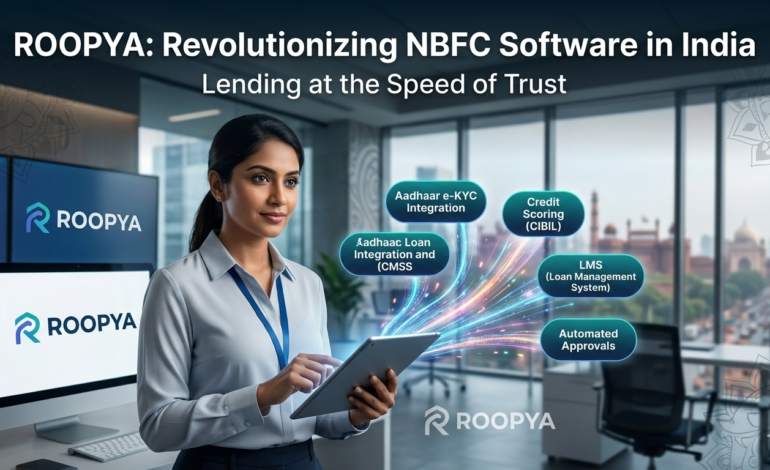
India’s Non-Banking Financial Companies (NBFCs) have emerged as one of the most important pillars of the country’s financial ecosystem. From personal loans and business loans to vehicle financing and microfinance, NBFCs play a critical role in improving credit accessibility for millions of individuals and businesses.
As the lending industry becomes increasingly digital, traditional manual processes are no longer sufficient to meet growing customer expectations and regulatory requirements. This is where NBFC software comes into the picture.
NBFC software is a comprehensive digital platform designed to automate and streamline the complete lending lifecycle, including customer onboarding, loan origination, underwriting, disbursement, repayment tracking, collections, compliance management, and reporting.
In this article, we’ll explore everything you need to know about NBFC software in India, its features, benefits, challenges, and how it helps lenders achieve sustainable growth.
What is NBFC Software?
NBFC software is a specialized financial technology solution developed to manage and automate the operations of Non-Banking Financial Companies.
The software enables NBFCs to handle their lending activities digitally while ensuring compliance with RBI regulations and industry standards.
A modern NBFC software platform typically covers:
- Digital customer onboarding
- Loan Origination System (LOS)
- Loan Management System (LMS)
- Credit assessment
- Automated underwriting
- Loan disbursement
- EMI management
- Collection management
- Regulatory reporting
- Customer relationship management
The primary objective of NBFC software is to reduce operational costs, improve efficiency, minimize risks, and enhance customer experiences.
Why NBFCs in India Need Digital Software Solutions
The Indian lending market has undergone significant transformation in recent years.
Several factors are driving NBFCs toward digital adoption:
Growing Loan Demand
The demand for personal loans, MSME loans, gold loans, education loans, and consumer financing continues to increase rapidly across India.
Managing thousands of loan applications manually becomes difficult and inefficient.
RBI Compliance Requirements
NBFCs must comply with various regulations and reporting requirements issued by the Reserve Bank of India (RBI).
Digital software helps maintain accurate records and generate compliance reports automatically.
Faster Loan Processing
Modern borrowers expect loan approvals within minutes or hours rather than days.
NBFC software automates verification and approval workflows, reducing turnaround times significantly.
Risk Management
Automated credit scoring and risk assessment help lenders make better lending decisions and reduce defaults.
Improved Customer Experience
Digital lending platforms enable customers to apply for loans online, upload documents electronically, and track loan status in real time.
Key Features of NBFC Software
1. Digital Customer Onboarding
Customer onboarding is the first step in the lending process.
The software allows:
- Online application submission
- Aadhaar verification
- PAN verification
- Video KYC
- Document uploads
- Digital signatures
This eliminates paperwork and speeds up loan processing.
2. Loan Origination System (LOS)
A Loan Origination System manages the entire loan application process.
Key functionalities include:
- Application management
- Credit evaluation
- Automated workflows
- Decision engine
- Approval routing
- Document verification
LOS helps NBFCs process loans faster and more accurately.
3. Credit Assessment and Underwriting
Advanced NBFC software integrates with:
- Credit bureaus
- Banking APIs
- GST systems
- Income verification services
This enables automated risk assessment and credit scoring.
4. Loan Management System (LMS)
The Loan Management System handles post-disbursement operations.
Features include:
- EMI scheduling
- Interest calculations
- Loan account management
- Payment tracking
- Penalty calculations
- Loan closure management
5. Automated Collections Management
Collections are critical for maintaining healthy loan portfolios.
NBFC software supports:
- Automated reminders
- SMS alerts
- WhatsApp notifications
- Email communication
- Collection workflows
- Recovery tracking
6. Regulatory Compliance
Compliance management features include:
- RBI reporting
- Audit trails
- Regulatory documentation
- Data security controls
- Risk monitoring
These capabilities help NBFCs stay compliant with evolving regulations.
7. Analytics and Reporting
Real-time dashboards provide insights into:
- Loan performance
- Collection efficiency
- Portfolio quality
- Customer acquisition
- Risk exposure
Data-driven insights support better business decisions.
Benefits of NBFC Software in India
Faster Loan Processing
Automation reduces approval times from days to minutes.
Reduced Operational Costs
Digital workflows eliminate repetitive manual tasks.
Better Risk Management
Advanced analytics improve credit decision-making.
Enhanced Customer Experience
Customers enjoy faster approvals and digital interactions.
Improved Compliance
Automated reporting ensures regulatory compliance.
Higher Productivity
Employees can focus on strategic tasks rather than administrative work.
Scalability
NBFCs can handle larger loan volumes without significantly increasing manpower.
Types of NBFCs That Can Use NBFC Software
Personal Loan Companies
Manage unsecured personal loan portfolios efficiently.
Gold Loan Companies
Track collateral, valuation, and repayments digitally.
Vehicle Finance Companies
Automate vehicle loan processing and servicing.
MSME Lenders
Streamline business loan origination and monitoring.
Microfinance Institutions
Manage large borrower bases and field operations effectively.
Consumer Finance Companies
Enable instant financing for retail purchases.
Challenges Solved by NBFC Software
Traditional lending operations often face challenges such as:
- Lengthy approval cycles
- Manual documentation
- Data inaccuracies
- Compliance risks
- Collection inefficiencies
- Customer dissatisfaction
Modern NBFC software addresses these issues through automation and intelligent workflows.
Future of NBFC Software in India
The future of NBFC software is being shaped by emerging technologies such as:
Artificial Intelligence (AI)
AI-powered underwriting improves credit decision accuracy.
Machine Learning
Predictive analytics helps identify high-risk borrowers.
Open Banking
API integrations provide real-time financial data access.
Blockchain
Enhanced security and transparency in financial transactions.
Embedded Finance
Lending services integrated directly into digital platforms.
These innovations will further transform the lending landscape in India.
How to Choose the Right NBFC Software
When selecting NBFC software, consider:
- RBI compliance capabilities
- Loan origination features
- Loan management functionalities
- API integrations
- Scalability
- Security standards
- Reporting capabilities
- Customization options
- Customer support
- Deployment flexibility
A comprehensive solution should support both current requirements and future growth.
NBFC software has become an essential technology investment for modern lending institutions in India. As competition intensifies and customer expectations continue to rise, digital transformation is no longer optional.
By automating customer onboarding, loan origination, servicing, collections, and compliance management, NBFC software helps lenders improve efficiency, reduce costs, manage risks, and deliver superior customer experiences.
Organizations that adopt advanced NBFC software today will be better positioned to scale their operations, remain compliant, and succeed in India’s rapidly evolving financial services market.
For NBFCs looking to accelerate digital lending, investing in a robust and scalable software platform can provide a significant competitive advantage and drive long-term business growth.