How to Choose Premium Socks That Last for Years
DIRECT ANSWER
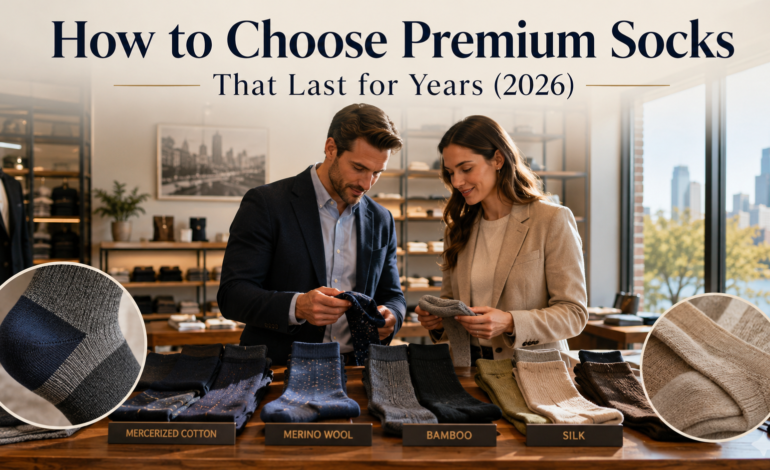
To choose premium socks that last for years, focus on four factors: fiber quality (mercerized cotton, merino wool, bamboo, or silk), knit density (tighter knit means longer wear), reinforced heel and toe construction, and proper care. Socks made from natural fibers with double-reinforced stress points consistently outlast cheaper synthetic alternatives by two to five years under regular wear.
Introduction
Most people buy socks without much thought, grab the cheapest multipack on the shelf and replace them every few months when holes appear or elastic fails. The problem is not the socks wearing out. The problem is buying the wrong socks from the start.
For Illinois residents who deal with everything from cold winters to hot and humid summers, sock quality matters more than it might seem. The right pair protects your feet, holds its shape through dozens of washes, and stays comfortable across long workdays, travel, and active use. This guide breaks down exactly what separates a premium sock from a commodity one, and what to look for before you spend your money.
What Makes a Sock Premium? The Core Difference
The word premium is used loosely in retail. For socks specifically, it means measurable differences in materials, construction, and durability rather than just higher price or better packaging.
Fiber Quality: The Foundation of Everything
The fiber a sock is made from determines how it feels, how it performs under different conditions, and how long it holds up. Here is how the most common premium sock fibers compare.
| Fiber | Key Properties | Best For | Durability |
| 100% Mercerized Cotton | Smooth finish, colorfast, breathable, moisture-absorbing | Business, everyday, formal wear | Very High |
| Merino Wool | Temperature-regulating, odor-resistant, soft against skin | Travel, active use, all-season | High |
| Bamboo | Naturally antibacterial, silky soft, highly breathable | Summer, sensitive skin, daily wear | Moderate to High |
| Silk | Lightweight, smooth, excellent moisture management | Formal occasions, dress wear | High with proper care |
| Cotton/Nylon Blend | Durable, shape-retaining, affordable | Everyday casual and athletic | High |
| Commodity Polyester | Cheap, fast-wicking but holds odor | Single-use athletic | Low |
According to Cotton Incorporated’s Fiber Science research, mercerized cotton undergoes a chemical treatment that increases fiber strength by up to 20 percent compared to untreated cotton, while simultaneously improving luster and dye retention. This is why mercerized cotton socks hold their color and shape significantly longer than standard cotton alternatives.
Knit Construction: Density and Technique
Two socks made from the same fiber can have dramatically different lifespans depending on how they are knit. Key construction indicators include needle count (higher needle count means finer, denser knit and longer wear), linked toe seaming (flat-linked toes lie flush against the skin and reduce friction that causes premature wear), and reinforced heel and toe zones (double-layer construction in high-stress areas is the single biggest indicator of sock longevity).
Elastic and Cuff Quality
The elastic in a sock’s cuff fails faster than the body of the sock in low-quality products. Look for socks where the elastic is woven into the cuff structure rather than just sewn onto the top. A well-constructed cuff maintains its hold through 50 or more washes without losing elasticity or leaving marks on the skin.
How to Read a Sock Label Before You Buy
Most people skip the label entirely. The label contains the information that tells you whether a sock is actually premium or just marketed as one.
Fiber Composition Percentages
The first fiber listed is always the dominant one by percentage. A sock labeled 80% mercerized cotton, 15% polyamide (nylon), 5% elastane is a high-quality construction: the dominant natural fiber provides comfort and breathability, the nylon adds structural durability, and the elastane provides fit retention. Socks labeled primarily polyester or acrylic with a small natural fiber percentage are reversing this formula and sacrificing comfort and longevity for low cost.
Country of Manufacture as a Quality Signal
Manufacturing origin is not a guarantee of quality, but it is a consistent indicator. Countries with long hosiery traditions, including Greece, Italy, Portugal, and Japan, have established technical standards and skilled manufacturing ecosystems that produce measurably better sock construction than low-cost commodity manufacturing. Pournara socks are crafted in Greece, drawing on more than 75 years of hosiery expertise that is reflected directly in the construction quality of every pair.
What Certifications Matter
Look for OEKO-TEX Standard 100 certification, which confirms the sock has been tested for harmful substances and is safe for skin contact. This certification is particularly relevant for people with sensitive skin or those buying for children.
How to Make Premium Socks Last Longer: Care Guide
Even the highest quality socks will wear out prematurely with poor care. These practices extend the life of premium socks significantly.
- Wash in cool or lukewarm water, not hot. Heat breaks down elastic fibers and causes shrinkage in natural fiber socks.
- Turn socks inside out before washing. This protects the outer surface finish and reduces pilling.
- Use a gentle detergent without enzymes or bleach. Enzyme-based detergents degrade protein fibers including wool and silk.
- Wash in a mesh laundry bag to reduce friction against other garments in the machine.
- Air dry where possible, or use a low heat tumble dry setting. High heat is the single biggest cause of premature elastic failure.
- Store socks folded rather than balled. Balling socks stretches the elastic in the cuff and shortens its functional life.
- Rotate your sock pairs. Wearing the same pair daily without rotation concentrates wear on specific fibers.
also read this article, How to Wear Compression Socks in Summer: A Complete Guide.
Signs You Are Buying Low-Quality Socks
Knowing what to avoid is as useful as knowing what to look for.
- Elastic that leaves marks on the skin after a few hours of wear indicates poor cuff construction.
- Color fading after the first or second wash indicates low-quality dyes or untreated cotton.
- Pilling on the sole or heel after a few wears indicates low fiber density.
- Toe seams that feel raised or rough against the skin indicate low-cost seaming technique.
- Socks that slip down during the day indicate cuff elastic that is already compromised at purchase.
- Thinning in the heel or ball of the foot after fewer than ten wears indicates no reinforcement in stress zones.
Premium Socks for Illinois Wearers: Pournara
For Illinois residents looking for socks built to the standards described in this guide, Pournara offers a range of premium Greek-made options across mercerized cotton, bamboo, wool, and silk constructions. Each collection is built with proper fiber composition, reinforced stress zones, and quality knit construction that reflects more than seven decades of Greek hosiery craftsmanship.
The Pournara collection includes options for men and women across everyday, business, luxury, and active categories. Free shipping is available on orders over $75 to Illinois and across the United States. Browse the full collection at shoppournara.com/shop/.
Frequently Asked Questions
What is the most durable sock material for everyday wear?
Mercerized cotton with a nylon reinforcement blend is consistently the most durable choice for everyday wear. The mercerization process increases cotton fiber strength by up to 20 percent, while the nylon component adds abrasion resistance in high-stress areas. This combination outperforms pure cotton and most synthetic blends for long-term durability under regular use.
How many times should a premium sock last before wearing out?
A well-constructed premium sock made from mercerized cotton or merino wool with reinforced heels and toes should comfortably last 100 to 200 washes under proper care. Many wearers report Pournara socks lasting three to five years with regular use, which compares favorably to commodity socks that typically need replacement within six to twelve months.
Are expensive socks actually worth it?
On a cost-per-wear basis, yes. A pair of quality socks at $15 to $25 that lasts three years costs significantly less per day of use than a $3 sock that needs replacement every few months. Beyond economics, premium socks provide measurable comfort improvements including better moisture management, reduced odor, and elimination of friction-related issues like blisters.
How do I know if a sock has reinforced heels and toes?
Hold the sock up to the light. Reinforced zones will visibly appear thicker or denser in the heel and toe areas compared to the rest of the sock body. You can also feel the difference: reinforced zones feel noticeably denser when compressed between your fingers. Some brands list reinforcement explicitly on their packaging or product descriptions.
Why do my socks wear out so quickly?
Premature sock wear is usually caused by one or more of these factors: low fiber quality with no reinforcement in stress zones, washing in hot water that degrades elastics and fibers, tumble drying on high heat, wearing the same pair daily without rotation, or wearing socks inside shoes without proper insoles on rough interior surfaces.
What should I look for when buying socks for Illinois winters and summers?
For Illinois winters, look for merino wool or thermal cotton blends with good insulation properties. For Illinois summers, especially given the state’s high humidity from June through August, prioritize breathable lightweight mercerized cotton or bamboo constructions that manage moisture vapor effectively. Having separate seasonal sock rotations extends the life of each pair and provides appropriate performance year round.
How should I store premium socks to make them last longer?
Fold premium socks flat rather than rolling or balling them. Balling socks by tucking one inside the other stretches the cuff elastic and shortens its functional lifespan. Store in a cool, dry drawer away from direct sunlight, which can fade colors in natural fiber socks over time.
Final Thoughts
The difference between socks that last years and socks that fall apart in months comes down to decisions made before purchase, not after. Fiber quality, knit construction, reinforcement placement, and care habits together determine whether a pair delivers genuine value or ends up in the bin inside a season.
For Illinois wearers who want socks built to last, the criteria in this guide point consistently in the same direction: natural fibers, dense knit construction, reinforced stress zones, and manufacturing from a region with genuine hosiery expertise. Pournara’s Greek-made collection meets each of these criteria. Browse the full range at shoppournara.com.