
The Role of Loan Management Systems in Digital Lending Transformation
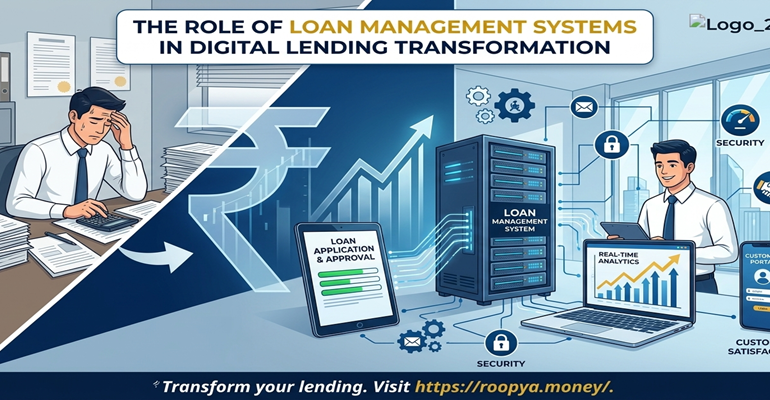
The financial services industry is undergoing a significant digital transformation, with lenders increasingly adopting technology-driven solutions to streamline operations and improve customer experiences. Traditional loan processing methods that rely on manual paperwork, spreadsheets, and disconnected systems are no longer sufficient in today’s competitive lending market.
A Loan Management System (LMS) has become the backbone of modern digital lending by automating loan origination, underwriting, disbursement, repayment tracking, collections, and reporting. Whether for NBFCs, fintech companies, microfinance institutions, cooperative banks, or private lenders, a robust loan management platform helps reduce operational costs while improving efficiency and regulatory compliance.
As customer expectations continue to evolve, lenders need scalable and intelligent software solutions that support faster approvals, seamless borrower experiences, and data-driven decision-making. This is where modern loan management systems play a critical role in accelerating digital lending transformation.
What Is a Loan Management System?
A Loan Management System (LMS) is a comprehensive software platform designed to automate and manage the entire lifecycle of a loan—from application submission and credit assessment to repayment collection and loan closure.
Unlike manual systems, an LMS centralizes borrower information, automates workflows, generates repayment schedules, monitors delinquencies, and provides real-time analytics for better portfolio management.
Key functions include:
- Digital loan application processing
- Customer onboarding
- KYC and document management
- Credit evaluation
- Loan approval workflows
- Automated loan disbursement
- EMI schedule generation
- Payment tracking
- Collection management
- Regulatory reporting
- Portfolio analytics
Understanding Digital Lending Transformation
Digital lending transformation refers to replacing traditional paper-based lending operations with technology-enabled automated processes.
Modern borrowers expect:
- Instant loan approvals
- Paperless documentation
- Mobile-friendly applications
- Digital identity verification
- Online payment options
- Real-time loan tracking
To meet these expectations, lenders require integrated software platforms capable of delivering speed without compromising compliance or risk management.
Loan Management Systems provide this technological foundation.
How Loan Management Systems Enable Digital Lending
1. End-to-End Process Automation
One of the biggest advantages of an LMS is complete automation of lending workflows.
Instead of manually processing applications across multiple departments, automated workflows route applications through predefined approval stages, significantly reducing turnaround time.
Automation minimizes human errors while improving operational efficiency.
2. Faster Loan Origination
Borrowers today expect quick approvals.
An advanced LMS integrates customer onboarding, KYC verification, credit scoring, and document validation into a unified workflow, allowing lenders to process applications within minutes rather than days.
This speed directly improves customer satisfaction and increases conversion rates.
3. Improved Customer Experience
Digital lending focuses heavily on user experience.
Loan Management Systems provide:
- Self-service borrower portals
- Mobile access
- Digital document uploads
- EMI calculators
- Repayment tracking
- Instant notifications
- Online payment options
Customers enjoy a frictionless borrowing experience from application to final repayment.
4. Better Risk Assessment
Modern LMS platforms leverage analytics and credit evaluation tools to help lenders make informed lending decisions.
They consolidate borrower data from multiple sources and generate insights that improve underwriting accuracy.
This reduces default risks while supporting responsible lending practices.
5. Centralized Data Management
Traditional lenders often struggle with scattered customer records stored across multiple systems.
A Loan Management System creates a centralized database that stores:
- Borrower profiles
- Loan documents
- Transaction history
- Payment schedules
- Communication logs
- Compliance records
Centralized data improves operational transparency and simplifies audits.
Benefits for NBFCs and Fintech Companies
Enhanced Operational Efficiency
Automation significantly reduces manual intervention across lending operations.
Teams spend less time processing paperwork and more time focusing on customer acquisition and portfolio growth.
Lower Operating Costs
Digital workflows eliminate excessive paperwork and repetitive administrative tasks.
Reduced processing costs directly improve profitability.
Improved Compliance
Regulatory compliance is a critical challenge for lenders.
Modern LMS solutions maintain audit trails, generate reports, and ensure documentation remains organized for regulatory inspections.
Portfolio Monitoring
Real-time dashboards enable management teams to monitor:
- Active loans
- Delinquency rates
- Collection performance
- Loan disbursements
- Outstanding balances
- Recovery trends
These insights support proactive business decisions.
AI and Automation in Modern Loan Management Systems
Artificial Intelligence is transforming digital lending by introducing intelligent automation.
AI-powered Loan Management Systems can assist with:
- Automated document verification
- Fraud detection
- Predictive risk analysis
- Smart underwriting
- Customer segmentation
- Collection prioritization
- Personalized lending recommendations
Machine learning models continuously improve decision-making based on historical lending data.
Digital Document Management
Paper-based documentation often delays approvals.
Loan Management Systems digitize document storage and retrieval through secure cloud infrastructure.
Borrowers can upload:
- Identity proofs
- Income documents
- Address verification
- Bank statements
- Business records
Digital documentation reduces turnaround time while improving security.
EMI and Repayment Automation
An effective LMS automates repayment scheduling and tracking.
Features typically include:
- Automatic EMI generation
- Payment reminders
- SMS notifications
- Email alerts
- Late fee calculations
- Interest recalculations
- Collection workflows
Automation improves repayment rates and reduces delinquency.
Real-Time Analytics and Reporting
Business intelligence capabilities allow lenders to evaluate portfolio performance using real-time dashboards.
Important metrics include:
- Loan approval ratios
- Collection efficiency
- Portfolio at risk
- Average processing time
- Default rates
- Customer acquisition trends
Data-driven insights enable continuous operational improvement.
Scalability for Growing Lending Businesses
As lending businesses expand, manual operations become increasingly difficult to manage.
Loan Management Systems support growth by handling:
- Higher loan volumes
- Multiple loan products
- Branch expansion
- Multi-location operations
- Digital channels
- API integrations
Scalable architecture ensures long-term business sustainability.
Security and Data Protection
Financial institutions handle highly sensitive customer information.
Modern LMS platforms implement:
- Role-based access control
- Data encryption
- Secure authentication
- Activity logs
- Backup systems
- Disaster recovery mechanisms
These security measures help protect customer data while supporting regulatory compliance.
Integration with the Digital Ecosystem
Modern lending requires seamless connectivity with external systems.
Loan Management Systems often integrate with:
- Payment gateways
- Credit bureaus
- Banking APIs
- CRM platforms
- Accounting software
- KYC providers
- E-signature solutions
These integrations create a unified digital lending ecosystem.
Why Loan Management Systems Are the Future of Lending
Digital transformation is reshaping customer expectations and competitive dynamics across financial services.
Organizations relying on outdated manual processes risk slower approvals, higher operational costs, and reduced customer satisfaction.
By implementing a comprehensive Loan Management System, lenders can automate operations, improve compliance, reduce risk, and deliver exceptional borrower experiences while preparing for future technological advancements.
The role of Loan Management Systems in digital lending transformation extends far beyond automation. They serve as strategic platforms that enable faster decision-making, efficient loan servicing, better customer engagement, and data-driven portfolio management.
For NBFCs, fintech startups, banks, and lending institutions aiming to scale their operations, investing in a modern Loan Management System is no longer optional—it is a necessity for remaining competitive in an increasingly digital financial ecosystem.
Organizations that embrace digital lending technologies today will be better positioned to improve operational efficiency, enhance customer trust, and drive sustainable business growth in the years ahead.
FAQ
1. What is a Loan Management System?
A Loan Management System (LMS) is software that automates the complete loan lifecycle, including application processing, underwriting, disbursement, repayment tracking, collections, and reporting.
2. How does a Loan Management System support digital lending?
It digitizes and automates lending workflows, enabling faster approvals, paperless documentation, real-time tracking, and better customer experiences.
3. Why is a Loan Management System important for NBFCs?
An LMS helps NBFCs reduce operational costs, improve compliance, automate collections, manage portfolios efficiently, and scale lending operations.
4. Can a Loan Management System integrate with third-party services?
Yes. Modern LMS platforms typically integrate with payment gateways, banking APIs, credit bureaus, KYC providers, CRM systems, and accounting software.
5. How does automation improve loan processing?
Automation reduces manual intervention, minimizes errors, speeds up approvals, streamlines workflows, and enhances overall operational efficiency.
6. Does a Loan Management System improve customer experience?
Yes. Features such as online applications, digital document uploads, EMI tracking, payment reminders, and self-service portals make borrowing more convenient.
7. How does an LMS help reduce lending risk?
By centralizing borrower data, supporting credit evaluation, providing analytics, and enabling better monitoring of repayment behavior, an LMS helps lenders make more informed decisions.
8. What industries benefit from Loan Management Systems?
Banks, NBFCs, fintech companies, microfinance institutions, cooperative societies, and digital lending platforms can all benefit from implementing an LMS.