How to Apply for a Payday Loan Online: A Step-by-Step Guide
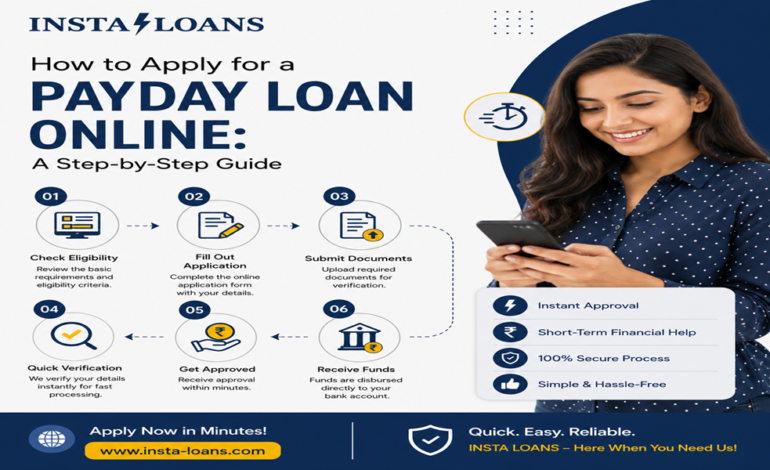
When an unexpected expense comes up, you may need access to money before your next paycheck. An online payday loan can be one form of short-term credit that some consumers consider for temporary cash-flow needs. However, payday loans can carry substantial fees and may have short repayment periods, so it is important to understand the terms before applying.
A typical payday loan is a small, short-term loan that is often due within two to four weeks or on the borrower’s next payday. Exact loan amounts, fees, repayment periods, and availability depend on the lender and applicable state law.
If you’re considering an online payday loan, the application process is generally straightforward. You provide information about yourself, your income, and your banking arrangements, review available terms, and decide whether a particular offer fits your financial situation.
What Is an Online Payday Loan?
An online payday loan is a short-term form of borrowing that is applied for through the internet rather than at a physical storefront.
The basic process can involve:
- Completing an online application.
- Providing personal and financial information.
- Allowing the lender or participating provider to verify the information.
- Reviewing loan terms and costs.
- Accepting an offer if you decide it is appropriate.
- Receiving funds according to the lender’s stated funding process.
- Repaying the loan according to the agreement.
Payday loans are generally designed for short-term borrowing rather than long-term financial needs. Because fees can be significant relative to the amount borrowed, consumers should consider whether they will have enough money to repay the loan when it becomes due.
How to Apply for a Payday Loan Online
1. Determine How Much You Actually Need
Before completing an application, calculate the amount required for your immediate expense.
Avoid borrowing more than necessary. A larger loan can mean a larger repayment obligation, depending on the lender’s pricing and applicable regulations.
Consider:
- The amount needed for the emergency expense
- Your upcoming income
- Existing bills and financial commitments
- The loan’s total repayment amount
- The repayment date
The most important question is whether you can comfortably repay the loan according to the agreement.
2. Check Whether You Meet the Basic Requirements
Requirements differ between lenders and states, but payday lenders commonly request an active bank, credit union, or prepaid-card account, proof or verification of income, valid identification, and that the applicant is at least 18 years old.
Depending on the lender, you may also need to provide information such as:
- Full name
- Date of birth
- Residential information
- Employment or income information
- Contact details
- Banking information
- Identification information
Do not assume that meeting basic requirements guarantees approval. A lender or service provider may have additional eligibility criteria.
3. Complete the Online Application
Once you have determined that the product is appropriate for your circumstances, you can complete the online application.
Applications typically ask for information needed to identify you, understand your income, and process the loan request.
Enter your information accurately. Incorrect information can delay the application or affect the outcome.
You should also make sure you are using a legitimate website and understand whether you are applying directly with a lender or submitting information to a service that may connect you with participating lenders.
The CFPB specifically recommends determining whether an online site is an actual lender or a lead-generation service before submitting sensitive financial information.
4. Review Available Loan Terms
If you receive a loan offer, don’t focus only on the amount you can receive.
Review the complete cost of borrowing.
Look for:
- Finance charges
- Interest or applicable fees
- Annual Percentage Rate (APR)
- Origination or processing fees
- Late fees
- Returned-payment or NSF fees
- Renewal or rollover fees
- Total repayment amount
- Repayment date
- Payment method
The Federal Trade Commission advises consumers to review the finance charge and APR before signing a credit agreement.
For example, if a lender charges $15 for every $100 borrowed, borrowing $300 would involve a $45 finance charge, making the repayment $345 under that example. Actual costs vary according to the lender and applicable law.
5. Understand How Repayment Works
Before accepting a payday loan, make sure you know exactly how and when repayment will occur.
Online lenders may use electronic payments, including ACH authorization, depending on the loan agreement. An ACH authorization can allow a lender to electronically withdraw an agreed payment from a bank, credit union, or prepaid-card account.
Check:
- The exact payment date
- The amount that will be withdrawn
- Whether repayment is a single payment or installments
- Whether automatic payments are involved
- What happens if you do not have sufficient funds
- Whether renewal or rollover is permitted
- How payment authorization can be stopped or revoked
Understanding these details can help you avoid unexpected fees and cash-flow problems.
6. Read the Loan Agreement Carefully
Never accept a loan simply because the application process is quick.
Read the agreement from beginning to end and make sure you understand the financial obligation.
Pay particular attention to:
Loan amount: How much are you actually borrowing?
Finance charge: What is the cost of borrowing?
APR: What is the annualized cost disclosed for the loan?
Due date: When must the loan be repaid?
Late fees: What happens if payment is late?
Renewal terms: Can the loan be extended, and what additional charges could apply?
Payment authorization: How will the lender collect repayment?
Total cost: How much will you repay in total?
The CFPB recommends understanding the total cost and repayment method before agreeing to an online payday loan.
How Long Does an Online Payday Loan Application Take?
The time required to complete an online application can vary depending on the provider, the information required, verification procedures, and applicable regulations.
An online application may be completed relatively quickly, but application speed should not be confused with guaranteed approval or guaranteed funding.
If you are considering a payday loan, focus on the complete loan terms rather than simply how quickly an application can be submitted.
What Information May Be Required?
Depending on the lender, an applicant may be asked for:
- Government-issued identification
- Name and contact information
- Address
- Employment information
- Income information
- Bank account information
- Information needed for identity verification
Requirements can vary by lender and state.
Because online applications can involve sensitive financial information, security and privacy should be important considerations. The CFPB recommends checking how an online provider handles information such as Social Security numbers and bank-account information and reviewing its privacy and opt-out policies.
Is a Payday Loan Right for You?
A payday loan may seem convenient when you need money quickly, but convenience should not be the only consideration.
Before applying, ask yourself:
- Can I repay the entire amount when it is due?
- How much will the loan actually cost?
- Will repayment interfere with rent, utilities, food, or other essential expenses?
- Are there less expensive alternatives?
- Is the lender licensed or permitted to operate where I live?
- Do I understand the automatic payment arrangements?
- What happens if I cannot repay on time?
The CFPB and FTC both recommend considering alternatives and evaluating the full cost before using payday loans.
Alternatives to Consider Before a Payday Loan
Depending on your circumstances, you may want to explore alternatives such as:
Credit Union Options
Some credit unions offer smaller-dollar borrowing products that may have different terms from payday loans.
Employer-Based Advances
Some employers offer paycheck advances or emergency assistance programs.
Negotiating a Bill
If you’re borrowing to pay a bill, contact the company or creditor and ask whether a payment extension or alternative payment arrangement is available.
Personal Loan
A traditional personal loan may offer a longer repayment period and different pricing, depending on your credit profile and the lender.
Emergency Assistance
Community organizations and nonprofit programs may provide assistance for certain essential expenses.
The best option depends on your financial circumstances, eligibility, and the cost and terms of each alternative.
How to Avoid Payday Loan Scams Online
When searching for short-term credit online, be careful with websites that make unrealistic promises.
Potential warning signs include:
- Guaranteed approval regardless of circumstances
- Pressure to act immediately
- Requests for unusual payment methods
- Requests for money before receiving a promised loan
- Unclear lender identity
- Missing contact information
- Unclear fees or repayment terms
- Requests for unnecessary sensitive information
The FTC warns consumers about advance-fee loan scams, where scammers may promise credit and demand money upfront while falsely implying that payment guarantees the loan.
A legitimate-looking website is not automatically proof that an offer is legitimate. Verify who you are dealing with and read the terms carefully.
What Happens If You Cannot Repay a Payday Loan?
If you cannot repay your loan on time, additional fees or other consequences may apply depending on the loan agreement and applicable law.
Some lenders may offer an extension or renewal where permitted, but extending a loan can add additional costs while leaving the original balance outstanding.
If you anticipate difficulty making a payment, review your loan agreement and contact the lender as soon as possible. You can also contact your state regulator or attorney general for information about applicable consumer protections.
Payday Loan Application Checklist
Before submitting an online payday loan application, consider this checklist:
Before applying:
- Calculate how much you need.
- Check whether you can repay it on time.
- Compare alternatives.
- Check the provider’s legitimacy.
Before accepting an offer:
- Review the APR.
- Check the finance charge.
- Calculate the total repayment.
- Confirm the due date.
- Check late and returned-payment fees.
- Understand automatic payment arrangements.
- Read the complete loan agreement.
After accepting:
- Keep a copy of the agreement.
- Track the repayment date.
- Keep enough funds available for scheduled payments.
- Contact the lender promptly if you expect a repayment problem.
Final Thoughts
Applying for a payday loan online can be relatively simple, but deciding whether to use one requires careful consideration. Payday loans are generally short-term, higher-cost forms of borrowing, and repayment can become difficult if your budget is already tight.
If you are considering an online payday loan through Insta-Loans, use the application process to compare your options and carefully review the terms presented to you. Do not rely solely on claims such as “fast,” “easy,” or “instant.” The most important factors are the total cost, repayment obligation, lender information, and whether the loan is affordable for you.
Before submitting personal or financial information, verify the provider, understand how your information will be used, and make sure you know exactly what you are agreeing to.
Frequently Asked Questions
1. How do I apply for a payday loan online?
Generally, you complete an online application, provide the requested personal and financial information, review any available loan offer and its terms, and accept the agreement only if you understand and can afford the repayment obligation.
2. What do I need to apply for a payday loan?
Requirements vary, but lenders commonly request valid identification, proof or verification of income, an active bank or similar account, and that the applicant is at least 18 years old.
3. Can I get a payday loan online?
Online payday loans may be available in some locations, but availability and legal requirements vary by state. Always check whether the product is available and permitted where you live.
4. How quickly can I receive a payday loan?
Funding time varies by lender, verification process, banking system, and other factors. An application being processed quickly does not guarantee approval or immediate funding.
5. How much does a payday loan cost?
The cost varies by lender and state. CFPB information notes that payday-loan finance charges can commonly range from $10 to $30 per $100 borrowed, depending on applicable law.
6. Do payday loans have to be repaid on the next payday?
Many payday loans are structured for repayment on the borrower’s next payday or within a short period, often two to four weeks. The actual repayment date depends on the loan agreement and applicable law.
7. What is an ACH authorization?
An ACH authorization gives a lender permission to electronically withdraw an agreed payment from a bank, credit union, or prepaid-card account. Carefully review the authorization and understand the amount and timing of withdrawals.
8. Are payday loans expensive?
They can be. Payday loans generally have higher fees relative to the amount borrowed and can become more expensive if payments are missed or the loan is renewed where permitted.
9. Can I apply if I have bad credit?
Eligibility varies by lender. Do not assume that a “bad credit” claim means approval is guaranteed. Review the lender’s actual eligibility criteria and loan terms.
10. What should I check before applying for an online payday loan?
Check the lender or provider’s identity, applicable licensing, total cost, APR, fees, repayment date, automatic-payment terms, privacy practices, and what happens if you cannot repay on time.