How Can Business Model Development Help Your Business Grow?
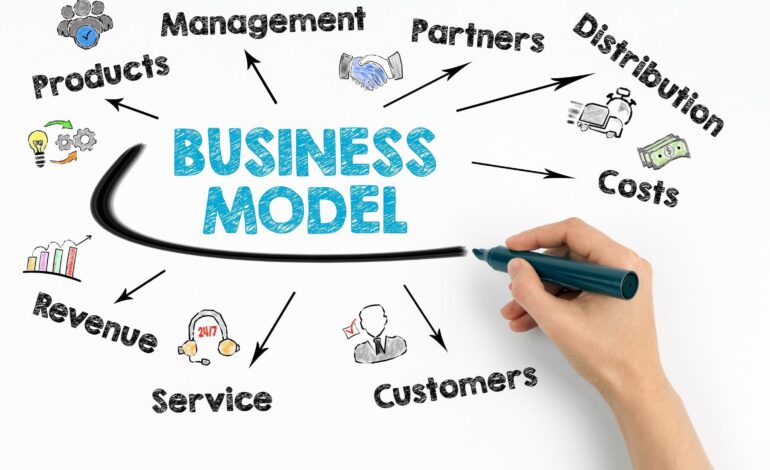
In a competitive business environment, having a good product or service is not always enough to achieve sustainable growth. A business needs a clear understanding of how it creates value, serves customers, generates revenue, and manages its resources. This is where business model development becomes important. It provides a structured approach for designing, evaluating, and improving the way a company operates and creates value in its target market.
Whether a company is launching a new venture, entering a different market, or trying to improve an existing operation, a well-designed business model can provide greater clarity. It can also help decision-makers understand where opportunities exist and which parts of the business may need improvement.
A strong business model should not simply describe how a company makes money. It should explain how different parts of the organization work together to deliver value to customers while maintaining financial sustainability.
What Is Business Model Development?
Business model development is the process of designing or refining the structure through which a business creates, delivers, and captures value. It involves examining customers, products or services, revenue streams, costs, resources, partnerships, distribution channels, and other important business activities.
The process is often used by startups, established companies, entrepreneurs, and organizations that are exploring new opportunities.
A business model typically answers several important questions:
- Who are the target customers?
- What problem does the business solve?
- What value is being provided?
- How will customers access the product or service?
- How will revenue be generated?
- What resources are required?
- Which activities are essential to operations?
- Which partnerships can support the business?
- What costs will be involved?
- How can the model remain sustainable over time?
When these questions are clearly answered, business decisions can be made with greater confidence.
Why Is Business Model Development Important?
Markets change quickly. Customer expectations, technology, competition, regulations, and economic conditions can all influence the way a company operates. A business model that worked several years ago may not remain equally effective today.
Effective business model development allows organizations to review their existing approach and identify areas where changes may be required.
It Creates Strategic Clarity
A business can have ambitious goals but still lack a clear path toward achieving them. Developing a business model brings important elements together and makes the overall strategy easier to understand.
For example, a company may discover that its target audience is too broad or that its pricing structure does not adequately reflect the value being delivered. Once these weaknesses are identified, they can be addressed more effectively.
It Helps Identify New Opportunities
New revenue streams and customer segments can often be identified through a detailed business model review. Businesses may discover opportunities to introduce complementary products, develop subscription services, enter new markets, or create strategic partnerships.
Opportunities should be evaluated carefully before significant resources are committed. A structured model makes this evaluation easier.
It Supports Better Decision-Making
Business decisions are often influenced by incomplete information. By examining customers, costs, resources, competition, and revenue together, decision-makers can develop a more complete picture of the organization.
Some assumptions may be tested before they are turned into major investments. This can reduce unnecessary risk.
Key Elements of a Strong Business Model
A successful business model is made up of several interconnected components. Each element should support the overall value proposition and business objectives.
Customer Segments
The first step is understanding who the business intends to serve. Customer segments can be divided based on demographics, location, industry, purchasing behavior, needs, or other characteristics.
A business should avoid trying to serve everyone without a clear reason. A well-defined customer segment allows marketing, product development, pricing, and customer service strategies to be aligned.
Value Proposition
The value proposition explains why customers should choose a particular product or service.
It may focus on:
- Solving a specific customer problem
- Reducing costs
- Saving time
- Improving convenience
- Providing better quality
- Offering specialized expertise
- Delivering a unique experience
The value proposition should be connected directly to customer needs rather than simply describing product features.
Revenue Streams
A business must determine how it will generate revenue. Different models can be considered depending on the industry and customer expectations.
Common revenue approaches include:
- Direct product sales
- Service fees
- Subscriptions
- Licensing
- Commissions
- Advertising
- Memberships
- Consulting fees
Multiple revenue streams can provide additional financial stability, although they should only be introduced when they make strategic sense.
Cost Structure
Every business model needs a realistic understanding of its costs. Expenses may include staffing, technology, manufacturing, marketing, logistics, rent, software, suppliers, and administrative operations.
Costs should be compared with expected revenue to determine whether the proposed model can remain financially sustainable.
Key Resources and Activities
Businesses depend on resources such as employees, technology, intellectual property, equipment, capital, and data.
Key activities may include manufacturing, product development, marketing, sales, customer support, distribution, or research.
These elements should be mapped carefully because operational weaknesses can affect the entire business model.
Strategic Partnerships
Partnerships can allow businesses to access expertise, technology, distribution networks, suppliers, or other resources without developing everything internally.
Potential partners may include suppliers, technology providers, distributors, agencies, consultants, or complementary businesses.
How Does the Business Model Development Process Work?
Although approaches can vary by organization, the process can generally be divided into several stages.
1. Research the Market
Market research should be conducted before a model is finalized. Customer needs, competitors, industry trends, pricing, and market gaps should be examined.
Both qualitative and quantitative information can be useful. Customer interviews, surveys, industry reports, competitor analysis, and market data can all contribute to a stronger understanding of the environment.
2. Define the Target Customer
The ideal customer should be clearly identified. Their needs, challenges, purchasing behavior, and expectations should be understood.
When customer problems are properly defined, products and services can be developed around genuine demand rather than assumptions.
3. Develop the Value Proposition
The next step is to establish how the business will provide meaningful value. The proposed solution should address a real problem or fulfill a genuine customer need.
At this stage, different concepts can be compared and tested before a final direction is selected.
4. Design the Revenue Model
Revenue generation should be considered alongside customer value. Pricing, payment structures, sales channels, and recurring revenue opportunities can be evaluated.
The model should be designed so that revenue potential is not separated from operational realities.
5. Evaluate Costs and Resources
The resources required to operate the business should be identified. Expected costs should then be compared with projected revenue.
Financial assumptions should be tested because an attractive concept may still be difficult to operate if its cost structure is unrealistic.
6. Test and Refine the Model
A business model should not always be treated as a permanent document. It can be tested through prototypes, pilot programs, customer feedback, or small-scale launches.
Based on the results, changes can be made. Some assumptions may be confirmed, while others may need to be reconsidered.
Common Challenges in Business Model Development
Developing a business model can be challenging, especially when markets are uncertain or customer behavior is difficult to predict.
One common issue is relying too heavily on assumptions. A business may believe customers will pay a particular price or use a service in a specific way without sufficient evidence.
Another challenge is focusing too much on competitors. Competitor analysis is valuable, but copying another company’s model does not necessarily create a sustainable advantage.
Businesses can also struggle when too many revenue streams are introduced at once. Complexity can make operations difficult to manage and can weaken the primary value proposition.
To reduce these challenges, assumptions should be documented, tested, and reviewed regularly.
The Role of Technology in Modern Business Models
Technology has changed the way many businesses create and deliver value. Digital platforms, automation, cloud services, artificial intelligence, data analytics, and online payment systems have created new possibilities for both startups and established organizations.
For example, a traditional service business can potentially introduce online consultations, subscription packages, digital products, or automated customer support.
Technology should not be adopted simply because it is available. Its role should be connected to customer needs and business objectives. When technology genuinely improves efficiency or customer experience, it can become an important part of the business model.
How Can Businesses Improve Their Existing Model?
Business model development is not limited to new companies. Established businesses can also benefit from reviewing their current approach.
A business model can be improved by:
- Analyzing customer feedback
- Reviewing pricing and profitability
- Identifying inefficient processes
- Exploring new customer segments
- Improving distribution channels
- Developing strategic partnerships
- Introducing useful technology
- Testing additional revenue opportunities
- Monitoring changes in customer behavior
- Comparing performance against business objectives
Regular reviews can help businesses remain responsive as market conditions change.
Business Model Development and Long-Term Growth
Long-term growth requires more than increasing sales. A business must be able to deliver value consistently while maintaining healthy operations and financial performance.
A carefully developed model can provide a framework for sustainable expansion. Before entering a new market or launching a new product, the potential impact on resources, operations, customers, and revenue should be assessed.
Growth strategies can then be prioritized according to their potential value and feasibility.
It should also be recognized that successful models are often adapted over time. Customer expectations evolve, competitors introduce new solutions, and technologies create different ways of delivering products and services. As a result, flexibility should be built into the model.
Final Thought
Business model development provides businesses with a practical way to understand how their ideas can be transformed into sustainable operations. By examining customers, value propositions, revenue streams, costs, resources, partnerships, and market opportunities, organizations can make more informed strategic decisions. A business model should not be viewed as a one-time exercise. It should be reviewed, tested, and improved as the business and market evolve. When the right model is developed around genuine customer needs and realistic financial and operational assumptions, a stronger foundation for sustainable growth can be created.