
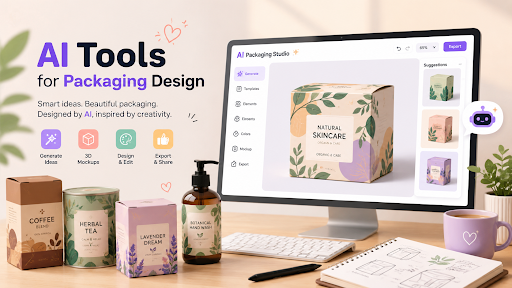
Package design is a very significant factor in the recognition and memory of a product. The strategic design of a package can convey a brand and emphasize key product information that can drive purchase. AI is playing an increasingly important role in the packaging design process as companies seek more innovative and speedy solutions to come up with packaging concepts. Whether they are brainstorming concepts or developing visual ideas, AI tools are enabling designers to explore potential solutions that might be much more time-consuming to generate by hand.A major benefit of AI packaging design is the capability to develop several design concepts in a rapid and efficient manner. Traditionally, designers can spend hours researching trends, sketching, choosing colors, and experimenting with various layouts. AI platforms can help with these initial steps by generating design variations based on a description, product category, style preference, or target audience. This enables designers to see which way to go before spending a lot of time creating final artwork.
What Is AI Packaging Design?
AI packaging design is any use of artificial intelligence technology that helps in the packaging development process. These technologies are able to interpret visual patterns, create images, propose design elements and organise creative ideas. AI is not supposed to replace human designers, but rather to complement their skills and assist them in their processes.For instance, an organic skin care brand intending to launch a new product could brainstorm packaging ideas on how to incorporate natural colors, simple design elements, botanical imagery and sustainability packaging themes using AI. The designer will then take a look at the ideas generated and choose the ones that are closest to the brand.
How AI Can Improve the Design Process
One of the biggest advantages of using AI in packaging design is its speed. Producing the initial concept can be one of the longest phases in a project. In just a few minutes, AI can provide initial visual directions to the designer, providing a helpful starting point.AI can be used for brainstorming as well. An AI can generate multiple design directions, including modern, luxury, minimalist, playful, and traditional, if a designer is not certain of the visual direction of a product. The following concepts can be used to share ideas with the team about what is working well and what needs to be improved.Another good use is personalization. There may be different visual styles needed for different audiences. AI can generate a variety of packaging options based on customer tastes, product type, demographics, or market trends. This can help to make the process of creating more data-driven but still allow for key decisions to be made by human hands.
The Role of AI in Sustainable Packaging
Packaging sustainability is a key factor in today’s packaging landscape. Companies are now finding a way to cut down on waste material and packaging with a lesser environmental footprint. AI can assist in this regard by offering design suggestions for efficient layouts, alternative materials, and streamlined packaging designs.AI-powered systems, for instance, can be employed to test packaging dimensions and designs prior to creating physical prototypes. AI will not be able to say for sure whether a material is truly sustainable, but it will support teams in brainstorming sustainable ideas that they can then assess based on environmental and manufacturing factors.
AI Packaging and Brand Identity
Packaging is a communication medium, too, as well as a container. Colors, typography, imagery, shapes and layouts all add to a brand’s identity. AI packaging solutions can assist businesses to try out these visual elements without compromising the creative direction.
AI can create Custom packaging options that align with established brand aesthetics for established brands. It can be a source of inspiration for new businesses to brand themselves visually from the start. But, there is a need for human judgment because a pretty design does not necessarily convey the proper message.
Limitations Designers Should Consider
While AI has its merits, it also has drawbacks. Generated concepts might include incorrect information, inappropriate typography, unrealistic products or appropriate designs, which may not be feasible in actual production. Originality, brand integrity and IP can also be concerns.
This is why ideas produced by AI should generally be considered as a starting point for creating original packaging and not as a final product. Since this can be done by a professional designer, they can further enhance the graphics, verify the technical specifications, draft the print-ready documents and ensure that the final product is compliant with the regulatory and printing criteria.
The Future of Packaging Design
AI packaging design’s future seems to be a blend of human creativity and AI, with greater synergy anticipated. AI can take care of repetitive tasks, come up with alternatives, and offer inspiration, while designers bring out strategy, emotional understanding, cultural awareness, and practical expertise.However, with the continued advancement of these technologies, businesses of varying sizes could be eligible for more streamlined packaging development processes. AI offers small businesses the ability to brainstorm concepts without committing to significant resources and also boosts concept development for larger businesses in several products and markets.AI can help small companies brainstorm ideas without having to invest in extensive resources, in addition to speed up concept development for larger businesses in various products and markets.In conclusion, you should think of AI as a creative tool that helps design professionals rather than a design professional. With thoughtful usage, AI can streamline workflow, generate more ideas, and create captivating and business-focused packaging concepts. The best outcomes can be achieved through a fusion of AI experimentation and human creativity, strategic thinking, and professional design skills.