
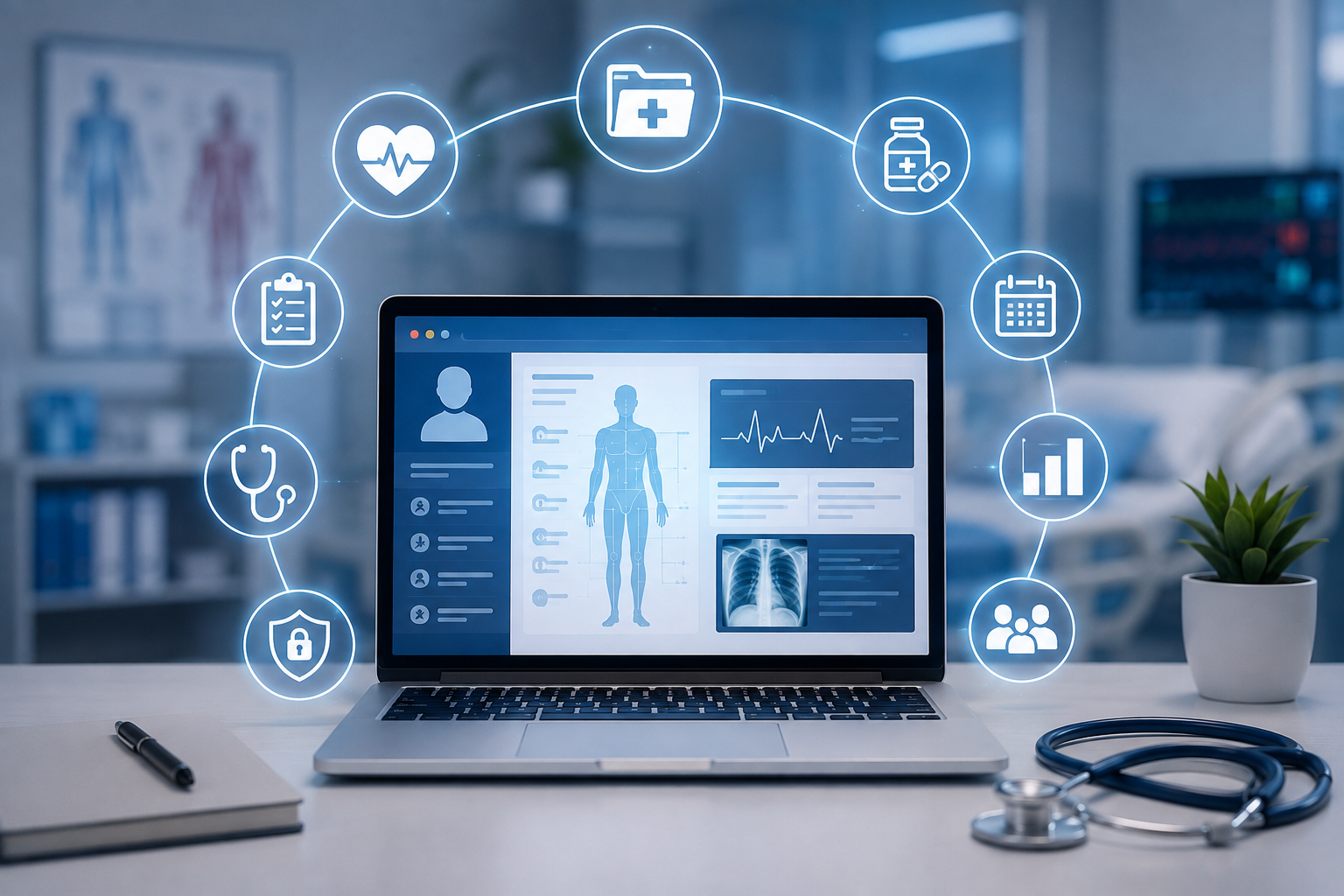
Healthcare organizations are increasingly adopting digital technology to improve the quality, speed, and coordination of patient care. One of the most important technologies supporting this transformation is Electronic Medical Record (EMR) software. It allows healthcare providers to digitally store, manage, update, and access patient information while reducing dependence on traditional paper-based records.
As hospitals and clinics handle growing patient volumes, efficient information management has become essential. Doctors need quick access to medical histories, nurses need accurate clinical information, and administrators need organized data to support daily operations. Modern EMR systems bring these requirements together and can help healthcare organizations create more connected and efficient workflows.
What Is EMR Software?
EMR software is a digital platform used by healthcare providers to maintain patient medical records. It can contain information such as patient demographics, medical history, diagnoses, medications, allergies, laboratory results, clinical notes, and treatment information.
Unlike paper records, digital records can be accessed by authorized users when needed. This makes it easier for healthcare professionals to review important information during consultations and follow-up visits.
Depending on the platform, EMR software may also include appointment scheduling, prescription management, laboratory integration, billing, reporting, patient portals, and analytics.
How EMR Software Improves Patient Care
The primary purpose of healthcare technology is to support better patient outcomes. EMR software can contribute to this goal in several ways.
1. Faster Access to Patient Information
Doctors often need to review a patient’s medical history before making clinical decisions. Searching through paper files can take time and may become difficult when records are stored across different locations.
An EMR system provides authorized healthcare professionals with a centralized digital record. They can quickly review previous diagnoses, medications, allergies, test results, and clinical notes.
Faster access to relevant information allows healthcare professionals to spend more time focusing on the patient instead of searching for records.
2. Better Clinical Decision-Making
Accurate patient information is important when making treatment decisions. EMR software can bring relevant clinical information together in one place.
For example, a doctor can review previous medications, laboratory results, allergies, and diagnoses before recommending a treatment. Having this information available can support more informed clinical decisions.
Some advanced systems can also provide alerts and reminders related to medications, allergies, or other clinical information, depending on their configuration.
3. Reduced Documentation Errors
Paper-based documentation can create problems such as illegible handwriting, missing pages, duplicate records, or incomplete information.
Digital documentation provides standardized fields and structured workflows that can make records easier to read and organize. Healthcare professionals can enter information directly into the system, reducing some common documentation problems.
This can improve the consistency and quality of patient records.
4. Improved Coordination Between Healthcare Teams
Patient care often involves multiple healthcare professionals. A patient may interact with doctors, nurses, specialists, laboratory staff, pharmacists, and administrative teams.
When appropriate access is provided, EMR software can help authorized staff work from the same up-to-date information. This can reduce communication gaps and make it easier for different teams to coordinate patient care.
Better coordination is especially important in hospitals where patients may move between departments.
5. More Efficient Prescription Management
Prescription management is another area where digital systems can improve workflow. Doctors can create and maintain electronic prescriptions within the system rather than relying entirely on handwritten prescriptions.
Depending on the available integrations, prescription information can also be connected with pharmacy workflows.
Digital prescription management can help reduce handwriting-related misunderstandings and make medication information easier to track.
How EMR Software Improves Clinical Efficiency
Improving patient care is only one part of the value provided by EMR technology. These systems can also improve the efficiency of healthcare professionals and administrative teams.
6. Streamlined Patient Registration
Patient registration is often one of the first steps in a healthcare visit. Manual registration can involve paperwork, repeated data entry, and physical file management.
EMR systems can digitize patient registration and maintain demographic information within a centralized database. When the patient returns, authorized staff may be able to access existing information rather than collecting the same details repeatedly.
This can save administrative time and improve the overall patient experience.
7. Efficient Appointment Scheduling
Appointment management can become complicated when healthcare organizations handle large numbers of patients.
EMR platforms may include scheduling tools that allow staff to manage appointments, doctor availability, cancellations, and follow-up visits. Automated reminders can also help reduce missed appointments when supported by the system.
Better scheduling allows healthcare providers to organize their workload more effectively.
8. Faster Clinical Documentation
Documentation is an important part of healthcare, but it can also consume a significant amount of a clinician’s time.
Digital templates and structured documentation tools can help healthcare professionals record information more efficiently. Standardized fields can also help ensure that important information is captured consistently.
Reducing repetitive documentation tasks gives clinicians more time to focus on patient interaction and clinical responsibilities.
9. Easier Laboratory and Diagnostic Integration
Laboratory and diagnostic information plays an important role in patient care. Without digital integration, healthcare staff may need to manually collect and enter test results.
EMR systems that support laboratory or diagnostic integrations can make relevant results available within the patient’s digital record. This can reduce duplicate data entry and help clinicians review information more efficiently.
It can also support better continuity when patients have multiple tests over time.
10. Centralized Patient History
Maintaining a complete patient history can be challenging when information is spread across different files and departments.
An EMR platform can organize clinical information within a centralized record. Authorized healthcare professionals can review previous visits, diagnoses, medications, procedures, and test results.
Having a more complete view of the patient’s history can support continuity of care and reduce unnecessary repetition.
Role of EMR Software in Patient Safety
Patient safety is closely connected with accurate information. Missing or outdated records can create risks during treatment.
EMR systems can support patient safety through features such as allergy information, medication records, clinical alerts, and standardized documentation. When configured correctly, these features can help healthcare professionals identify important information before making clinical decisions.
Access controls are also important. Healthcare organizations can assign different permissions to doctors, nurses, pharmacists, administrators, and other users based on their responsibilities.
This helps ensure that sensitive patient information is accessed appropriately.
EMR Software and Healthcare Analytics
Modern healthcare organizations generate large amounts of information every day. EMR systems can organize this data and provide reporting and analytics capabilities.
Healthcare administrators can use reports to monitor patient volumes, appointment trends, department performance, and other operational indicators.
Clinical data can also help organizations identify patterns and areas that may require improvement. With appropriate privacy and governance measures, analytics can support planning and resource allocation.
Choosing the Right EMR Solution
Healthcare providers should carefully evaluate their requirements before selecting an EMR platform. There is no single system that is suitable for every organization.
Organizations looking for the Best EMR Software India should consider factors such as:
- Ease of use
- Patient record management
- Clinical documentation
- Appointment scheduling
- Prescription management
- Laboratory integration
- Pharmacy integration
- Billing capabilities
- Reporting and analytics
- Data security
- User access controls
- Scalability
- Customer support
- Integration capabilities
- Overall cost
Hospitals may require advanced functionality and multi-department support, while small clinics may prioritize simplicity, affordability, and ease of implementation.
Benefits for Doctors and Healthcare Staff
EMR software can reduce repetitive administrative activities and provide healthcare professionals with easier access to relevant information.
Doctors can spend less time searching for patient records, while nurses and administrative staff can manage information more systematically. Digital workflows can also reduce paperwork and make communication between departments more organized.
When staff members can quickly access accurate information, the overall workflow can become more efficient.
Benefits for Patients
Patients can also benefit from better digital healthcare workflows. Faster registration, organized medical records, easier appointment management, electronic prescriptions, and improved communication can create a smoother healthcare experience.
Patient portals and digital communication tools can provide patients with access to selected information, appointment details, reports, or other services depending on the healthcare provider’s system.
This can make patients more involved in managing their healthcare.
The Future of EMR Software
EMR technology is continuing to evolve with artificial intelligence, automation, interoperability, telehealth, and advanced analytics.
AI-assisted documentation may help clinicians reduce repetitive administrative work. Automated workflows can support scheduling, communication, and other routine activities.
Interoperability will also remain important because healthcare providers increasingly need systems that can exchange information securely with other healthcare applications.
As healthcare becomes more digitally connected, EMR platforms are likely to play an even larger role in improving clinical workflows and patient experiences.
Conclusion
EMR software has become an important part of modern healthcare management. By providing faster access to patient information, improving documentation, supporting coordination, and reducing repetitive administrative tasks, EMR systems can help healthcare organizations improve both patient care and clinical efficiency.
The benefits extend beyond doctors and nurses. Administrators can manage operations more effectively, patients can experience smoother healthcare services, and organizations can use structured information for reporting and planning.
However, successful implementation depends on selecting the right system and ensuring that healthcare professionals receive appropriate training. Security, usability, integration, scalability, and support should all be considered before making a decision.
With the right EMR platform and well-designed workflows, healthcare providers can create a more organized, connected, and efficient environment while keeping patient care at the center of their digital transformation.