L-Ornithine Production Cost Report: Complete Guide for Investors
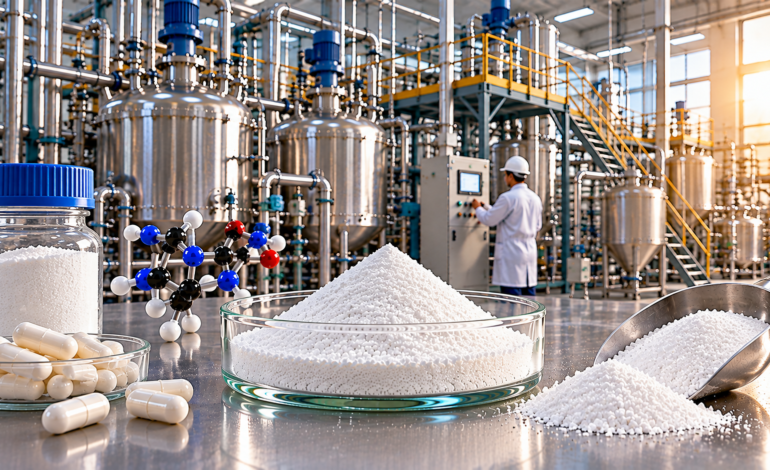
L-ornithine is a non-proteinogenic amino acid that plays a central role in the urea cycle, and that biology explains most of its commercial use. It’s sold as a sports nutrition and recovery supplement, as L-ornithine L-aspartate (LOLA) for liver support and hepatic encephalopathy, and as the hydrochloride salt in nutraceutical and pharma formulations. Demand is small next to bulk amino acids like lysine or glutamate, but it’s steady, and pharma-linked grades pay well.
So what does it cost to make a tonne at commercial scale? Investors, business brokers, corporate advisers and lenders can’t answer that from a supplier quote. They need a structured, sourced breakdown, and an L-Ornithine Production Cost Report is built to provide one. Without it, it’s easy to misjudge fermentation economics and the cost of getting pharma-grade purity.
What an L-Ornithine Production Cost Report Covers
The report begins with the process: the production route, operating conditions, yields at each stage and the full mass and energy balance. Raw material consumption follows, stated per tonne of finished product with price assumptions for each input.
Utilities include steam, cooling water, power, compressed air and process water. Fermentation is energy hungry, mostly through aeration and agitation, and downstream evaporation and drying add heavy steam demand. Infrastructure covers land, buildings, sterile zones, storage and effluent treatment. Machinery includes seed and production fermenters, centrifuges or membrane filters, ion exchange columns, evaporators, crystallizers and dryers.
Manpower is included too, since microbiology and quality work need trained staff. Packaging is usually lined bags or drums with moisture protection, especially for hygroscopic salt forms. Transportation covers inbound sugar and nitrogen sources plus outbound product. Frankly, wastewater from fermentation is one of the lines first-time investors tend to underestimate.
Decisions start with data explore the insight
Raw Materials Required for L-Ornithine
Modern industrial production is mostly fermentative. The producing organism is typically an engineered strain of Corynebacterium glutamicum, and strain quality is a kind of raw material in itself, because titer and yield decide how much broth you process per tonne.
The fermentation medium needs a carbon source such as glucose, sucrose or molasses, and a nitrogen source such as ammonium sulfate or ammonia, plus corn steep liquor or yeast extract, phosphates, magnesium and trace minerals. Biotin and other growth factors may be added depending on the strain.
Downstream, chemicals do a lot of the work. Acids and bases adjust pH, hydrochloric acid is used to form the hydrochloride salt, and ion exchange resins along with their regeneration chemicals handle capture and purification. Activated carbon is used for decolorization. For LOLA, L-aspartic acid becomes an additional input. Sugar prices are the number to watch, since carbon source is usually the biggest single raw material.
Industrial Production Process
The main route is microbial fermentation. A culture is grown through seed stages and transferred to the production fermenter, where temperature, pH, dissolved oxygen and feed rate are tightly controlled over a couple of days. Sugar is converted through the arginine pathway, with the strain engineered so that ornithine accumulates rather than being pushed on to citrulline and arginine.
When fermentation ends, the broth is clarified to remove cells, by centrifugation, microfiltration or ultrafiltration. The clear liquor then goes through cation exchange, where ornithine binds to the resin and is eluted with ammonia or a similar eluent. The eluate is decolorized with activated carbon and concentrated by evaporation.
To make the hydrochloride salt, hydrochloric acid is added, and the product is crystallized, centrifuged, dried and milled. For LOLA, ornithine and aspartic acid are combined in solution and crystallized as the salt. Mother liquor is recycled to raise overall yield. Older enzymatic and chemical routes, such as hydrolysis of arginine with arginase, still exist for small-scale or specialty output, but fermentation is more economical at volume.
Capital Investment and Plant Setup Costs
Land and site development come first. Access to cheap sugar or molasses, reliable utilities and effluent disposal options all shape location, which is why amino acid plants often sit near sugar-producing regions.
Equipment is the largest block. Stainless steel fermenters with sterilization and aeration systems, harvest and filtration units, chromatography or ion exchange trains, evaporators, crystallizers and dryers add up quickly. Engineering, validation, quality lab setup and wastewater treatment are commonly underbudgeted, though pharma-grade plants can’t skip them.
Working capital deserves attention. Sugar must be stocked, fermentation batches take days, and pharma customers often take time to qualify a supplier and to pay. Underfund it, and a technically sound plant can still run short of cash.
Operating Cost Factors
Variable costs are led by the carbon source, then nitrogen, nutrients, acids, resin regeneration chemicals, steam, power, water and packaging. Fermentation yield and recovery efficiency turn directly into cost per tonne.
Fixed costs include salaries, plant overheads, insurance, quality systems, regulatory compliance and maintenance. Fermentation and ion exchange systems need regular servicing, so maintenance allowances should be realistic.
Financing costs depend on funding structure, and depreciation spreads the capital outlay over asset life. Neither changes cash cost per tonne, but both shape investor returns, so a good report presents them separately.
What Pushes L-Ornithine Production Costs Up or Down
Fermentation titer is the biggest lever. A strain that lifts yield cuts the broth volume, steam, resin use and labor needed per tonne, and strain development can be worth more than any equipment upgrade.
Sugar and energy prices come next. Both are tied to agricultural and fuel markets, so margins swing with them. Purification design matters as well, since better resin capacity, eluent recycling and evaporation efficiency lower unit cost. Scale spreads fixed costs, though the market is small compared with bulk amino acids, so oversizing is a real risk.
Region shapes labor, energy, sugar access and regulatory demands. Chinese producers benefit from integrated amino acid supply chains and have set the price benchmark for many grades. So where can a new entrant compete? Usually in pharma-grade or LOLA output where quality and documentation count as much as price.
FAQs
Q1. Is L-ornithine made by fermentation or chemically?
Mostly fermentation today, because it’s cheaper at scale.
Q2. What’s the biggest cost item in production?
The carbon source, usually sugar or molasses, followed by steam, power and purification chemicals. Since the raw material is an agricultural commodity, prices can shift from one season to the next, which is why any model should test several price scenarios instead of relying on one flat number.
Q3. Is the pharma grade much costlier to make than the supplement grade?
Yes, though how much depends on the specs. Tighter purity limits, stricter documentation and heavier testing all add cost.
Q4. How long does it take to set up a plant?
Usually one to two years from approvals to commissioning, depending on equipment lead times and environmental clearances. Strain performance at full scale can take further months to stabilize, so lenders should expect a gradual ramp before full revenue.
Q5. Why not just build my own spreadsheet?
You can start there. But banks and buyers want traceable consumption norms, price assumptions and sensitivities, and a professional report supplies those in a form they’ll accept.
Why a Professional Cost Report Matters
An amino acid plant looks straightforward until you price fermentation yield, wastewater load and pharma-grade purification. Sugar volatility, energy use and quality demands all interact. A professional L-Ornithine Production Cost Report ties process economics, capex, operating costs and sensitivities into one reference, so decisions rest on data rather than instinct. It helps advisers compare routes, helps brokers value an operating asset, and gives finance companies a basis they can underwrite.
Read Also :- Dinitrogen Tetroxide Production Cost Reports