
Personal Loan Lending Software: The Complete Guide for Banks and NBFCs
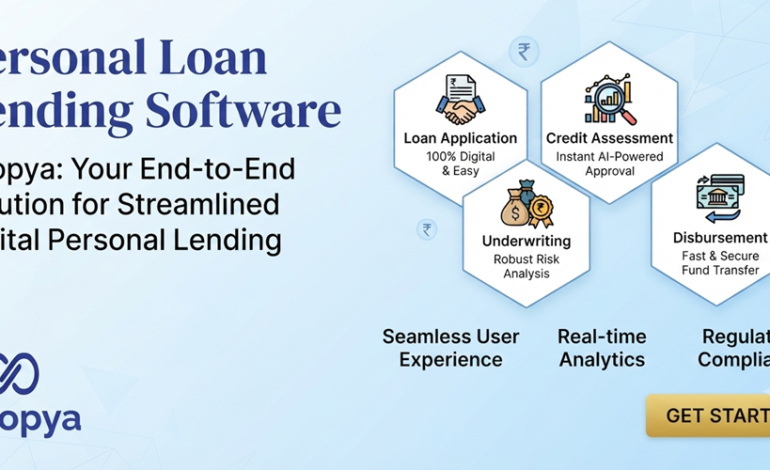
The personal loan market in India has grown at a pace few other retail credit products can match. Digital-first borrowers, instant approval expectations, and a maturing NBFC ecosystem have pushed banks, NBFCs, and fintech lenders to rethink how they originate, underwrite, disburse, and collect personal loans. The spreadsheets, disconnected CRMs, and manual credit checks that once powered lending desks simply cannot keep pace with borrower expectations or regulatory scrutiny anymore.
This is where personal loan lending software comes in. A modern loan management system (LMS) doesn’t just digitize paperwork — it re-engineers the entire lending lifecycle, from the moment a borrower clicks “Apply Now” to the day their final EMI clears. For lenders evaluating a platform, understanding what this software actually does, why it matters, and how to choose the right one is essential before making a technology investment that will shape operations for years.
This guide walks through everything a bank, NBFC, or digital lender needs to know about personal loan lending software — including core features, benefits, compliance considerations, implementation steps, and how a purpose-built platform like Roopya supports lenders at every stage.
What Is Personal Loan Lending Software?
Personal loan lending software is a specialized technology platform that automates and manages the end-to-end lifecycle of unsecured personal loans. It typically covers:
- Loan origination — capturing borrower applications, KYC, and documentation
- Credit underwriting — pulling credit bureau data, applying scorecards, and generating risk-based decisions
- Loan structuring — configuring tenure, interest rate, processing fees, and repayment schedules
- Disbursal management — releasing funds via bank transfer, UPI, or NEFT/RTGS rails
- Servicing and collections — tracking EMIs, sending reminders, managing delinquencies
- Reporting and compliance — generating regulatory reports, audit trails, and MIS dashboards
Unlike generic CRM or accounting software, a personal loan LMS is purpose-built around the credit lifecycle. It understands loan-specific concepts like amortization schedules, days-past-due (DPD) buckets, NPA classification, and bureau reporting formats — things a general-purpose tool simply isn’t designed to handle out of the box.
Why Banks and NBFCs Need Dedicated Lending Software
1. Speed Is Now a Competitive Advantage
Borrowers today compare loan offers the way they compare flight tickets — quickly, across multiple apps, and with an expectation of instant feedback. Lenders relying on manual underwriting or fragmented systems routinely take days to approve a loan that a digitally native competitor can approve in minutes. Personal loan lending software collapses origination-to-disbursal timelines by automating document verification, bureau pulls, and rule-based decisioning.
2. Manual Processes Don’t Scale
A lending desk built on spreadsheets and email might work when a lender is processing a few hundred loans a month. It breaks down entirely at scale. Manual re-keying of data between systems introduces errors, slows down processing, and creates operational risk that grows linearly — or worse, exponentially — with loan volume.
3. Regulatory Expectations Keep Rising
The RBI has steadily tightened expectations around digital lending, fair practices, data handling, and grievance redressal, particularly following the Digital Lending Guidelines. Lenders now need audit trails, standardized Key Fact Statements (KFS), consent logs, and transparent fee disclosures baked into their process — not bolted on afterward. Purpose-built lending software makes compliance a byproduct of normal operations rather than a separate, painful exercise.
4. Borrower Expectations Have Shifted
Today’s borrower expects a mobile-first application journey, real-time status updates, digital signatures, and instant disbursal. Lenders without this capability lose applicants mid-funnel to competitors who offer a smoother experience — regardless of whether their underlying rates are more competitive.
5. Collections Efficiency Directly Impacts Profitability
Personal loans are unsecured, which makes collections discipline critical to portfolio health. Lending software that automates reminders, tracks DPD buckets, and prioritizes collector effort based on risk scoring meaningfully reduces NPAs compared to manual, calendar-based follow-ups.
Core Features of Personal Loan Lending Software
Digital Loan Origination System (LOS)
The origination module is the borrower’s first touchpoint. A strong LOS should support:
- Online application forms with real-time field validation
- Aadhaar-based or Digilocker-based e-KYC
- PAN verification and CIBIL/Experian/CRIF bureau pulls
- Bank statement analysis (often via account aggregator or statement-parsing APIs)
- Document upload with OCR-based data extraction
- Configurable eligibility checks (income, age, employment type, existing obligations)
A good LOS reduces application drop-off by minimizing the number of manual steps a borrower has to complete.
Automated Underwriting and Credit Decisioning
This is the engine room of any lending platform. Underwriting modules typically include:
- Rule-based and score-based decisioning engines
- Configurable credit policies (multiple products, multiple risk appetites)
- Bureau score integration with automatic pass/fail thresholds
- Debt-to-income (DTI) and fixed obligation to income ratio (FOIR) calculations
- Manual override workflows with maker-checker controls for edge cases
- Fraud detection checks (device fingerprinting, address verification, income document forensics)
The best systems let credit teams tune policies without needing a developer to change code every time risk appetite shifts.
Loan Structuring and Pricing Engine
Once approved, the loan needs to be structured — tenure, interest rate (fixed or reducing balance), processing fee, insurance add-ons, and prepayment terms. A flexible pricing engine allows lenders to:
- Offer risk-based pricing tied to credit score bands
- Configure multiple products (salaried personal loans, self-employed personal loans, top-up loans)
- Generate compliant Key Fact Statements automatically
- Model EMI schedules instantly for borrower transparency
Disbursal Management
Disbursal modules integrate with banking rails (NEFT, RTGS, UPI, IMPS) and often connect to escrow or nodal accounts for co-lending or NBFC-partner arrangements. Key capabilities include:
- Multi-mode disbursal (full disbursal, partial/tranche disbursal for larger amounts)
- Automated penny-drop verification of borrower bank accounts
- Disbursal approval workflows with dual authorization
- Real-time disbursal status tracking
Loan Servicing and EMI Management
Post-disbursal, the software manages the full servicing lifecycle:
- Automated EMI schedule generation and amortization tracking
- NACH/e-mandate setup and auto-debit processing
- Payment reconciliation across multiple channels (auto-debit, UPI, cash, cheque)
- Prepayment, foreclosure, and restructuring workflows
- Real-time ledger updates and interest accrual calculations
Collections and Delinquency Management
Since personal loans are unsecured, structured collections functionality is critical:
- DPD-bucket-based segmentation (0-30, 31-60, 61-90, 90+)
- Automated reminders via SMS, WhatsApp, email, and IVR
- Collector allocation and field agent app integration
- Promise-to-pay tracking and settlement workflows
- NPA classification aligned with RBI norms
Compliance, Reporting, and MIS
Lending software should generate the reports lenders, auditors, and regulators actually need:
- CIBIL/CRIF/Experian/Equifax bureau reporting file generation
- RBI regulatory returns and digital lending disclosures
- Portfolio-level MIS dashboards (disbursal trends, NPA ratios, vintage analysis)
- Complete audit trails for every loan decision and status change
- Grievance redressal and complaint tracking modules
Integration Capabilities
Modern lending software rarely operates in isolation. It should integrate cleanly with:
- Credit bureaus (CIBIL, CRIF High Mark, Experian, Equifax)
- KYC and Aadhaar e-verification providers
- Account aggregators for cash-flow-based underwriting
- Payment gateways and NACH/e-mandate providers
- Co-lending and loan-partner (LSP) platforms
- Accounting and core banking systems
APIs matter here — a lender should be able to plug in new data sources or partners without a multi-month development cycle each time.
Benefits of Implementing Personal Loan Lending Software
Faster turnaround times. Automated origination and underwriting can take approval times from days down to minutes for straightforward applications, directly improving conversion rates.
Lower operating costs. Automating manual, repetitive tasks — document verification, EMI calculations, reminder calls — reduces the headcount needed to process the same loan volume.
Better risk management. Consistent, rule-based underwriting reduces the variability and bias that comes with purely manual credit decisions, while giving risk teams the data to continuously refine policy.
Improved compliance posture. Built-in audit trails, standardized disclosures, and automated regulatory reporting reduce the risk of penalties and make audits significantly less painful.
Scalability. A cloud-based lending platform can absorb a 5x or 10x increase in application volume without a proportional increase in operational headcount.
Stronger borrower experience. Real-time status updates, digital documentation, and instant disbursal build trust and improve repeat-borrowing rates.
Data-driven decision making. Centralized data across the loan lifecycle gives management real visibility into portfolio performance, product profitability, and collection efficiency — insights that are nearly impossible to extract reliably from spreadsheets.
Personal Loans vs. Other Loan Types: Why the Software Needs to Be Purpose-Built
Personal loans differ meaningfully from secured products like home loans or loans against property. They are typically unsecured, have shorter tenures, involve higher-frequency disbursal cycles, and carry different risk dynamics. A lending system designed primarily for mortgages or secured lending often has clunky, over-engineered workflows for unsecured products — too many steps, irrelevant collateral modules, and underwriting logic that doesn’t map well to personal loan risk factors like income stability and existing unsecured exposure.
Software purpose-built for personal loans, by contrast, is optimized around speed, bureau-driven decisioning, and high-volume processing — the things that actually matter for this product category.
Cloud-Based vs. On-Premise Lending Software
Most lenders today are moving toward cloud-based LMS platforms, and for good reason:
| Factor | Cloud-Based | On-Premise |
|---|---|---|
| Deployment time | Weeks | Months |
| Upfront cost | Lower (subscription-based) | Higher (infrastructure + licensing) |
| Scalability | Elastic, on-demand | Requires manual capacity planning |
| Maintenance | Handled by vendor | Handled by in-house IT |
| Updates | Continuous, automatic | Manual upgrade cycles |
| Data control | Vendor-managed with SLAs | Fully in-house |
On-premise deployments still make sense for a small number of large banks with strict data residency mandates or legacy core banking dependencies. For most NBFCs and mid-sized banks, cloud-based platforms offer a faster path to production and lower total cost of ownership.
How to Choose the Right Personal Loan Lending Software
When evaluating vendors, lenders should look closely at the following:
- Configurability of credit policy — Can underwriting rules be changed by the credit team without engineering involvement?
- Integration ecosystem — Does the platform have pre-built connectors to major bureaus, KYC providers, and payment rails?
- Compliance readiness — Does it generate RBI-compliant disclosures, KFS documents, and bureau reporting formats out of the box?
- Scalability — Can the platform handle projected volume growth over the next 3-5 years without a re-platforming exercise?
- Multi-product support — Can the same platform support personal loans alongside other products the lender may launch later (business loans, top-up loans, co-lending programs)?
- Implementation timeline — How quickly can the platform go live, and what does the onboarding process look like?
- Vendor track record — Does the vendor have experience specifically with banks and NBFCs, and can they speak to regulatory nuances?
- Total cost of ownership — Beyond licensing fees, what are the costs of integrations, customizations, and ongoing support?
Implementation: What to Expect
Rolling out a new lending platform is a project, not a switch-flip. A typical implementation follows these phases:
Phase 1 — Discovery and configuration. Mapping existing credit policies, products, and workflows into the new system’s configuration layer.
Phase 2 — Integration. Connecting bureau APIs, KYC providers, payment rails, and any core banking or accounting systems.
Phase 3 — Testing and UAT. Running parallel test cycles against real (anonymized) application data to validate underwriting logic and reporting accuracy.
Phase 4 — Staff training. Onboarding credit, operations, and collections teams onto the new workflows.
Phase 5 — Phased go-live. Many lenders start with a single product line or geography before rolling the platform out across the full portfolio.
A well-run implementation for a mid-sized NBFC typically takes 6-12 weeks depending on integration complexity, not the 6-12 months often associated with legacy core banking replacements.
Compliance Considerations Specific to India
Lenders operating in India need software that natively supports:
- RBI Digital Lending Guidelines — direct disbursal into borrower accounts, standardized Key Fact Statements, and a cooling-off period for loan cancellation
- Fair Practices Code — transparent communication of all-in cost of credit, including fees and charges
- Data localization and privacy — borrower data handling aligned with RBI and applicable data protection requirements
- Bureau reporting formats — standardized data submission to CIBIL, CRIF High Mark, Experian, and Equifax
- Grievance redressal mechanisms — a documented complaint-handling workflow, often now expected to include a nodal grievance officer
Lenders should treat compliance capability as a non-negotiable evaluation criterion, not an afterthought bolted on post-implementation.
How Roopya Supports Personal Loan Lenders
Roopya is a loan management system built specifically for the operational and regulatory realities banks and NBFCs face in India. Rather than adapting a generic workflow tool, Roopya’s platform is structured around the actual personal loan lifecycle — application intake, bureau-integrated underwriting, disbursal, EMI servicing, and collections — with configurability that lets credit and operations teams adjust policy without waiting on engineering cycles.
For lenders evaluating a platform, Roopya’s approach centers on:
- Fast, configurable onboarding so new products and credit policies can go live without a lengthy build cycle
- Bureau and KYC integrations that plug into standard Indian data providers
- Compliance-aware workflows designed with RBI’s digital lending expectations in mind
- Scalable architecture that supports growing application volume without re-platforming
- End-to-end visibility across origination, servicing, and collections in a single system
Lenders considering a transition from spreadsheets, legacy systems, or a patchwork of point solutions can reach out through roopya.money to discuss how the platform maps to their specific product and compliance needs.
Common Pitfalls to Avoid When Adopting Lending Software
Underestimating integration complexity. Bureau and payment integrations often take longer than expected if data formats or authentication mechanisms aren’t clarified upfront.
Over-customizing on day one. Lenders sometimes try to replicate every legacy workflow exactly, including inefficient ones, rather than using the new platform as an opportunity to streamline processes.
Ignoring change management. Credit and collections staff need proper training and a transition period — a technically sound platform can still fail if adoption is poor.
Choosing a generic platform. Tools not purpose-built for lending often require expensive customization to handle amortization, DPD tracking, and bureau reporting correctly.
Skipping a phased rollout. Migrating an entire loan book to a new system overnight increases operational risk unnecessarily; a phased approach reduces exposure.
The Future of Personal Loan Lending Software
Several trends are shaping where lending technology is headed:
- Cash-flow-based underwriting using account aggregator data is supplementing traditional bureau scores, particularly for thin-file and new-to-credit borrowers.
- AI-assisted credit decisioning is being used to refine risk scoring beyond static rule-based models, though regulatory scrutiny around explainability is increasing alongside adoption.
- Embedded lending is pushing personal loan origination into non-financial apps (e-commerce, payroll platforms), requiring lending software with strong API-first architecture.
- Co-lending and partnership models between banks and NBFCs are becoming more common, requiring platforms that can handle multi-party disbursal, risk-sharing, and reconciliation natively.
- Real-time fraud detection is becoming standard rather than optional, given the rise in synthetic identity and first-party fraud in digital lending.
Lenders investing in a platform today should evaluate not just current feature fit, but whether the architecture can accommodate these shifts without requiring a full replacement in a few years.
Conclusion
Personal loan lending software has moved from a “nice to have” to a foundational requirement for any bank, NBFC, or digital lender serious about competing on speed, compliance, and borrower experience. The right platform doesn’t just digitize existing paper processes — it fundamentally changes how quickly a lender can originate, underwrite, disburse, and collect on personal loans, while keeping regulatory risk in check.
For lenders exploring their options, the evaluation should go beyond feature checklists to consider configurability, integration depth, compliance readiness, and long-term scalability. Platforms like Roopya are built specifically around these requirements, aiming to give lending teams a system that grows with their portfolio rather than becoming a bottleneck to it.
Frequently Asked Questions (FAQ)
1. What is personal loan lending software? Personal loan lending software is a technology platform that automates the full lifecycle of unsecured personal loans — from application and credit underwriting through disbursal, EMI servicing, and collections.
2. Who uses personal loan lending software? Banks, NBFCs, digital lenders, and fintech lending platforms use this software to manage origination, underwriting, and servicing of personal loan portfolios.
3. How is personal loan lending software different from a core banking system? A core banking system manages a bank’s overall accounts, deposits, and transactions. Personal loan lending software is purpose-built around the credit lifecycle — underwriting rules, amortization schedules, DPD tracking, and bureau reporting — and typically integrates with, rather than replaces, core banking systems.
4. Is cloud-based lending software secure enough for financial data? Reputable cloud-based lending platforms use encryption, role-based access controls, and comply with applicable data protection and RBI guidelines, making them suitable for handling sensitive borrower data when implemented correctly.
5. How long does it take to implement a personal loan LMS? Implementation timelines vary by integration complexity, but a mid-sized NBFC can typically go live within 6-12 weeks for a phased rollout.
6. Does personal loan lending software support RBI compliance requirements? Purpose-built platforms are designed to support RBI’s Digital Lending Guidelines, including Key Fact Statements, standardized disclosures, and audit trails, though lenders should confirm specific compliance coverage with any vendor.
7. Can the same software handle multiple loan products, not just personal loans? Many modern lending platforms are built to be multi-product, supporting personal loans alongside business loans, top-up loans, and co-lending arrangements within the same system.
8. What integrations should I look for in personal loan lending software? Look for pre-built integrations with credit bureaus (CIBIL, CRIF, Experian, Equifax), KYC/Aadhaar verification providers, account aggregators, and payment/NACH rails.
9. How does lending software help reduce NPAs? By automating DPD-based segmentation, prioritizing collector effort using risk data, and sending timely automated reminders, lending software helps lenders intervene earlier in the delinquency cycle.
10. How do I get started with Roopya’s lending platform? Lenders can visit roopya.money to learn more about the platform and discuss how it fits their specific product, volume, and compliance requirements.




1 Comment
[…] Loan Origination System is the software that manages a loan from the moment a borrower applies to the moment funds are […]