
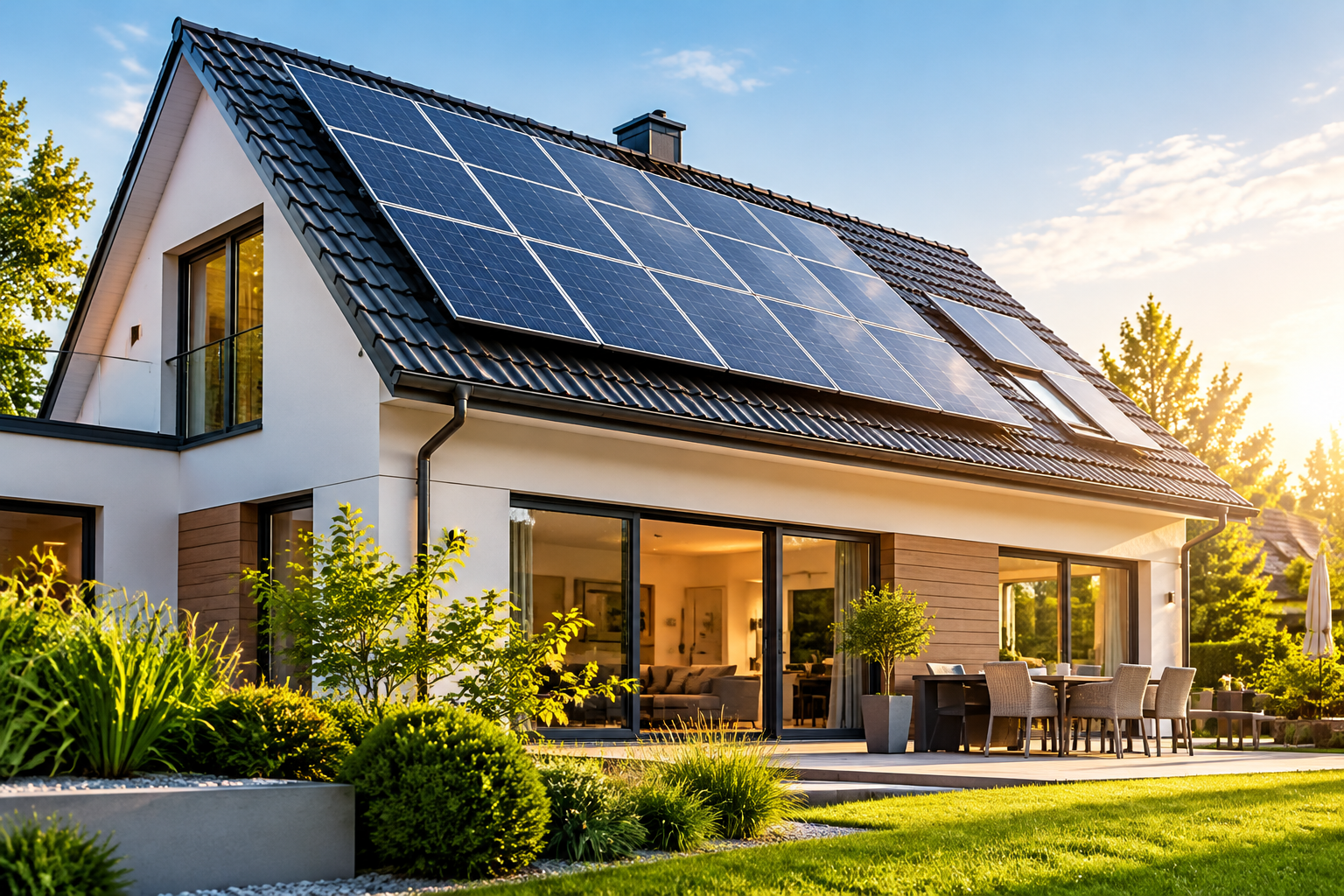
Look at your electricity bill from June. Now look at December. See the gap? That swing is why so many Lahore families are asking about solar. Add long power cuts in summer, and the question gets louder.
Residential solar solutions are the answer for many homes. They cut what you pay. They also keep the lights on when the grid goes down.
CellSol Energy works with homeowners across Lahore. Our engineers, qualified technicians, and solar consultants plan each system for the house in front of them. No copy-paste designs.
What You Actually Get
A home solar system is a few parts working together. Panels on the roof catch sunlight. An inverter turns that power into something your fridge and fans can use. Steel mounts hold it all in place, and good wiring ties it together.
Some homes add batteries. Some don’t. That choice shapes the price and how the system behaves, so it’s worth understanding.
Three Types of Home Solar Systems
On-Grid
This one stay connected to the grid. Your panels run the house by day. If you make extra, net metering may let you send it back. Net metering rules have changed before, so check the current terms.
On-grid costs the least. The catch? It shuts off when the grid does. No battery means no backup.
Off-Grid
Off-grid stands alone. Batteries store the power. The grid plays no part.
It suits places with weak or no supply. It’s also the priciest, since the battery bank is large.
Hybrid
Hybrid systems do both jobs. They connect to the grid and hold power in batteries. When the grid drops, your home keeps going.
For most city houses, hybrid solar systems for homes make the most sense. You get backup and savings together.
Why Families Go Solar
The big reason is the bill. Panels make power in the daytime, so you buy less from the grid.
But bills aren’t the whole story.
- A battery keeps the fan and lights running through a cut.
- Quality panels often come with 25-year performance warranties.
- Sunlight costs nothing once the system is up.
- Many buyers like a house that already has solar on the roof.
What Decides the Home Solar System Price?
People ask this first, and fair enough. But there’s no single number. Prices move with the market, and every house is different. Get a fresh written quote before you decide.
Here’s what pushes the price up or down.
System size. Homes often use 3 kW, 5 kW, or 10 kW systems. Bigger means more cost.
Panel brand. Well-known makers cost more. They usually last longer and carry stronger warranties.
Inverter type. A hybrid inverter costs more than a basic on-grid one.
Batteries. Lithium costs more up front than lead-acid. It lasts longer and needs less care.
Roof and cable runs. A tricky roof or a long wire path adds labor.
One warning. The cheapest quote often hides weak parts. Compare what’s inside each offer, not just the total.
Picking the Right Size
Start with your bills. Pull out a full year. Pay attention to July and August, when the air conditioners work hardest. Then list the big users. ACs, water pumps, fridges, and irons eat the most.
Roof space matters too. As a rough guide, 1 kW of panels needs about 100 square feet. So, a 5 kW system wants around 500 square feet of clear, sunny roof. We run these numbers with you. We won’t sell you a bigger system than your home needs.
How Installation Works
Great panels can still underperform on a sloppy install. So here’s how we do it. First, we visit. We look at your roof, check for shade, and inspect your wiring. Next, our engineers draw the plan. You see every part and every cost. Then the technicians build it. They mount the panels, fit the inverter, and run the cables safely. Last, we test everything. We show you how to read the system, and hand over your warranty papers.
Inverters and Battery Backup
The inverter is the brain of the setup. If it fails, the system stops. Choose a trusted brand and give it a cool, shaded spot. Heat shortens its life.
Batteries come down to taste and budget. Lithium is light, lasts long, and asks for little attention. Lead-acid is cheaper at the start but needs regular checks.
Keeping Your System Healthy
Solar doesn’t ask for much. Still, a few habits pay off.
- Wipe the panels every few weeks. Lahore dust cuts output quickly.
- Watch for new shade from trees or a neighbor’s floor going up.
- Check your app. A sudden dip in output is a warning.
- Book one service visits a year.
- Look over the wiring after a storm.
And please, don’t climb on the roof without safety gear. Call a technician instead.
Why CellSol Energy
We care about how a system performs in year five, not just on day one. Our team brings real field experience to every home. You get clear quotes, careful installation, and someone to call if something goes wrong.
Frequently Asked Questions
How much does a home solar system cost in Pakistan?
It depends on size, brands, and whether you want batteries. A small on-grid setup costs much less than a large hybrid one. Ask CellSol Energy for a current quote.
How long do solar panels for homes last?
Good panels run for 25 years or more. Output slips a little each year. Most makers guarantee a minimum level.
Can solar run my air conditioner?
Yes, if the system is sized for it. ACs use a lot of power, so we plan around them from the start.
Do I need batteries?
Not always. On-grid systems work without them. Add batteries if outages are long or you want power at night.
How often does a solar system need service?
Clean the panels every few weeks. Get a full check once a year.