What Does Digital Transformation Consulting Actually Involve? A Direct Answer
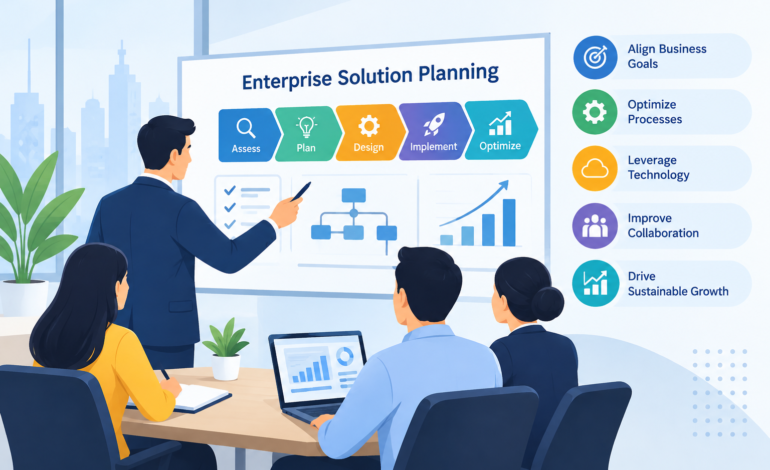
digital transformation consulting means assessing how work currently moves through a business, deciding what should be standardized before anything gets automated, then implementing a system that holds those decisions. Most of the work is process and configuration rather than software development. The deliverable is a functioning operational system plus the documented rules underneath it.
That description is deliberately unglamorous, and the gap between it and how the category usually gets sold explains a lot of failed programs.
Why the Term Covers Two Very Different Purchases
Some engagements are development projects. Custom software, engineering effort, a build timeline measured in quarters.
Others are configuration projects. An existing platform gets shaped around how a specific business operates, with no code written and business users able to maintain it afterward.
Both get called transformation. They have different costs, different timelines, and different failure modes. Notionmind’s positioning on this is specific: most teams they work with have outgrown spreadsheets but do not need a full ERP, which is the situation where configuration usually wins.
Knowing which one you need before the first vendor conversation prevents most of the misalignment that follows.
The Three Symptoms That Usually Trigger It
Notionmind’s published framing names three, and they tend to arrive together rather than separately:
- Approvals lost in email threads, with projects tracked across mismatched spreadsheets
- Leadership deciding on data that is already out of date, while teams spend hours on manual updates
- Processes that exist only in people’s heads, until those people leave
The third one is the underrated risk. The first two are inefficiencies you can quantify. The third is a staffing dependency, and it only becomes visible on the day you cannot ask the person who knows.
If your onboarding for a new hire involves someone sitting beside them for two weeks, the process lives in a person rather than a system.
What the Consulting Portion Actually Produces
The extraction work is harder than the implementation work, and it is where the value concentrates.
Getting real process knowledge out of experienced people requires tracing actual cases rather than asking for descriptions, because people describe the documented path and execute the real one. Exceptions in particular are almost never volunteered. They surface only when a specific case gets walked end to end.
Notionmind’s stated approach is that implementations are configured around a client’s actual workflows rather than generic templates, and that timelines get defined after understanding those workflows rather than quoted in advance. That second point is worth noting during evaluation. A firm quoting a fixed timeline before seeing your process is quoting the average of their previous projects.
The output of good extraction should surprise your own management. If the resulting process map matches what leadership already believed, the interviews were too polite.
Why Documentation Alone Does Not Solve This
The obvious cheaper alternative is to write everything down. It rarely holds, and understanding why saves money.
Documentation sits outside the work. Keeping it current competes with actual delivery, so it degrades from the day it is finished. Within a year people trust it enough to be misled and not enough to rely on.
A configured system encodes the process into the path of the work instead. The approval rule is enforced rather than described. The required field cannot be skipped. The escalation happens whether or not anyone remembers it should.
That is the substantive argument for consolidating operations onto a platform rather than documenting them on top of scattered tools.
A Short Readiness Check
Before engaging anyone, four questions worth answering honestly:
- Could two people run the same case independently and take the same path? If not, the process is not defined yet, whatever any document claims.
- Who owns the system in month twelve? Unowned systems drift back toward spreadsheets within about a year.
- Which existing tools must survive? Some systems cannot be replaced, and that constraint shapes the whole design rather than being handled later.
- What are you willing to change about how people work? Some efficiency requires behavioral change, not software.
The last one is the filter most programs skip. A system introduced without explicitly retiring the manual method ends up running in parallel with it, and parallel processes resolve in favor of the familiar one.
Where This Sits Against Larger Platform Decisions
Once operations are consolidated, a boundary question arrives that is worth anticipating.
A structured operational system handles the process. It does not resolve how that system relates to everything else the organization runs, particularly where legacy platforms hold data that cannot move. Teams working through enterprise software consulting usually reach this point from the operational side rather than the technical side, and the correct sequence is to get operations producing consistent structured records first.
Notionmind’s reported figures on the configuration side include around 92 percent of projects moving to production and most clients seeing measurable return within three to six months. Both are self reported rather than independently audited. Their published industry coverage spans construction and property, solar and renewables, government, manufacturing, property management, and education, with outcome descriptions given directionally rather than numerically.
What to Do First
Pick your most critical workflow. Have someone who does not normally run it attempt a real case using only what is currently written down, and record every point where they had to ask a person.
That list is your specification. It costs an afternoon, requires no vendor, and it will tell you more about what you actually need than any discovery call.
Then take it to two firms and ask what they would configure rather than build. The answers will differ more than you expect, and the difference is the decision.