
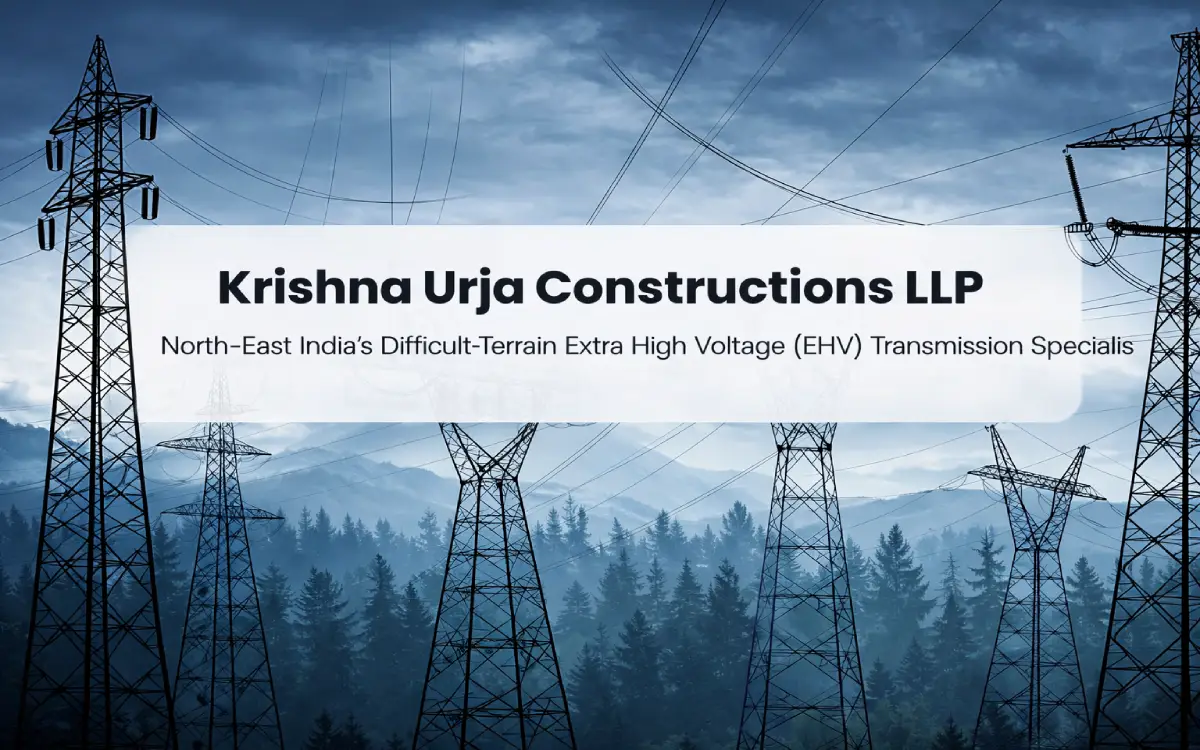
Electric power transmission plays a very important role in modern infrastructure. Industries, commercial buildings, cities, villages, and public utilities all depend on reliable electricity supply every day. High-voltage transmission systems help move electricity from generating stations to substations over long distances with minimum power loss.
Among the most commonly used transmission systems in India are 132 kV and 220 kV Overhead Lines. These lines are widely used for transmitting electricity safely and efficiently across different regions. They are designed to handle high electrical loads while maintaining system stability and operational safety.
Understanding the design, components, installation process, and safety requirements of these transmission lines is important for engineers, contractors, industries, and even landowners near transmission corridors. This guide explains the key aspects of overhead transmission lines in simple and easy language.
What Are 132 kV and 220 kV Overhead Lines?
Overhead transmission lines are electrical lines installed above the ground using towers or poles. These lines carry high-voltage electricity from power plants to substations and distribution networks.
The voltage level indicates the amount of electrical pressure carried through the transmission line:
- 132 kV lines are generally used for medium-to-long-distance transmission.
- 220 kV lines are used for higher-capacity transmission over larger distances.
These systems are essential for maintaining uninterrupted power supply in urban and rural areas.
Importance of High-Voltage Transmission Lines
High-voltage transmission systems offer several benefits in power distribution networks. Their importance includes:
Efficient Power Transfer
Electricity can travel long distances with lower energy loss when transmitted at higher voltage levels.
Support for Industrial Growth
Large industries require continuous and stable power supply. High-voltage overhead lines help meet these energy demands efficiently.
Reliable Grid Connectivity
Transmission lines connect generating stations, substations, and distribution systems to maintain grid stability.
Cost-Effective Infrastructure
Compared to underground cable systems, overhead lines are generally more economical for long-distance power transmission.
Easy Maintenance Access
Since the conductors and towers are visible above ground, inspection and repair activities become easier.
Main Components of Overhead Transmission Lines
A transmission line system consists of several important components. Each component has a specific function in maintaining performance and safety.
1. Transmission Towers
Transmission towers support conductors and maintain required ground clearance. Towers are usually made from galvanized steel for durability and corrosion resistance.
Different types of towers include:
- Suspension towers
- Tension towers
- Angle towers
- Terminal towers
The tower type depends on terrain conditions and route alignment.
2. Conductors
Conductors carry electrical current from one location to another. Aluminum conductor steel reinforced (ACSR) conductors are commonly used because they offer high strength and conductivity.
3. Insulators
Insulators prevent electricity from flowing into the tower structure. They are generally made from:
- Porcelain
- Glass
- Polymer materials
4. Earth Wire or Shield Wire
Earth wires are installed at the top of towers to protect transmission lines from lightning strikes.
5. Foundations
Tower foundations support the complete structure and ensure stability under different weather conditions.
6. Hardware and Fittings
Clamps, connectors, spacers, vibration dampers, and bolts are used for secure installation and operation.
Design Considerations for 132 kV and 220 kV Overhead Lines
Designing transmission lines requires proper technical planning. Engineers must consider several factors before installation.
Route Selection
The transmission route should avoid:
- Dense residential areas
- Forest regions
- Airports
- Sensitive environmental zones
Proper route planning reduces construction challenges and improves safety.
Electrical Load Capacity
The line must handle expected electrical demand without overheating or excessive voltage drop.
Ground Clearance
Adequate clearance between conductors and the ground is necessary for public safety.
Weather Conditions
Transmission lines must withstand:
- High wind speed
- Heavy rain
- Lightning
- Temperature variations
Tower Strength
Tower structures should tolerate conductor tension and environmental loads.
Sag and Tension Calculations
Conductors naturally sag between towers. Engineers calculate proper sag and tension to maintain safe clearances.
Insulation Coordination
Proper insulation design protects the system against voltage surges and faults.
Types of Conductors Used in High-Voltage Lines
Different conductor types are used based on transmission requirements.
ACSR Conductors
These conductors combine aluminum and steel for high strength and conductivity.
Benefits include:
- Lightweight design
- Good mechanical strength
- Cost efficiency
AAAC Conductors
All Aluminum Alloy Conductors provide improved corrosion resistance.
HTLS Conductors
High Temperature Low Sag conductors are used for higher power transmission capacity.
Tower Design and Structure
Tower design is one of the most critical parts of transmission line engineering.
Self-Supporting Towers
These towers stand independently and are widely used in transmission projects.
Guyed Towers
Guy wires support these towers for additional stability.
Narrow Base Towers
Used where space availability is limited.
River Crossing Towers
Specially designed tall towers help transmission lines cross rivers and valleys safely.
Safety Standards in Overhead Transmission Lines
Safety is extremely important in high-voltage systems. Proper standards reduce risks to workers and the public.
Electrical Safety Clearance
Minimum clearance must be maintained from:
- Buildings
- Roads
- Railways
- Trees
Earthing System
Proper grounding protects equipment and workers during faults.
Lightning Protection
Shield wires and surge arresters reduce lightning-related damage.
Warning Signage
Danger signs and identification plates are installed near transmission towers.
Regular Inspection
Routine inspections help identify:
- Corrosion
- Loose fittings
- Conductor damage
- Insulator cracks
Personal Protective Equipment
Workers use safety equipment such as:
- Helmets
- Safety harnesses
- Insulated gloves
- Safety shoes
Construction Process of Overhead Transmission Lines
The installation process follows several important stages.
Survey and Route Mapping
Engineers conduct detailed surveys to finalize tower locations and route alignment.
Foundation Work
Excavation and concrete work are completed for tower foundations.
Tower Erection
Steel members are assembled and erected using cranes or manual methods.
Stringing of Conductors
Conductors are pulled and installed carefully to avoid damage.
Insulator Installation
Insulators and fittings are fixed before conductor stringing.
Testing and Commissioning
The line undergoes electrical and mechanical testing before operation.
Common Challenges in Transmission Line Projects
Transmission line construction often faces several challenges.
Land Acquisition Issues
Obtaining land permissions can delay project timelines.
Difficult Terrain
Hilly areas, forests, and river crossings increase construction complexity.
Weather Interruptions
Heavy rain and storms may affect project schedules.
Material Transportation
Transporting large tower components to remote locations can be difficult.
Safety Risks
Working at height and near electrical systems requires strict safety control.
Maintenance of 132 kV and 220 kV Overhead Lines
Regular maintenance improves system reliability and reduces unexpected outages.
Visual Inspection
Teams inspect towers, insulators, and conductors for damage.
Thermographic Inspection
Thermal imaging helps detect overheating components.
Vegetation Control
Trees near transmission corridors are trimmed to maintain clearance.
Corrosion Protection
Protective coatings help extend tower life.
Replacement of Damaged Components
Worn-out hardware and insulators are replaced during maintenance activities.
Advantages of Overhead Transmission Lines
Lower Installation Cost
Overhead systems are more affordable than underground cables for long distances.
Faster Fault Detection
Visible infrastructure makes fault identification easier.
Easier Expansion
Additional lines can be added when power demand increases.
Long Service Life
Properly maintained transmission lines can operate efficiently for many years.
Environmental and Social Considerations
Transmission projects should balance infrastructure development with environmental protection.
Forest Clearance Management
Project developers must follow environmental regulations during route planning.
Noise Reduction
Proper conductor selection helps reduce corona noise.
Community Awareness
Local communities should understand safety precautions around transmission lines.
Bird Protection Measures
Bird diverters and markers reduce risks to flying birds.
Technological Advancements in Transmission Lines
Modern technology is improving transmission efficiency and monitoring capabilities.
Smart Monitoring Systems
Sensors help monitor conductor temperature and line performance in real time.
Drone Inspection
Drones make tower inspection faster and safer.
GIS Mapping
Geographic Information Systems improve route planning accuracy.
Advanced Conductors
Modern conductors increase transmission capacity with lower sag.
Government Regulations and Compliance
Transmission projects must comply with electrical and environmental regulations.
Important areas include:
- Electrical safety standards
- Environmental approvals
- Grid connectivity regulations
- Right-of-way requirements
Compliance ensures safe and legal project operation.
Role of Skilled Engineering and Construction Teams
Experienced engineering teams are essential for successful transmission projects. Their responsibilities include:
- Design planning
- Structural analysis
- Safety management
- Quality control
- Project execution
Professional project management helps ensure timely completion and reliable system performance.
Future of High-Voltage Transmission Infrastructure
The demand for electricity is continuously increasing because of:
- Urban development
- Industrial expansion
- Renewable energy integration
- Infrastructure growth
As energy demand rises, transmission networks will require more efficient and stronger infrastructure systems. Modern 132 kV and 220 kV overhead lines will continue to play a major role in strengthening power distribution networks.
Renewable energy projects such as solar and wind farms also depend heavily on high-voltage transmission systems for grid connectivity.
Best Practices for Safe Operation
To ensure long-term reliability and safety, transmission line operators should follow these practices:
- Conduct regular inspections
- Maintain vegetation clearance
- Use quality materials
- Follow approved engineering standards
- Train workers properly
- Monitor weather-related risks
- Replace damaged components quickly
These steps help improve operational efficiency and reduce outage risks.
Conclusion
Reliable transmission infrastructure is essential for stable electricity supply across industries, cities, and rural regions. Proper planning, engineering design, quality construction, and regular maintenance all contribute to the successful operation of 132 kV and 220 kV Overhead Lines.
From tower structures and conductors to safety systems and inspection methods, every part of the transmission network plays an important role in ensuring efficient power transfer. As power demand continues to grow, advanced transmission technologies and professional project execution will become even more important.
Companies such as Krishna Urja Constructions LLP contribute to the development of dependable transmission infrastructure through engineering expertise, construction quality, and commitment to safety standards in high-voltage power projects.