3PL Logistics: Benefits, Costs and Key Services
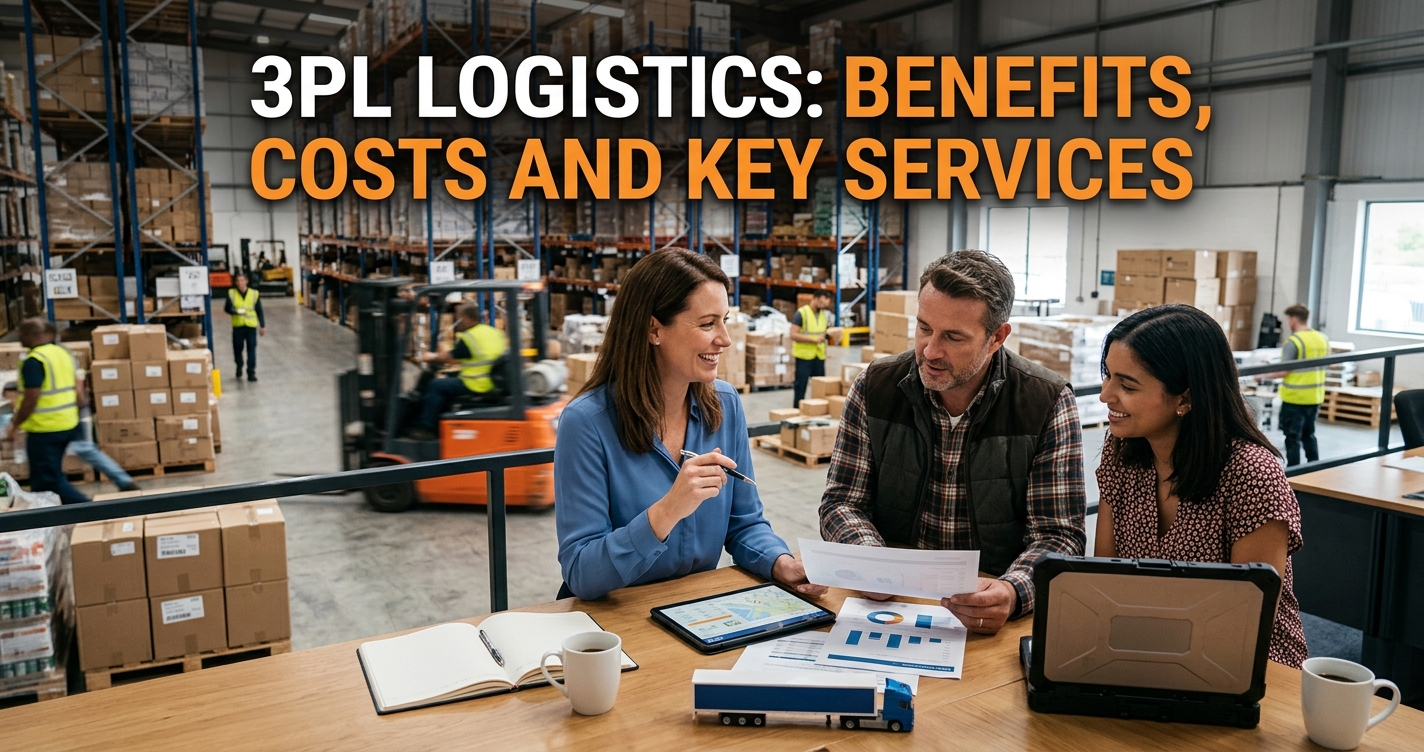
Keeping up with product distribution can quickly become overwhelming for growing brands. Between stocking inventory, scheduling freight, and making sure orders reach doorsteps on time, physical operations consume massive amounts of energy. Rather than buying fleets, renting warehouse spaces, and hiring dedicated logistics crews, many brands outsource these tasks to third-party logistics (3PL) partners.
Outsourcing supply chain responsibilities lets companies hand off everyday fulfillment and shipping challenges to industry experts, freeing up internal teams to focus on design, sales, and customer connection.
What Exactly Is 3PL Logistics?
A 3rd party logistics services operates as an external partner handling specific stages—or the entirety—of your physical operations.
Instead of building your own distribution system from scratch, you tap into an established network equipped with real estate, software, transport vehicles, and trained warehouse personnel.
Depending on your business structure, a 3PL contract can cover:
-
Long-haul freight and local transport
-
Pallet and unit storage
-
Real-time stock tracking
-
Pick, pack, and order fulfillment
-
Regional and national distribution
-
Returns processing (reverse logistics)
-
Delivery tracking and status updates
Step-by-Step: How a 3PL Operational Flow Works
While every vendor-client relationship differs slightly, a typical 3PL integration follows five core phases:
-
Mapping operational gaps: The brand reviews current fulfillment bottlenecks to decide which tasks to delegate (e.g., overflow storage, last-mile shipping, or nationwide fulfillment).
-
Designing the workflow: The 3PL analyzes product dimensions, sales volumes, delivery destinations, and turnaround times to design a tailored fulfillment path.
-
Receiving stock: Products travel directly from manufacturers to the 3PL’s facilities, where staff inspect, log, and shelf the inventory.
-
Processing and dispatching orders: As sales come in through ecommerce stores or wholesale channels, warehouse crews pick items, package them, and stage them for pickup.
-
Transit and live tracking: The provider assigns carriers, coordinates routes, and shares tracking data with both the business and end customers.
Core Capabilities of Modern 3PL Partners
Businesses can pick and choose from several core operational services based on immediate needs:
1. Freight & Fleet Management
Logistics partners coordinate carrier networks, plan fuel-efficient delivery routes, and schedule transport. This service keeps cargo moving reliably across single-destination bulk runs or complex multi-stop drops.
2. Commercial Warehousing
Maintaining dedicated real estate is expensive. Using shared or dedicated third-party storage gives companies access to industrial facilities without long-term property leases. Operations cover inbound receiving, pallet organization, environmental monitoring, and inventory auditing.
3. Order Processing & Packing
Fulfillment teams receive digital orders, pull products from warehouse aisles, pack them safely using branded or standard packaging, and clear them for carrier dispatch.
4. Digital Stock Control
Modern providers rely on advanced Warehouse Management Systems (WMS) to monitor stock levels across centers. This prevents stockouts, flags slow-moving goods, and gives brands live visibility into total available units.
5. Final-Mile Distribution
3PLs leverage established regional transport grids to move inventory smoothly from regional hubs straight to retail stores or consumer doorsteps.
Key Strategic Advantages of Outsourcing Logistics
Setting up an in-house distribution system takes time, heavy upfront capital, and ongoing administrative oversight. Shifting to an external logistics network offers several distinct operational advantages:
| Advantage | Practical Business Impact |
| Capital Savings | Eliminates large upfront investments in warehouses, forklifts, delivery fleets, and specialized WMS software. |
| Hands-Off Scalability | Warehouse space and labor scale up during peak seasonal rushes and scale back naturally during quieter months. |
| Specialized Expertise | Gives your business instant access to supply chain pros experienced in route optimization, regulatory compliance, and warehouse layout design. |
| Sharper Focus | Frees leadership and internal teams from operational headaches so they can dedicate energy to product innovation, marketing, and brand growth. |
Breaking Down 3PL Pricing Structures
Because every company brings different product shapes, weights, and order volumes, 3PL pricing isn’t one-size-fits-all. Invoices are generally built around several distinct fee components:
-
Storage fees: Charged per pallet, shelf, bin, or square foot occupied per month.
-
Inbound receiving charges: Fees covering the labor required to offload containers, verify packing slips, and log incoming stock.
-
Fulfillment labor (Pick & Pack): Typically calculated as a base fee per order, plus small add-on charges per individual item pulled.
-
Transit costs: Determined by shipment size, dead weight, dimensional weight, destination zones, and delivery speed guarantees.
-
Platform & tech integrations: Periodic charges for platform access, API connections to ecommerce channels, and reporting dashboards.
-
Specialized service add-ons: Custom packaging inserts, temperature-controlled storage, fragile item handling, and customer return processing.
Combining Regional Courier Services with Broader 3PL Networks
Not every delivery requires a 53-foot trailer or a national freight network. High-priority local deliveries, smaller parcel lots, and urgent same-day requests often call for nimble, vehicle-specific transport.
Dedicated van delivery services mesh cleanly into broader 3PL frameworks. While a national 3PL manages high-density storage and interstate freight, dedicated local van services can jump in to cover:
-
Same-day point-to-point store transfers
-
Rapid local customer order drops
-
Small-batch cargo runs that don’t justify larger trucks
-
High-touch, direct-entry commercial deliveries
Blending a broad 3PL system with specialized local transport gives businesses maximum flexibility across every tier of their supply chain.
Criteria for Selecting the Right Logistics Partner
Partnering with a 3PL gives an outside team control over customer experience. When comparing potential partners, evaluate these core operational traits:
-
Niche experience: Verify that the provider regularly handles your specific product type—whether that means fragile goods, perishable food, apparel, or bulk electronics.
-
Geographic reach: Ensure their facility footprint matches where your primary customer base actually lives to keep shipping zones short and transit costs down.
-
Software compatibility: Check if their WMS connects directly into your existing storefronts (e.g., Shopify, WooCommerce, ERP systems) for automated order syncing.
-
Agility and adaptability: Choose a partner capable of absorbing unexpected demand surges without crashing turnaround times or accuracy rates.
-
Clear contract terms: Look for transparent fee structures that explicitly list storage rates, handling costs, platform fees, and potential hidden surcharges.
Can Small and Growing Brands Benefit from 3PLs?
Outsourcing physical operations isn’t reserved for massive corporations. Small ecommerce businesses and mid-sized regional brands often turn to 3PLs early in their growth cycles.
By handing over storage, picking, and packing to a third party, small businesses can match the delivery speeds and reliability of industry giants without taking on heavy debt or binding facility leases. As order volumes grow, the service scales naturally to support that growth.
In-House Logistics vs. 3PL: Quick Comparison
+------------------------+------------------------------------+-------------------------------------+
| Feature                | In-House Operations                | 3PL Outsourcing                     |
+------------------------+------------------------------------+-------------------------------------+
| Upfront Investment     | High (Facilities, fleets, tech)    | Low (Pay-for-use framework)         |
| Operational Control    | Direct, total oversight            | Managed via SLAs & KPIs             |
| Scaling Overhead       | Slow, expensive, long-term leases  | Instant, dynamic adjustments        |
| Management Effort      | High internal staff load           | Handled by vendor team              |
+------------------------+------------------------------------+-------------------------------------+
Frequently Asked Questions
What does “3PL” stand for?
3PL stands for third-party logistics. It refers to outsourcing supply chain operations—such as warehousing, inventory tracking, fulfillment, and transportation—to an external vendor.
How do 3PL providers calculate their fees?
Costs are broken down into individual operational services, including inventory intake, monthly storage space usage, order pick-and-pack labor, transport carrier rates, and technology interface fees.
What are the main services included in a 3PL contract?
Standard offerings cover freight transport, warehouse storage, order picking and packing, stock management, regional distribution, tracking services, and returns processing.
Is 3PL viable for early-stage or small businesses?
Yes. Outsourcing logistics allows early-stage companies to leverage professional warehouse infrastructure and discounted shipping rates without spending capital on leased space or dedicated staff.
Can local courier services operate alongside a 3PL setup?
Local van services complement 3PL operations by taking on tight-turnaround, local dir