7 Mistakes That Damage Shear Blades and Reduce Their Lifespan
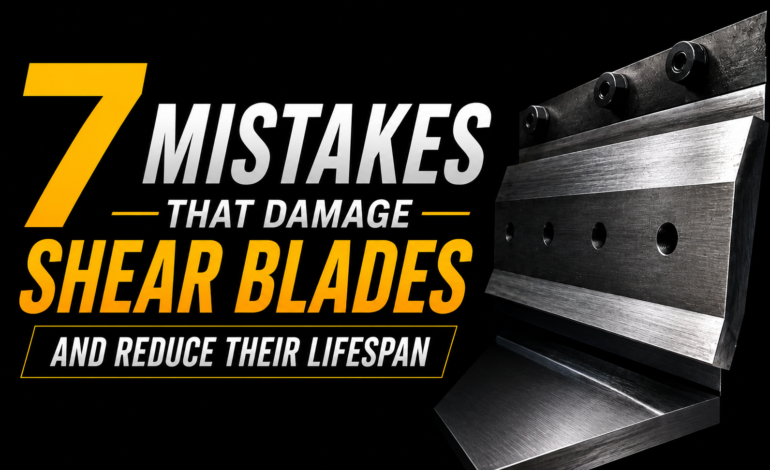
Shear Blades are the backbone of any cutting or slitting operation. Whether you’re processing steel Shear blades are among the most important cutting tools used in metal fabrication, recycling, paper processing, plastics, and many other industrial applications. Their performance directly affects cut quality, production speed, operating costs, and machine efficiency. Even the highest-quality shear blades can wear out prematurely if they are installed incorrectly, maintained poorly, or used outside their intended operating conditions.
Premature blade failure not only increases replacement costs but also leads to unplanned downtime, poor-quality cuts, and reduced productivity. Understanding the common mistakes that shorten blade life can help manufacturers maximize performance while lowering overall operating expenses.
1. Incorrect Blade Clearance and Overlap Settings
One of the most frequent causes of premature wear is improper clearance between the top and bottom blades. Too much clearance causes the material to bend and drag rather than shear cleanly, putting excess stress on the cutting edge. Too little clearance forces the blades to grind against each other, chipping edges and generating heat that softens the steel.
Every material thickness and type has a recommended clearance and overlap setting. Skipping this calibration step – especially after a material changeover – is one of the fastest ways to dull an edge before its time.
2. Using the Wrong Blade Material for the Application
Not all cutting edges are built the same. Blade steel is selected based on the hardness, thickness, and abrasiveness of the material being processed. Using a blade designed for mild steel on a high-carbon or stainless application (or vice versa) accelerates wear dramatically.
Choosing the correct grade and heat treatment for Shear Blades matched to your specific application is essential. A mismatch may still cut initially, but the edge will degrade far faster than expected, leading to more frequent – and costly – replacements.
3. Skipping Routine Lubrication
Friction and heat are two of the biggest enemies of a sharp cutting edge. Without proper lubrication, blades run hotter, wear faster, and are more prone to galling and micro-chipping. Some operators only lubricate when a problem is already visible, but by then, damage has typically already begun.
A consistent lubrication schedule – following the equipment manufacturer’s recommendations — keeps temperatures in check and extends the interval between sharpenings.
4. Ignoring Early Signs of Wear
Small nicks, slight dullness, or minor edge rounding are often dismissed as “not bad enough yet” to warrant attention. Continuing to run Shear Blades past this point is a mistake, because a dull or damaged edge doesn’t just cut poorly – it also transfers additional stress to the rest of the machine, including the drive system and bearings.
Regular visual inspection and edge testing should be part of a standard maintenance routine, not an afterthought triggered by visibly poor cut quality.
5. Overloading Beyond Rated Capacity
Pushing material thickness or hardness beyond what the blade and machine were rated for is a common shortcut that damages equipment quickly. Even a single pass beyond rated capacity can chip an edge or throw off alignment, and repeated overloading compounds the damage over time.
Operators under production pressure sometimes stretch the limits “just this once” — but this is one of the surest ways to turn a long-lasting blade into a short-lived one.
6. Poor Storage and Handling Practices
Blades that aren’t in use still need care. Stacking them without protective spacers, exposing them to moisture, or storing them in areas with temperature swings can lead to corrosion and warping — even before the blade sees its first cut.
Proper storage for Shear Blades includes clean, dry conditions, individual protection between edges, and careful handling during transport to avoid nicks or impact damage.
7. Inconsistent or Delayed Maintenance Scheduling
Reactive maintenance – waiting until something breaks or performance drops noticeably — is far more damaging than a proactive schedule. Skipping routine inspections, alignment checks, and sharpening intervals allows small issues to compound into major ones.
A documented maintenance calendar, tied to production hours or material volume rather than guesswork, helps catch problems while they’re still minor and inexpensive to fix.
Final Thoughts
Extending the working life of your cutting equipment doesn’t require expensive upgrades – it requires consistency. Correct clearance settings, the right blade material, routine lubrication, careful handling, and a proactive maintenance schedule all play a role in keeping Shear Blades performing at their best for longer. Avoiding these seven mistakes will save on replacement costs, reduce downtime, and keep your production quality consistent.
If you’re looking for high-quality, precision-engineered Shear Blades, Maxwell Slitters delivers reliable cutting solutions designed for exceptional durability, accuracy, and long-lasting performance. Manufactured using premium materials and advanced production techniques, our shear blades help manufacturers improve productivity, minimize maintenance, and achieve consistent cutting results across demanding industrial applications.
Frequently Asked Questions
1. How often should shear blades be sharpened?
This depends on material type, thickness, and production volume, but most operations sharpen every few weeks to a couple of months. Tracking cut quality and edge condition over time is more reliable than following a fixed calendar alone.
2. What are the signs that a blade needs replacing rather than sharpening?
If a blade has been reground multiple times and is approaching its minimum thickness specification, or if it shows cracks, warping, or chipping beyond the edge, replacement is usually more cost-effective and safer than further sharpening.
3. Can improper clearance really damage a blade that quickly?
Yes. Incorrect clearance is one of the fastest ways to cause chipping, edge rounding, and excessive heat buildup, sometimes causing visible damage within a single production run.
4. Does the type of lubricant matter, or is any oil sufficient?
Lubricant type matters. Manufacturers typically specify a lubricant suited to the operating speed, material, and temperature range of the application. Using the wrong type can reduce its effectiveness or even accelerate wear.
5. Is it worth investing in higher-grade blade steel for tougher materials?
Generally, yes. While higher-grade steel may cost more upfront, it typically lasts significantly longer under demanding conditions, reducing the frequency of sharpening and replacement – which often makes it more economical over time.