The Anatomy of a Master Woodshop: Designing the Ultimate Professional Workspace for Efficiency and Precision
When an aspiring carpenter transitions into a full-fledged professional woodworker, the nature of their challenges changes dramatically. Early projects are often defined by patience, resourcefulness, and working around the limitations of a cramped garage or a makeshift workbench. However, running a commercial custom cabinetry business, a high-end architectural millwork shop, or an elite furniture-making studio requires a completely different operational philosophy.
In a professional environment, time is literally capital. Every minute spent walking back and forth across a poorly laid-out room, searching for misplaced hand tools, clearing away choking clouds of fine dust, or fixing inaccuracies caused by unstable machinery directly eats into your profit margins. Designing and maintaining a master-grade woodshop is an exercise in applied ergonomics, workflow optimization, and uncompromising machinery selection.
Let us explore the core architectural and operational pillars required to build, organize, and maintain the ultimate professional woodshop capable of supporting master-level craftsmanship.
1. The Science of Woodshop Layout: Optimizing Workflow Zones
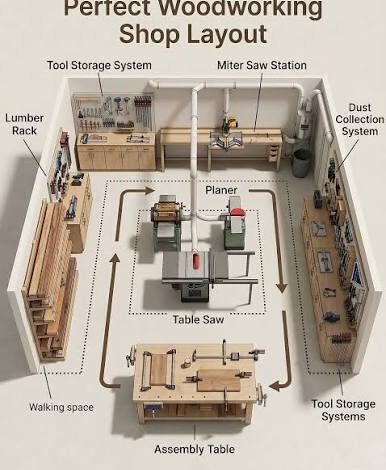
The single most common mistake woodworkers make when setting up a new shop is organizing their machinery based purely on aesthetic symmetry or random floor space availability. A truly efficient professional shop operates on a logical, sequential workflow pipeline. Materials must move through distinct developmental stages without backtracking or creating bottlenecks.
The Five Core Zones of a Professional Woodshop
To maximize productivity and minimize physical exhaustion, your physical floor plan should be divided into five distinct, sequential zones:
- The Rough Lumber and Storage Zone: Positioned immediately adjacent to the primary entrance or loading door. This zone houses sheet goods racks, vertical hardwood storage bins, and material handling carts. It allows you to bring full sheets of MDF, plywood, or heavy rough-sawn slabs into the shop and break them down immediately without dragging them past finished furniture pieces.
- The Stock Preparation and Milling Zone: This is where raw timber is squared, flattened, and brought to final dimensions. It anchors heavy-duty stationary machinery, including your industrial jointer, thickness planer, and sliding table saw or track saw breakdown station. Because this zone generates the highest volume of heavy wood chips and debris, it should be positioned close to your primary dust collection drop.
- The Precision Machining and Joinery Zone: Once stock is milled flat and square, it moves to the joinery and shaping stations. This area houses your drill presses, router tables, mortisers, and specialized joinery systems (such as the Festool Domino or doweling jigs). It requires immaculate lighting, dedicated precision layout benches, and quick access to hand-tool storage racks.
- The Assembly and Clamping Zone: The heart of the shop. This requires a massive, perfectly flat, heavy-duty workbench equipped with integrated clamping tracks, vise hardware, and dog holes. Surrounding this bench should be vertical storage racks holding your parallel body clamps, pipe clamps, cauls, and specialized gluing accessories.
- The Finishing and Sanding Clean Room: Dust is the absolute enemy of a flawless wood finish. Whenever possible, fine sanding and finishing operations should be isolated in a separate, positive-pressure clean room or sealed booth equipped with dedicated ventilation and heavy-duty HEPA air scrubbers. This prevents microscopic airborne dust particles from settling onto wet oil, lacquer, or polyurethane coats.
2. Power and Ergonomics: Protecting the Craftsman’s Greatest Assets
A professional woodworker’s body is their most valuable and irreplaceable tool. Years of working in awkward postures, breathing toxic wood dust, and enduring high-frequency tool vibration can lead to chronic physical injuries that cut a promising career tragically short. Building a professional shop means prioritizing operator health and electrical reliability.
Electrical Infrastructure and High-Demand Circuits
Running heavy commercial machinery—such as 3-phase planers, multi-stage dust collectors, and heavy industrial table saws—requires a robust electrical grid.
- Dedicated Breaker Zones: Never rely on daisy-chained extension cords or overloaded residential circuits. A professional shop needs dedicated 230V lines run in metal conduit along walls, with heavy-duty twist-lock receptacles strategically positioned near stationary machine locations.
- Smart Power Distribution: Implementing remote-controlled magnetic switches and automated current-sensing relays ensures that plugging in a handheld router or sander instantly triggers your mobile dust extractor without requiring you to walk across the room.
Ergonomic Tool Design and Vibration Control
When spending eight to ten hours a day sanding custom cabinet doors or routing edge profiles, tool weight balance and vibration dampening become paramount.
- Brushless Motor Efficiency: Modern professional power tools utilize brushless electronic motors that run cooler, deliver higher torque under load, and eliminate brush wear during continuous commercial production runs.
- Anti-Vibration Engineering: Tools engineered with internal balancing systems significantly reduce hand-arm vibration syndrome (HAVS), allowing craftsmen to work longer with zero numbness, fatigue, or loss of control.
3. The Digital and Mechanical Integration of Modern Trade Work
While traditional hand skills remain the soul of fine woodworking, modern commercial competitiveness requires embracing high-tech efficiency. The most successful contemporary woodshops seamlessly blend centuries-old joinery traditions with advanced digital tools.
CAD Modeling and Automated Material Optimization
Before a single dollar is spent on expensive exotic hardwoods or specialized hardware, digital design software transforms conceptual sketches into precision blueprints.
- Parametric 3D Modeling: Utilizing advanced computer-aided design programs allows woodbuilders to generate fully rendered visualizations of custom kitchens and architectural built-ins for client approval before cutting material.
- Cut-List Automation: Modern software calculates optimal panel nesting layouts, minimizing expensive sheet goods waste by up to 15% and generating exact cutting lists for track saws or CNC routers.
The Role of Specialized European Distribution Networks
Equipping a shop to this elite standard requires reliable access to professional-grade hardware, specialized machinery, and certified replacement parts. This is where legendary trade supply institutions—such as historical European distributors like Comercial Pazos—play an irreplaceable role in the professional ecosystem. By bridging the gap between world-class German engineering (such as Festool systems), traditional English hand tools, and specialized natural finishing products, a trusted trade partner ensures that professional woodshops never face project-halting supply shortages.
Conclusion
Building and running a master-grade professional woodshop is a continuous journey of refinement, strategic investment, and disciplined organization. By meticulously planning your workflow zones around a logical production pipeline, safeguarding your health through rigorous dust extraction and ergonomic tool selection, and integrating modern digital efficiencies with trusted professional hardware, you lay the indestructible foundation for a successful, profitable, and creatively fulfilling career in woodworking.