Best LOS Software in India (2026): A Complete Buyer’s Guide for Banks & NBFCs
Choosing a Loan Origination System (LOS) is one of the most consequential technology decisions a bank, NBFC, or fintech lender will make. It shapes how fast you can approve a loan, how many applicants drop off midway, how safely you can scale into new products, and how easily you stay compliant as RBI regulations evolve. Yet most lenders in India are still evaluating LOS platforms the way they evaluated core banking software a decade ago — on brochures and demos, not on operational reality.
This guide breaks down what actually matters when picking the best LOS software in India in 2026, what separates a genuinely modern platform from a repackaged legacy system, and how to think about the decision practically.
What Is a Loan Origination System (LOS)?
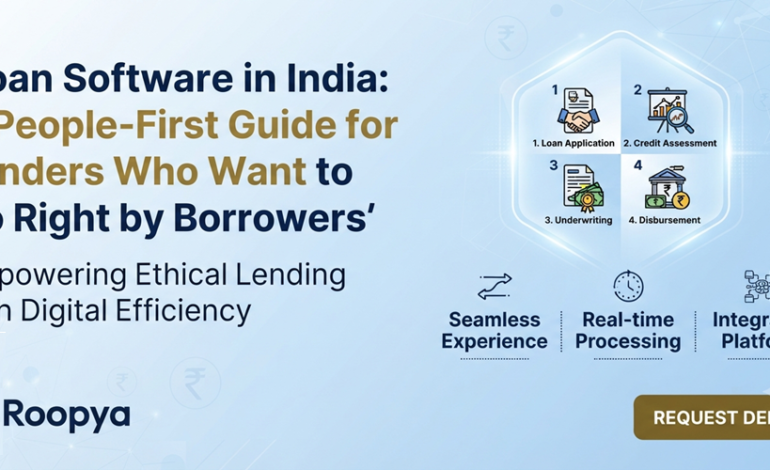
A Loan Origination System is the software that manages a loan from the moment a borrower applies to the moment funds are disbursed. It typically covers:
- Application capture — web, app, DSA, or branch-based
- KYC and identity verification — Aadhaar, PAN, video KYC
- Credit assessment — bureau pulls (CIBIL, CRIF, Experian, Equifax), bank statement analysis, and Account Aggregator (AA)-based cash flow checks
- Underwriting and decisioning — rule-based or AI-assisted approval logic
- Document management — e-signatures, e-stamping, digital agreements
- Disbursement — NACH mandate setup, UPI/NEFT/RTGS payout
An LOS is distinct from a Loan Management System (LMS), which takes over after disbursement to handle repayments, collections, and portfolio reporting. Many lenders now look for a single platform that runs both, since gaps between origination and servicing systems are a common source of operational errors and compliance risk.
Why LOS Software Matters More Than Ever in India
The Indian lending market has changed faster in the last three years than in the previous decade. A few forces are driving that shift:
Borrower expectations have reset. Digital-first lenders now approve small-ticket personal and consumer loans in minutes. Any lender still running manual, paper-heavy origination is competing on borrower experience against companies that have functionally eliminated wait times — and losing.
Application drop-off is a real cost, not an abstraction. Clunky, multi-day application journeys cause a large share of applicants to abandon the process before completion. Every point of friction in KYC, document upload, or bureau checks translates directly into lost disbursement volume.
Regulatory scrutiny has intensified. RBI’s continued focus on digital lending guidelines, fair practice codes, and data protection means an LOS now needs built-in audit trails, consent management, and configurable compliance workflows — not bolt-on fixes after the fact.
Account Aggregator adoption has matured. AA-based cash flow underwriting is now a realistic alternative (or complement) to bureau-only decisioning, particularly for thin-file and new-to-credit borrowers — a large segment of India’s addressable lending market.
Together, these mean the LOS is no longer back-office plumbing. It is the primary lever a lender has over approval speed, cost per loan, fraud exposure, and customer acquisition economics.
Key Features to Look For in the Best LOS Software
Not all platforms marketed as “LOS software” offer the same depth. When evaluating vendors, look past the marketing language and check for these specifically:
1. Pre-Built India-Specific Integrations
A serious LOS should arrive with ready integrations for CIBIL, CRIF, Experian and Equifax bureau pulls, Aadhaar and PAN verification, GST analysis for business loans, Account Aggregator connectivity, and NACH mandate registration — not integrations you have to commission and wait weeks for.
2. A Configurable Business Rule Engine (BRE)
Credit policy changes constantly — interest rate bands, eligibility criteria, risk segments. A no-code or low-code rule engine lets your credit and risk teams adjust policy themselves, without opening a developer ticket every time underwriting logic needs to change.
3. AI-Assisted Underwriting and Fraud Detection
Modern platforms increasingly use machine learning for document verification (OCR-based extraction from ID proofs and bank statements), anomaly detection, and alternative-data credit scoring for borrowers with thin credit files. This matters most for lenders serving MSME, gig-economy, or first-time credit customers.
4. Fast Time-to-Go-Live
Legacy LOS implementations can take months. Genuinely modern, API-first platforms are built for configuration rather than custom coding, which can bring go-live time down from months to days.
5. Usage-Based Pricing
Large upfront licensing fees make sense for large banks with predictable volumes; they’re a poor fit for growing NBFCs and fintechs whose loan volumes fluctuate. Pay-as-you-use or per-loan pricing models align cost with actual business activity.
6. Multi-Product Support
A lender rarely stays with a single loan product forever. Look for platforms that support personal loans, business/SME loans, gold loans, vehicle loans, and payday/salary-advance products from the same configuration layer, so launching a new product doesn’t mean starting over.
7. Open API Architecture
Your LOS needs to talk to your CRM, accounting systems, collections tools, and any co-lending or Business Correspondent partners. Closed, proprietary systems create integration debt that compounds over time.
Top LOS Software Platforms in India (2026 Landscape)
The Indian LOS market includes several credible categories of vendors:
Modern, no-code lending infrastructure platforms — such as Roopya — are built specifically for NBFCs, MFIs, and digital lenders that need to go live quickly, launch multiple loan products, and scale without heavy engineering overhead. These platforms typically combine LOS, LMS, collections, and analytics in one unified stack with pre-integrated bureau, KYC, and Account Aggregator connections.
Established enterprise software vendors, including Indian majors like Newgen Software and Nucleus Software (FinnOne), serve large banks and NBFCs that need deep customization and have longer implementation timelines and larger budgets.
Global core banking and lending suites, such as those from Finastra (Fusionbanking) and Fiserv, are common among larger banks already running those vendors’ broader banking stacks.
SaaS lending platforms like Finflux offer combined LOS/LMS capability aimed at NBFCs and microfinance institutions, with marketplace-style integrations.
Specialist and category-focused platforms, including AllCloud, Nelito, and several newer AI-native entrants, compete on speed of onboarding, specific underwriting capabilities (like GST or bank-statement analysis), or vertical focus (MSME, gold loans, microfinance).
The right category for you depends heavily on your institution type and scale. A large public sector bank replacing a core system has very different requirements from a two-year-old NBFC trying to launch its third loan product this quarter.
How to Choose the Right LOS for Your Institution
Rather than starting with a vendor shortlist, start with these questions:
- What’s your current time-to-decision, and what’s costing you the most in delays? — bureau latency, manual document review, or approval bottlenecks each need different fixes.
- How many loan products do you run or plan to launch in the next 18 months? A platform that’s cheap for one product can get expensive fast across five.
- Who owns policy changes — IT or credit/risk? If it’s credit and risk, insist on a genuinely no-code rule engine, not one that “supports customization via professional services.”
- What’s your realistic implementation timeline? Get a specific, contractual go-live date, not a range.
- How does pricing behave at 2x and 5x your current loan volume? Model this before you sign, not after.
- What happens to your data and configuration if you switch providers later? Avoid platforms that make you a hostage to their proprietary format.
Where Roopya Fits
Roopya is built as unified, no-code lending infrastructure covering origination, loan management, collections, and early-warning analytics in a single platform, aimed specifically at NBFCs, MFIs, and digital lenders operating in India. A few things worth knowing if you’re evaluating it:
- Fast onboarding — the platform is designed for go-live in a matter of days, not months, through plug-and-play configuration rather than custom development.
- 300+ pre-integrated APIs covering credit bureaus, KYC and identity verification, Account Aggregator connectivity, and payment rails.
- 20+ pre-configured loan products spanning personal, business/SME, gold, vehicle, home, and payday loans, so new product launches don’t require rebuilding workflows from scratch.
- A self-service, no-code business rule engine that lets credit and risk teams manage policy directly.
- AI-based document analysis and fraud detection, aimed at cutting verification time and reducing fraudulent applications.
- Usage-based pricing with no large upfront licensing cost, which tends to suit growing lenders better than fixed enterprise contracts.
This isn’t a claim that Roopya is the only credible option — the vendors listed above each serve real, legitimate use cases. It’s worth evaluating Roopya specifically if you’re an NBFC, MFI, or digital lender that values speed of deployment, product flexibility, and cost that scales with your business rather than against it.
Final Thoughts
The best LOS software for your institution is the one that matches your specific combination of loan products, volume, compliance obligations, and internal technical capacity — there’s no single universal answer. But in 2026, a few things are no longer optional: India-specific integrations out of the box, a rule engine your business teams can actually use, credible AI-assisted underwriting, and a pricing model that doesn’t punish growth.
Start by mapping your current bottlenecks honestly, shortlist two or three platforms that fit your institution’s scale, and run a real pilot before committing. The gap between a good LOS and a mediocre one shows up in your disbursement numbers within the first quarter.
FAQ Section
Q1. What is LOS software used for? LOS (Loan Origination System) software manages the loan process from application to disbursement — including KYC, credit bureau checks, underwriting, document handling, and fund transfer. It’s used by banks, NBFCs, MFIs, and digital lenders to automate and speed up loan approvals.
Q2. What’s the difference between LOS and LMS? LOS handles everything before disbursement — application, verification, credit assessment, and approval. LMS (Loan Management System) takes over after disbursement, managing repayments, collections, and portfolio reporting. Many modern platforms, including Roopya, combine both in one system.
Q3. How long does it take to implement an LOS in India? It varies widely by vendor. Legacy enterprise systems can take several months to implement, while modern, no-code platforms are often built for configuration-based go-live in days to a few weeks.
Q4. Is LOS software only for large banks? No. NBFCs, microfinance institutions, and digital lending startups increasingly rely on LOS software — often more than large banks — because it lets smaller teams process high volumes of loans without proportionally scaling headcount.
Q5. What integrations should a good LOS have for the Indian market? At minimum: CIBIL/CRIF/Experian/Equifax bureau checks, Aadhaar and PAN verification, GST analysis for business loans, Account Aggregator (AA) connectivity for cash-flow underwriting, and NACH for mandate-based repayment setup.
Q6. How is LOS software priced in India? Pricing models vary — some vendors charge large upfront licensing and implementation fees, while others (like Roopya) use usage-based or per-loan pricing that scales with actual loan volume rather than requiring big upfront capital commitment.