
Why Grease Selection Matters for Heavy-Load Bearings
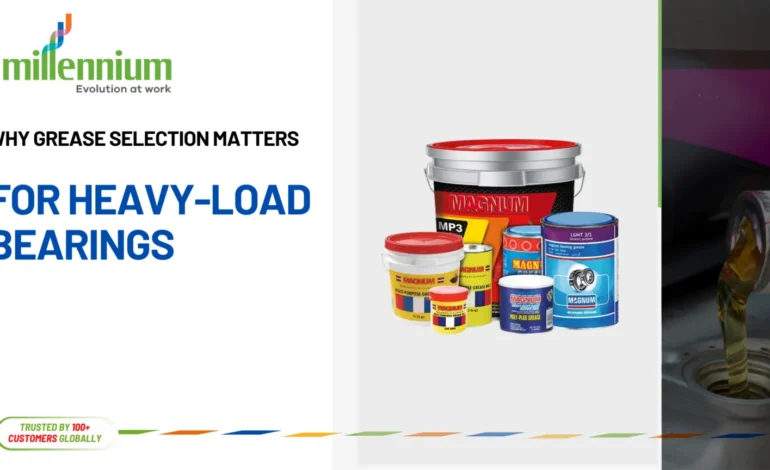
Heavy-load bearings are designed to support massive forces while allowing rotating equipment to operate smoothly and efficiently. They are commonly used in industries such as mining, construction, steel production, agriculture, and manufacturing, where machinery runs continuously under demanding conditions. Because these bearings experience high pressure, vibration, and varying environmental conditions, lubrication plays a crucial role in maintaining their performance. Selecting the wrong grease can result in increased friction, overheating, premature wear, and costly equipment failures. A proper bearing grease selection process ensures reliable operation, reduces maintenance requirements, and helps maximize the service life of valuable industrial assets.
Understanding Grease Classifications
Grease is more than just a lubricant—it is a carefully engineered product designed to perform under specific operating conditions. It consists of a lubricating oil, a thickening agent, and specialized additives that improve performance. The base oil provides lubrication, while the thickener acts like a sponge, holding the oil until it is released during operation.
Greases are classified according to their consistency using the National Lubricating Grease Institute (NLGI) grading system. Lower-grade greases are softer and flow more easily, whereas higher-grade greases are firmer and remain in place under heavier loads. In addition to consistency, grease is also categorized by its resistance to water, oxidation, corrosion, temperature, and mechanical stress.
Understanding these classifications helps maintenance teams match the lubricant to the operating environment, preventing unnecessary wear and improving equipment reliability.
Calcium vs. Lithium Greases
Among the numerous grease formulations available today, calcium and lithium greases remain two of the most widely used for industrial applications.
Calcium grease performs exceptionally well in wet environments because of its outstanding resistance to water washout. It is commonly applied in machinery exposed to rain, humidity, or frequent washing. However, traditional calcium grease has limitations when operating at elevated temperatures for extended periods.
Lithium grease offers a balanced combination of performance characteristics. It provides excellent lubrication across a wide temperature range while maintaining good mechanical stability and moderate water resistance. Because of its versatility, lithium grease is widely used in electric motors, conveyor systems, gear couplings, pumps, and heavy-duty rotating equipment.
For applications involving both high temperatures and severe loading, lithium complex grease often delivers superior protection compared to standard formulations.
Load-Carrying and Shear Stability
Heavy-load bearings generate enormous contact pressures between rolling elements and raceways. Under these conditions, grease must maintain a strong lubricating film that prevents direct metal-to-metal contact.
Extreme Pressure (EP) additives significantly improve a grease’s load-carrying capability by creating a protective layer during high-pressure operation. This protective barrier minimizes surface damage, reduces scuffing, and limits wear during shock loading.
Another equally important characteristic is shear stability. Continuous rotation and vibration repeatedly work the grease, potentially causing it to soften or separate. Grease with excellent shear stability maintains its consistency throughout its service life, ensuring that lubrication remains effective even under continuous heavy-duty operation.
Maintaining both load-carrying strength and mechanical stability helps improve equipment efficiency while reducing the likelihood of premature bearing failure.
Temperature and Contamination Considerations
Operating temperature directly affects grease performance. Excessive heat accelerates oxidation, causing grease to harden, lose its lubricating properties, and leave behind harmful deposits. On the other hand, extremely cold conditions can make grease too stiff, preventing it from reaching critical contact surfaces.
Selecting grease with the correct temperature rating allows bearings to receive consistent lubrication regardless of seasonal or operating conditions.
Contamination presents another major challenge. Dust, abrasive particles, water, chemicals, and process debris can enter bearings and rapidly accelerate wear. High-quality grease acts as a protective seal that helps block contaminants while preventing corrosion caused by moisture exposure.
Industries operating in cement plants, quarries, marine environments, food processing facilities, and chemical plants should always consider contamination risks when selecting lubricants.
Relubrication Intervals
Even premium-quality grease gradually loses effectiveness due to oxidation, contamination, and continuous mechanical stress. Regular relubrication is therefore essential to maintain bearing protection throughout equipment operation.
The ideal relubrication interval depends on several operating factors, including bearing size, rotational speed, applied load, ambient temperature, contamination level, and operating hours. Equipment running continuously under severe conditions generally requires more frequent lubrication than machinery operating intermittently.
Maintenance personnel should also avoid excessive lubrication. Overfilling bearings may increase internal pressure, generate additional heat, and actually shorten bearing life. Following manufacturer recommendations and monitoring equipment condition helps establish an effective lubrication schedule that balances performance with maintenance efficiency.
Benefits of the Right Grease Selection
Choosing the correct industrial bearing grease delivers measurable advantages across industrial operations. Proper lubrication minimizes friction, lowers operating temperatures, and protects bearing surfaces from wear. It also improves resistance to corrosion, moisture, and contamination, helping machinery perform consistently in demanding environments.
Effective grease selection reduces maintenance frequency, extends bearing replacement intervals, decreases unexpected downtime, and lowers overall operating costs. Improved lubrication also contributes to better energy efficiency by reducing mechanical resistance within rotating equipment.
These long-term benefits make grease selection an essential part of every preventive maintenance program.
Conclusion
Heavy-load bearings operate in some of the toughest industrial environments, making proper lubrication critical for dependable performance. Understanding grease classifications, comparing calcium and lithium greases, evaluating load-carrying capability, considering temperature and contamination, and following suitable relubrication intervals all contribute to better equipment reliability.
Investing time in selecting the right grease not only protects expensive bearings but also improves machine efficiency, minimizes downtime, and supports long-term operational success. A well-planned lubrication strategy remains one of the simplest and most effective ways to keep heavy industrial machinery performing at its best.