What’s Actually Causing Your Foot Pain When You Run
The injury usually starts at the moment of impact, the heel hitting the tarmac, with force travelling upward. Not in a muscle, not from overexertion. Just the simple physics of your body weight hitting a hard surface with nothing useful between the two.
On a firm road, every stride sends a load of roughly one and a half to three times your body weight through your foot and up into the ankle. At a moderate running pace, that’s happening around 160 times a minute.
If your shoes aren’t built to handle that, and most casual sneakers for men in Pakistan genuinely aren’t, the body has to absorb it somewhere. Plantar fasciitis, shin splints, heel bruising: these aren’t random. They follow directly from repeated unmanaged impact. The footwear is almost always part of the explanation.
What’s Happening to Your Foot Mid-Stride
The gait cycle has three distinct phases, and each one makes a specific mechanical demand on your foot. Worn-out or badly designed shoes fail at all three.
At heel strike, the rearfoot hits the ground and takes the initial force. With no real cushioning underfoot, that force moves straight into the heel bone and up the ankle; there’s nothing to soften it.
As weight shifts forward into mid-stance, the arch flattens slightly to spread the load. In runners who overpronate, where the arch collapses inward rather than just compressing, that flattening becomes excessive. The plantar fascia, the strip of connective tissue running along the base of the foot, is under constant strain. Do this across enough kilometers, and it becomes chronic.
Then toe-off. The forefoot pushes down to drive you forward, and if the sole is stiff or thin at that point, the shoe works against the motion. Stress builds in the small metatarsal joints and the Achilles.
A flat casual sole handles none of this well. No rebound at heel strike, no arch support during load, no forefoot flex. The stress just compounds, kilometer by kilometer. Footwear doesn’t explain every overuse injury; training load and recovery matter too, but it’s one of the more controllable variables.

How Running Shoes Actually Work
Whether you’re buying dedicated jogger shoes for men or a general running shoe, each part exists to solve a specific problem. It’s worth understanding what you’re actually buying.
The midsole does most of the work. Modern foam compounds, EVA-based materials, or newer supercritical foams compress under impact and spring back, returning energy instead of just deadening the blow. The keyword is “spring back.” An old, degraded midsole still compresses, but it recovers slowly. Over time, it stops rebounding at all, and you’re left running on foam that just transfers impact directly to your foot. Most shoes have a useful life of around 500–800 km before this becomes a real problem.
The heel counter is the firm cup at the back. It holds the rearfoot in place during the gait cycle, preventing the inward roll that drives overpronation. Without it, the foot wanders laterally on every stride.
The upper, specifically how well it’s engineered, determines how much your foot moves inside the shoe. A loose upper means foot slippage; foot slippage over distance means blisters. Structural mesh with overlays at the right points keeps the foot placed without cutting off flex.
Here’s a quick reference for matching shoe features to specific pain:
|
Pain type |
Root cause | What to look for |
|
Plantar fasciitis / arch pain |
Overpronation, insufficient midfoot support |
High-density medial foam or moulded insole support |
|
Shin splints |
Shock travelling up the tibia on each stride | Energy-returning midsole foam |
| Heel bruising | Hard heel-striking with no rearfoot cushioning |
Deep heel cup, multi-layer rearfoot cushioning |
| Friction blisters | Foot movement inside the upper |
Structural mesh upper with overlays |
Matching the Shoe to Your Foot
There’s no single pair of best running shoes for men that works for everyone. What matters is how your particular foot moves on the surfaces you actually run on.
Arch type. Wet your foot and step onto cardboard. A flat print that shows the full base of your foot suggests a tendency to overpronate. Look for a shoe with medial support built into the midsole. A narrow print with a visible curve along the inside indicates a higher arch, which usually does better with neutral cushioning and a more flexible sole. Treat this as a rough starting point. If you’re dealing with persistent pain, a gait analysis from a sports podiatrist will give you far more useful information.
Surface. Road running concrete, compacted earth, and tarmac demand more cushioning than a treadmill, which already has some give. On trails, lateral stability matters more than pure shock absorption, since the surface itself is unpredictable underfoot.
How you land. Heel-strikers and heavier runners generate more impact force per stride than forefoot runners. If you come down hard on the heel, a uniform midsole depth isn’t enough. You want specific multi-layer cushioning at the rearfoot, not just general padding across the shoe.
One thing worth knowing: a shoe designed for a neutral forefoot striker will actively work against someone who heel-strikes and overpronates. Cushioning alone doesn’t compensate for a structural mismatch. A shoe that feels plush in the shop can still be wrong for your foot.
The Local Availability Gap Is Closing
For a long time, runners looking for the best sneakers in Pakistan for actual training had a straightforward problem: technical performance footwear was either imported at significant markup, or what was locally available leaned toward fashion and casual use. A few of the best sneaker brands in Pakistan have started filling that gap with performance-focused options.
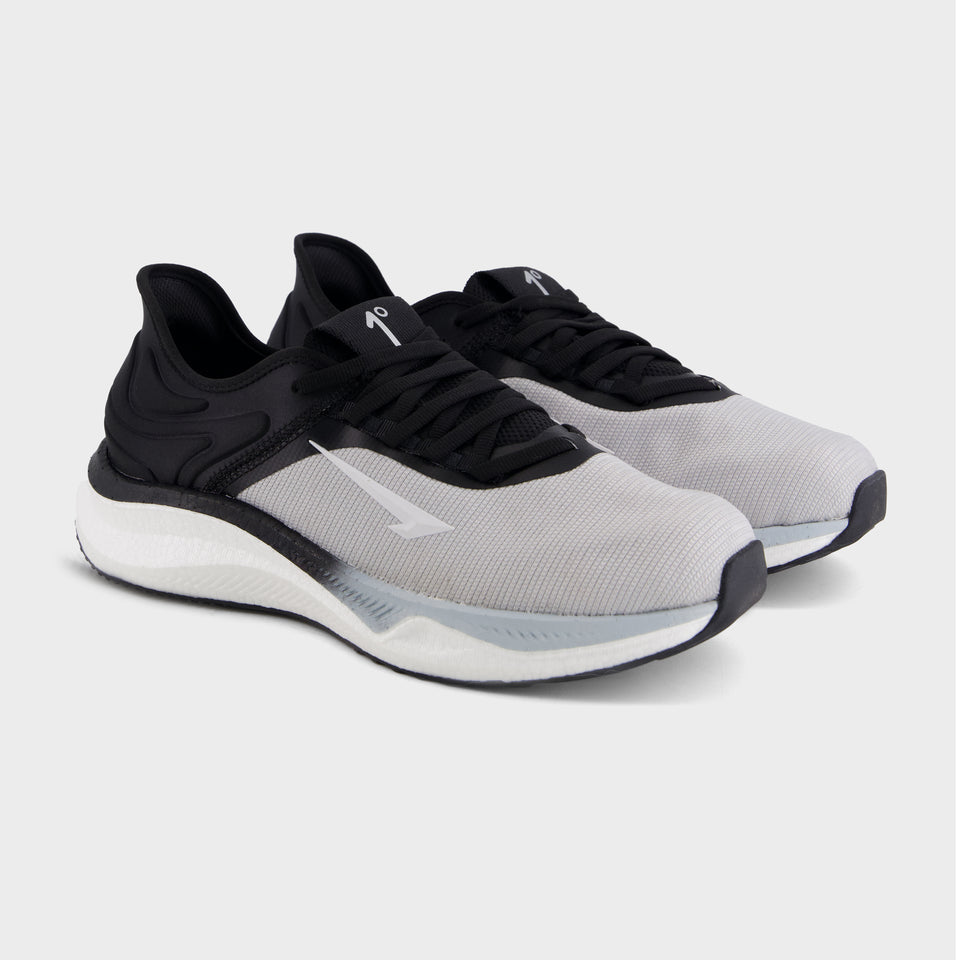
Brands like One Degree build their running range around expanded Phylon and supercritical foam midsole constructions, the same foam technologies found in international performance shoes developed with South Asian road conditions in mind.
Hard urban surfaces and significant temperature ranges require a different calibration than the moderate climates those international shoes were originally designed for. The aim is to make purpose-built running shoes in Pakistan accessible without the import premium that’s historically priced most local runners out of it.
Before Your Next Run
Press your thumb into the heel of your current shoe and hold it. If the foam compresses easily and stays compressed, the midsole isn’t doing its job anymore. That’s not a precise test, but it’s a useful signal worth cross-checking against how many kilometers those shoes have covered. Past 600–800 km, most midsoles are running on borrowed time regardless of how they look.
Running on dead cushioning is one of the more avoidable causes of foot pain. The fix isn’t complicated. But it does start with knowing what to look for.