
Loan Origination System (LOS) for NBFCs: The Complete Guide
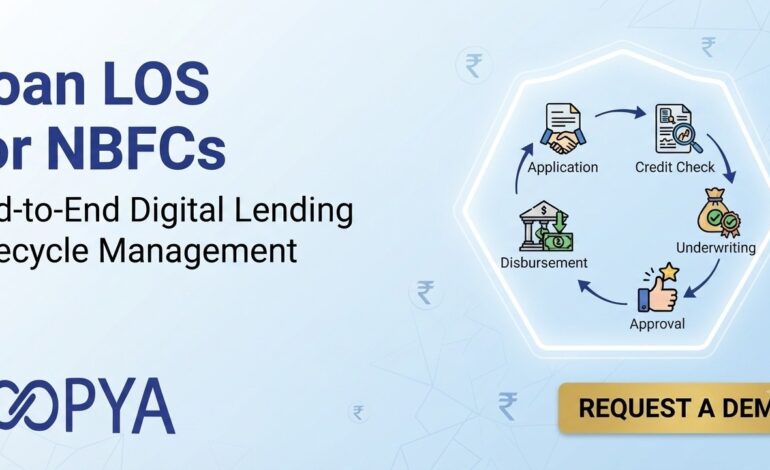
Every non-banking financial company eventually hits the same wall: manual, spreadsheet-driven loan processing simply cannot keep pace with borrower expectations or regulatory scrutiny. Applicants who are used to instant approvals from digital-first lenders will not wait three days for a branch officer to key their details into a legacy system. At the same time, the Reserve Bank of India continues to raise the bar on transparency, data protection, and audit-readiness for every entity that originates credit. A modern Loan Origination System, or LOS, is how NBFCs resolve both pressures at once — turning a slow, error-prone intake process into a fast, consistent, and fully documented one.
This guide explains what a Loan Origination System actually does, why it has become non-negotiable for NBFCs operating in 2026, and how a purpose-built platform like Roopya helps lenders go from application to disbursal without writing a single line of code.
What Is a Loan Origination System?
A Loan Origination System is the software that manages a loan from the moment a borrower applies to the moment funds are disbursed. It typically covers digital application capture, KYC and document verification, credit bureau checks, income and fraud assessment, rule-based or AI-assisted underwriting, approval workflows, and the generation of sanction letters and loan agreements.
Think of the LOS as the front door of your lending business. Everything that happens after disbursal — EMI collection, statements, restructuring, foreclosure — is handled by a separate but connected system, the Loan Management System (LMS). The two work together: the LOS decides who gets a loan and on what terms, while the LMS services that loan for the rest of its life.
Why NBFCs Need a Modern LOS Right Now
Three forces are pushing NBFCs to replace manual and semi-digital origination processes with a proper LOS platform.
1. Borrower expectations have shifted permanently
Digital lenders and fintech apps have trained Indian consumers to expect same-day, and often same-hour, credit decisions. An NBFC that still asks customers to submit physical documents and wait days for a callback is competing at a structural disadvantage, regardless of how competitive its interest rates are.
2. Regulatory expectations keep rising
The RBI’s Digital Lending Guidelines and related directions require lenders to maintain clear audit trails, disclose key facts statements, avoid unauthorised data sharing, and ensure that any lending service provider or digital platform they work with follows the same standards. Manual processes and disconnected spreadsheets make this kind of governance extremely difficult to demonstrate during an inspection.
3. Scale exposes the cost of manual work
A process that works for fifty applications a month quietly breaks down at five hundred. Manual data entry multiplies the risk of errors, duplicate checks slow down credit teams, and underwriters spend more time re-keying information than actually assessing risk. An LOS removes this friction by automating the repetitive parts of the journey and leaving humans to focus on judgement calls.
Core Features of Roopya’s Loan Origination System
Roopya was built specifically for the way Indian NBFCs, banks, and MFIs originate credit. It is delivered as a no-code, unified lending infrastructure, which means business teams can configure loan products and policies without depending on a development backlog. The platform’s LOS module includes:
- Digital application forms — configurable, mobile-first forms that capture borrower details, consent, and documents in one continuous flow, reducing drop-offs.
- Automated credit scoring — real-time bureau pulls combined with alternative data signals to generate a risk score without manual intervention.
- AI-powered document verification — OCR and NLP extract and validate identity documents, income proofs, and bank statements, flagging mismatches or tampering automatically.
- Real-time decisioning — a no-code Business Rule Engine lets credit and risk teams configure approval logic, cut-offs, and exceptions themselves, and adjust them as policy changes without waiting on IT.
- 300+ pre-integrated APIs — credit bureaus, PAN and Aadhaar verification, bank statement analysis, payment gateways, and e-signature and e-stamping providers are connected out of the box.
- 20+ pre-configured loan products — personal, business and SME, gold, payday, home, and auto loan journeys are ready to launch and can be customised to a lender’s own policy.
- Built-in fraud detection — AI-based fraud checks run automatically across every application, screening for identity mismatches, duplicate applications, and suspicious patterns.
- Open API architecture — the platform connects to a lender’s existing CRM, ERP, and other internal systems, so the LOS fits into a lender’s stack rather than replacing it outright.
How the Roopya LOS Works: The Borrower Journey
A typical loan journey on Roopya moves through a small number of connected stages, all visible to the lending team in real time:
- Application capture: the borrower fills a digital form and uploads or e-fetches documents; incomplete applications are flagged instantly rather than discovered days later.
- Verification: KYC, PAN, and bank statement checks run automatically, with AI-based document analysis validating authenticity within seconds.
- Credit assessment: bureau data and alternative data points feed the scoring engine, producing a risk grade for the underwriter.
- Decisioning: the configured Business Rule Engine applies the lender’s own credit policy, approving, rejecting, or routing the file to manual review as needed.
- Sanction and agreement: on approval, a sanction letter and loan agreement are generated automatically, ready for e-signature.
- Handover to servicing: once disbursed, the loan record flows straight into the Loan Management System, so there is no re-entry of data and no gap in the audit trail.
The Business Case: What Changes When You Automate Origination
Lenders who move from a manual or semi-digital process to a platform like Roopya typically see improvement across four areas: speed, accuracy, cost, and risk.
- Speed: document verification that used to take hours can be reduced to seconds when OCR and NLP handle the first pass, letting credit teams review exceptions rather than every file.
- Accuracy: AI-assisted credit scoring models are designed to outperform manual, judgement-only assessment, particularly for thin-file or new-to-credit borrowers where alternative data adds real signal.
- Cost and time to launch: because the platform is no-code and pre-integrated, NBFCs can go live with a new loan product in about a day, rather than the weeks a custom build or heavy IT project would take.
- Risk reduction: automated, AI-powered fraud modules screen every application consistently, closing the gaps that appear when fraud checks depend on an individual officer’s attention or experience.
Because Roopya is offered on a pay-as-you-use basis rather than a large upfront licence fee, NBFCs — including smaller and newer entrants — can adopt an enterprise-grade LOS without the capital outlay that has traditionally kept such platforms out of reach.
Compliance and Data Security
For an NBFC, an LOS is not just an efficiency tool — it is also the system of record a regulator will examine. Roopya is built to stay current with RBI’s evolving digital lending requirements, which means the platform is regularly updated as rules change rather than requiring the lender to track compliance manually. Every step of the origination journey — consent capture, document checks, credit decisions, and communications — is logged, giving compliance and audit teams a clear, timestamped trail for every application. This matters as much for day-to-day governance as it does for regulatory inspections, co-lending partner due diligence, or investor audits.
LOS vs. LMS: Understanding the Difference
It’s a common point of confusion, so it’s worth being precise. A Loan Origination System handles everything before disbursal: application, verification, credit assessment, and approval. A Loan Management System takes over after disbursal: EMI schedules, payment processing, statements, restructuring, and closure. Some lenders try to run these as separate systems from different vendors, which usually creates data gaps and duplicate work at the handover point. Roopya runs both LOS and LMS on one unified platform, so a loan record created during origination flows directly into servicing without manual re-entry — and reporting across the full loan lifecycle stays consistent.
Built for Every Loan Product an NBFC Offers
NBFCs rarely lend against a single product line, and their origination platform needs to keep pace with that variety. Roopya ships with journeys already configured for the products Indian NBFCs commonly originate:
- Personal loans — fast, largely automated decisioning for salaried and self-employed borrowers.
- Business and SME loans — cash-flow and GST-based assessment alongside traditional bureau checks.
- Gold loans — journeys built around collateral valuation and quick disbursal timelines.
- Payday and small-ticket loans — high-volume, low-value lending with lightweight, fast-turnaround checks.
- Home loans — longer-form applications with property and income documentation workflows.
- Auto and vehicle loans — dealer-linked origination with asset and insurance verification.
Because each of these journeys is configurable rather than hard-coded, credit teams can adjust eligibility rules, documentation requirements, and approval thresholds for each product independently, without engaging a development team.
Why NBFCs Choose Roopya Over Building or Buying Legacy Software
NBFCs evaluating an LOS generally weigh three paths: build a system in-house, buy a legacy enterprise platform, or adopt a modern no-code platform like Roopya. Building in-house demands a sustained engineering investment that most NBFCs would rather direct toward their core lending business. Legacy platforms often require lengthy implementation projects, custom development for every new product, and licence costs that are hard to justify for a mid-sized book. Roopya’s no-code approach — with 300+ pre-integrated APIs, 20+ ready loan products, and a same-day go-live — is designed to close that gap, giving lenders enterprise capability without the enterprise implementation timeline.
Getting Started
If your current origination process still depends on spreadsheets, email attachments, and manual bureau pulls, the fastest way to see the difference a purpose-built LOS makes is to walk through it on your own loan products. Roopya’s team can set up a tailored walkthrough that reflects the specific loan types, policies, and integrations your NBFC already works with.
Request a demo at roopya.money/contact-us to see the full Loan Origination System in action.
Frequently Asked Questions
What is a Loan Origination System (LOS) for NBFCs?
A Loan Origination System is software that manages the full loan application process for an NBFC — from digital application capture and KYC verification through credit assessment, decisioning, and sanction — before the loan is handed over to servicing.
How is an LOS different from a Loan Management System (LMS)?
An LOS covers everything before a loan is disbursed, such as application, verification, and approval. An LMS takes over after disbursal, handling EMI collection, statements, and account servicing. Roopya provides both on a single connected platform.
How long does it take to go live with Roopya’s LOS?
Roopya is designed for same-day onboarding. Because the platform is no-code and comes with pre-integrated APIs and pre-configured loan products, most NBFCs can start processing applications within a day of setup.
Is Roopya’s LOS compliant with RBI’s digital lending guidelines?
Yes. The platform is built to align with RBI’s Digital Lending Guidelines and is updated on an ongoing basis as regulatory requirements evolve, with full audit trails maintained for every application.
Does Roopya support multiple loan products on one platform?
Yes. Roopya ships with 20+ pre-configured loan journeys, including personal, business and SME, gold, payday, home, and auto loans, and each can be customised to a lender’s own policy without custom development.
Can Roopya’s LOS integrate with our existing credit bureau and KYC vendors?
Roopya includes 300+ pre-integrated APIs covering credit bureaus, PAN and Aadhaar verification, bank statement analysis, and e-signature providers, and it also connects to a lender’s existing CRM or ERP through an open API architecture.
Does Roopya require our IT team to write code?
No. Roopya is a no-code platform. Business and credit teams can configure application forms, underwriting rules, and approval workflows themselves through a visual interface.
What does Roopya’s LOS cost?
Roopya follows a pay-as-you-use pricing model with zero upfront cost, so lenders pay based on actual usage rather than a large licence fee. Specific pricing details are available on request.


1 Comment
[…] Modern lending software can create a more connected workflow. Instead of treating origination, servicing, collections, and reporting as isolated activities, banks can establish a common process and shared data model. This can make it easier for employees to see application status, identify pending actions, manage exceptions, and maintain a consistent customer journey. […]