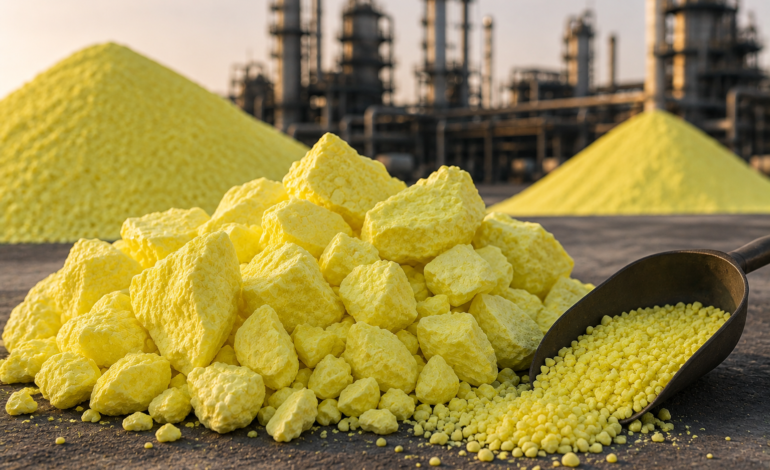
Sulphur Price Trend Q2 2026: What’s Behind the China and India Numbers
Sulphur doesn’t get talked about as much as some other commodities. It should. As of May 2026, China’s sulphur price sits at USD 1,061.37/MT on an FOB basis. India’s is higher, USD 1,128.71/MT on a CIF basis. That’s a real gap, and it tells you something about how these two markets are put together right now.
Sulphur feeds into fertilizer production more than anything else. Sulphuric acid, phosphate fertilizers, a long chain of agricultural inputs. When sulphur prices move, farm input costs follow a few weeks behind, then crop economics shift after that.
Current Sulphur Prices: China vs India
Numbers first.
| Product | Region | Incoterm Basis | Price | Last Updated |
|---|---|---|---|---|
| Sulphur | China | FOB | USD 1,061.37/MT | May 2026 |
| Sulphur | India | CIF | USD 1,128.71/MT | May 2026 |
Price Source :- procurement Resource
USD 67.34 separates the two. Not a massive number by itself. Multiply it across a large monthly order, though, and it turns into a figure procurement teams actually track.
A few points before drawing conclusions from this:
- China’s price is FOB, meaning the buyer picks up shipping and insurance from the port of origin.
- India’s is CIF, so freight and insurance are already folded into that number.
- Both figures are snapshots from May 2026. Sulphur prices can shift within weeks, sometimes faster.
Comparing FOB to CIF straight across isn’t really an even comparison. Part of the gap is just the incoterm structure working as designed. Still a decent starting benchmark, nothing more than that.
Why Sulphur Prices Move the Way They Do
A handful of forces tend to push sulphur pricing around.
Refinery output. Most sulphur comes as a byproduct of oil refining and natural gas processing. Refinery run rates go up, sulphur supply goes up, prices soften. Run rates drop, supply tightens fast.
Fertilizer demand. China and India both run massive agricultural sectors. Planting seasons drive sulphur demand hard. Miss a planting window and demand can spike or collapse depending on the crop calendar.
Shipping costs. Bunker fuel, port fees, vessel availability. FOB and CIF numbers both absorb these swings, just at different points in the supply chain.
Currency. Sulphur trades globally in dollars. A weaker rupee or yuan raises the local cost even when the dollar price hasn’t moved an inch.
Q: Does China always price lower than India?
Not always. Right now it does, mostly because of the incoterm difference and India’s heavier reliance on imported sulphur. But the gap has narrowed and widened plenty of times over past cycles depending on refinery output and freight rates.
What This Means for Buyers and Investors
Buyers sourcing sulphur, or advisers working with fertilizer and chemical clients, should treat this spread as more than a footnote.
China’s FOB price looks cheaper on the surface. But buyers still have to arrange their own freight and insurance from there, which adds cost that isn’t reflected in that headline number. Real landed cost often ends up closer than the raw figures suggest.
India’s higher CIF price points to something worth watching too. Heavier import reliance means more room for domestic sulphur recovery capacity to grow, particularly tied to refinery expansion projects already in motion.
Anyone advising fertilizer manufacturers should watch this trend closely. Sulphuric acid costs move with sulphur fairly quickly, and phosphate fertilizer pricing follows not long after. Early visibility here gives a real planning edge.
Looking Ahead: Q2 2026 Outlook
Nobody can call this with total certainty. But a few things point toward the China-India gap holding through the rest of Q2 2026.
Refinery output isn’t expected to shift dramatically in either country this quarter. Fertilizer demand tied to planting season should stay steady too. Barring a major freight disruption or currency shock, the spread likely stays close to where it sits today.
Buyers locking in long-term contracts should still pull fresh pricing before signing anything. Treating May 2026 numbers as fixed reference points months from now would be a mistake. Commodity markets this reactive don’t hold still.
Conclusion
The sulphur price trend for Q2 2026 shows a clear split between China’s FOB rate of USD 1,061.37/MT and India’s CIF rate of USD 1,128.71/MT, both as of May 2026. That gap comes from real structural differences: incoterm basis, import dependency, refinery output. For fertilizer producers, procurement teams, and market advisers, keeping close tabs on sulphur pricing isn’t a nice-to-have anymore. It’s basic due diligence.
FAQ Section
What is the current sulphur price trend in China and India?
China’s sulphur sits at USD 1,061.37/MT FOB as of May 2026, while India’s runs USD 1,128.71/MT CIF. The difference reflects incoterm basis, freight structure, and how much each country relies on domestic supply versus imports.
Why is sulphur more expensive in India than China?
India’s CIF price already includes freight and insurance, unlike China’s FOB figure. India also imports a larger portion of its sulphur supply. Longer shipping distances and refinery capacity limits both add to that higher landed cost.
What drives sulphur prices the most?
Refinery output matters most since sulphur is mainly a byproduct of oil and gas processing. Fertilizer demand tied to planting seasons, shipping costs, and currency movements all play a role too, sometimes shifting prices within a single week.
How often do sulphur prices change?
Sulphur prices can move weekly, sometimes faster, depending on refinery run rates and fertilizer demand cycles. May 2026 figures work fine as a benchmark, but anyone finalizing a contract should check for updated pricing first, especially close to planting season.
What’s the sulphur price outlook for Q2 2026?
The China-India gap should hold steady through Q2 2026 barring major disruptions. Refinery output and fertilizer demand aren’t expected to shift dramatically this quarter, though freight costs and currency swings could still move the numbers in either direction.
Also Read :- Sulfuric Acid Price Trend