
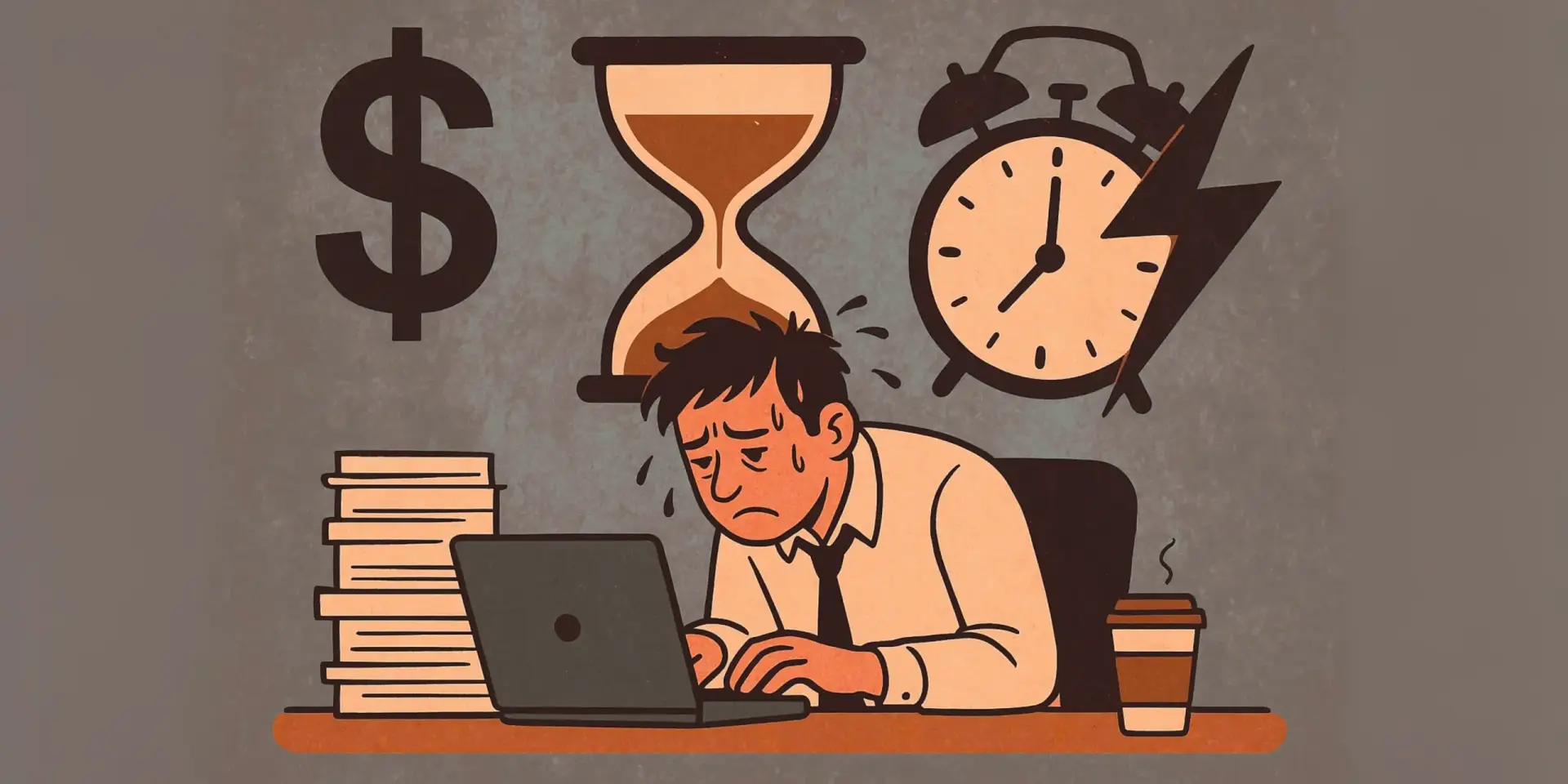
You closed your laptop after midnight.
You told yourself you’d “just finish one more thing.”
You slept six hours, woke up to notifications, and powered through on adrenaline and espresso.
By noon, your brain feels foggy. By 3 p.m., you’re irritable. By evening, you’re running on fumes.
If you’re a founder or entrepreneur, this probably feels normal.
But “normal” doesn’t mean optimal. And it definitely doesn’t mean sustainable.
Many entrepreneurs equate exhaustion with dedication. Yet health experts emphasize that adults generally need at least seven hours of sleep, and chronic under-recovery eventually undermines performance, creativity, and decision-making. Sleep matters, but so do stress management, nutrition, and micronutrient status.
The truth many founders don’t want to hear:
Sometimes the problem isn’t that you’re not working hard enough.
It’s that your body doesn’t have the resources to recover from the work you’re already doing.
The Entrepreneur’s Energy Leak
Your typical day might look like this:
- Skip breakfast to jump straight into calls.
- Eat while working, often choosing convenience over quality.
- Use caffeine to push through afternoon slumps.
- Work late, then unwind with screens instead of rest.
Sleep becomes the only “recovery” block in your schedule.
But sleep can’t fully compensate for a day of high stress, poor nutrition, and constant mental load.
Your body uses sleep to repair tissues, consolidate memories, balance hormones like cortisol and insulin, and recharge cellular energy systems. All of these processes rely on specific nutrients. When those are missing, you can sleep eight hours and still wake up depleted.
That’s why two founders can follow similar schedules but feel radically different.
One wakes up clear and driven.
The other wakes up heavy, anxious, and already behind.
Hidden Deficiencies in High-Performers
Nutrient gaps are surprisingly common in high-stress, high-output lifestyles.
CDC nutrition monitoring data shows that deficiencies in key nutrients—especially vitamin D—affect large segments of the population, even in apparently healthy groups.
Suboptimal levels may not cause dramatic symptoms right away, but they quietly erode energy, focus, mood stability, and resilience.
Vitamin D
Vitamin D is often framed as a “bone vitamin,” but it’s also crucial for muscle function, immune balance, and overall vitality.
Founders frequently work indoors, travel often, and spend little time in natural sunlight. Add pollution, sunscreen use, and inconsistent routines, and low vitamin D becomes almost expected.
Low levels are associated with persistent fatigue, lower exercise tolerance, muscle aches, and even low mood—exactly the kind of background drain that makes long workdays feel harder than they should.
Vitamin B12
B12 supports nerve health and the production of cellular energy (ATP).
When B12 dips, people often report feeling “wired but tired,” struggling to concentrate, or noticing their memory isn’t as sharp.
Because B12 stores take time to deplete, deficiency creeps in slowly. Many founders chalk it up to stress or age instead of investigating nutrition.
Vegetarians, people with gut issues, and those on certain medications are at higher risk, but anyone with irregular eating patterns can fall short.
Magnesium
Magnesium is a quiet powerhouse involved in hundreds of reactions, from energy production to stress regulation and sleep quality.
Low magnesium can show up as muscle tension, restless nights, afternoon crashes, and a general sense of being “on edge” but exhausted.
You might be in bed for eight hours, but if magnesium is low, your sleep may be lighter and less restorative.
Why More Caffeine Isn’t the Answer
The default founder response to fatigue is simple: more coffee, more energy drinks, more stimulants.
It feels productive in the moment.
But caffeine doesn’t add energy to your system. It changes your perception of fatigue by blocking adenosine receptors in the brain.
When the root issue is poor recovery, chronic stress, or nutrient gaps, caffeine becomes a crutch that masks the problem while often making it worse.
Over time, this creates a loop:
- Fatigue → more caffeine
- More caffeine → worse sleep and recovery
- Worse recovery → deeper fatigue
You end up needing more just to feel baseline, while your actual capacity shrinks.
Energy Is Built on Recovery, Not Willpower
A common myth in startup culture is that energy comes from sheer willpower or “hustle.”
In reality, sustainable energy is built on recovery.
Your brain, nervous system, and hormones need raw materials to function at a high level.
When those are lacking, everything gets harder:
- Strategic thinking
- Creative problem-solving
- Emotional regulation
- Even basic discipline
That’s why smart founders are shifting from a “push harder” mindset to a “recover better” mindset. They’re investing in the biological foundations of performance.
Designing a Founder-Proof Energy System
The answer isn’t another stimulant or a fancier productivity hack.
It’s a stronger daily foundation.
Start with fundamentals:
- Consistent sleep window (even on busy weeks)
- Protein-rich meals instead of skipped breakfasts
- Short stress-resets during the day (walks, breathwork, breaks from screens)
- Regular movement and sunlight exposure
- Checking key nutrient levels with a healthcare professional
For founders who want structured support, comprehensive formulas can help fill gaps without adding complexity.
Products like BioStack are built around this philosophy. Instead of chasing a single-ingredient “energy hit,” they support multiple systems involved in daily performance—cognitive clarity, cellular resilience, recovery, and overall nutritional support.
The goal isn’t to feel artificially stimulated.
It’s to build a body and brain that can handle founder-level demands without burning out.
The Bottom Line for Founders
If you’re grinding hard, sleeping “enough,” and still feeling drained, the issue might not be your work ethic.
It might be your recovery infrastructure.
Chronic fatigue is often a signal that your body is missing key resources—nutrients, rest quality, stress balance—that it needs to perform.
Sleep is non-negotiable, but it’s not the whole story.
Nutrient status, daily habits, and how you structure recovery determine whether you wake up ready to lead or already behind.
Next time you’re tempted to double down on hustle, ask: “What’s my recovery strategy?”
Because when you align hard work with smart recovery, you start to see just what works.
And a well-designed Bio stack can be one piece of that system, helping you sustain performance without sacrificing health.