
What to Expect From a Computer Vision Software Development Company
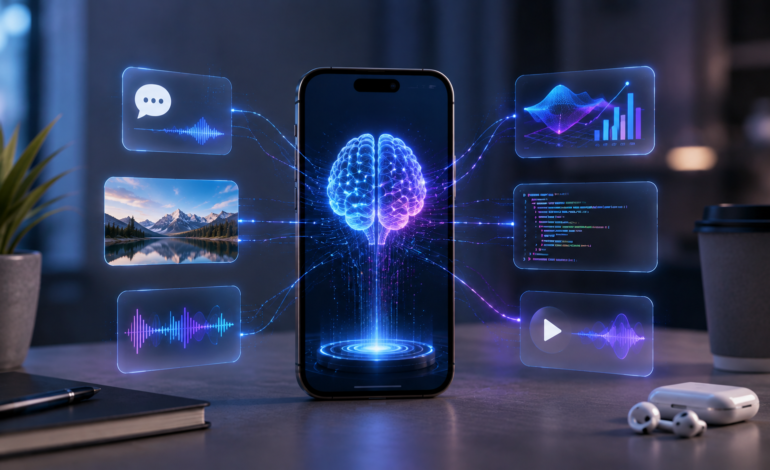
Computer vision can help businesses understand images, videos, documents, and physical environments through software. From identifying product defects to reading documents and monitoring inventory, the technology can support tasks that traditionally require significant manual effort.
However, businesses often underestimate what is involved in building a computer vision solution. An AI model alone does not create a complete product. The project may also require data preparation, application development, system integration, testing, deployment, security, and ongoing improvements.
This is why understanding what to expect from a computer vision software development company is important before starting a project. A capable development partner should help connect the technical side of computer vision with the practical needs of the business.
Rather than simply delivering an AI model, the development process should move from understanding the problem to building, testing, launching, and improving a solution that can work in real business conditions.
A Clear Understanding of Your Business Requirement
The first thing businesses should expect is a proper discussion about the problem they want to solve.
A development company should take time to understand the current workflow, users, available data, expected outcomes, and operational challenges. For example, a manufacturer may want to automate quality inspection, while a logistics company may want to identify packages or monitor warehouse activity.
These requirements influence almost every technical decision that follows.
A good development process should therefore begin with discovery rather than immediately recommending a particular AI model or technology.
A Practical Computer Vision Strategy
Once the business problem is understood, the development team should recommend an appropriate technical approach.
Computer vision can involve different techniques, including object detection, image classification, image segmentation, optical character recognition, facial analysis, and video analytics.
Not every project requires the same technology.
The development company should explain which approach is appropriate and why. Factors such as accuracy requirements, visual data, response time, infrastructure, privacy, and budget may all influence the recommendation.
This gives businesses a clearer understanding of how the proposed solution will work instead of receiving a technology recommendation without context.
Support With Visual Data
Data is a major part of computer vision development.
Businesses should expect their development partner to evaluate the quality and availability of their images or videos. Depending on the project, the data may need to be cleaned, organized, labeled, annotated, or expanded before it can be used effectively.
The development team should also consider real operating conditions.
Images captured in a factory, warehouse, retail store, or outdoor environment may vary because of lighting, camera angles, object movement, backgrounds, and image quality.
A strong development process accounts for these factors instead of assuming that ideal training data will represent every real-world situation.
Development of the AI Model
Businesses can also expect the development company to build, customize, or integrate the computer vision model required for the application.
Some projects may work with existing models or services, while others may require custom development based on business-specific data.
The development team should evaluate the model against the project’s requirements and refine it when necessary.
Importantly, model development should be connected to the application that will use the results. The goal is not simply to create a technically impressive model but to make the model useful within the intended workflow.
Complete Software Around the AI
One of the most important expectations is that the final solution should be more than an AI model.
Users may need a web dashboard, mobile application, administration panel, API, reporting interface, or another software layer to interact with the computer vision functionality.
For example, a quality inspection application might identify a defect but also need to show the affected product, record the result, notify a supervisor, and store the information for later analysis.
A computer vision software development company can build these surrounding components so that AI results become actionable for business users.
Integration With Existing Business Systems
Businesses should also expect support with integration.
A new computer vision application may need to exchange information with an ERP, CRM, inventory system, warehouse platform, database, or other internal software.
The development team can create APIs and integration workflows that allow visual information to move between systems.
For example, when a computer vision application recognizes a product, the result could update an inventory record. Similarly, a document-processing system could extract information and send it into an existing business workflow.
Integration helps make the new solution part of the company’s existing technology environment.
Real-World Testing
Computer vision applications need more than basic software testing.
The development team should evaluate how the system performs when conditions change. This may include different lighting, camera positions, backgrounds, object sizes, image quality, movement, and unexpected inputs.
Performance should also be measured using metrics relevant to the project.
Depending on the use case, businesses may need to evaluate detection accuracy, false positives, false negatives, processing speed, response time, and overall reliability.
Testing should provide businesses with a realistic understanding of how the application performs before it becomes part of an important operational process.
Deployment and Infrastructure Guidance
Businesses should expect the development partner to help determine how the solution will be deployed.
Computer vision applications can operate through cloud infrastructure, local servers, edge devices, mobile hardware, or hybrid environments.
The appropriate choice depends on the application’s requirements.
A system that needs immediate responses in a factory may have different requirements from a document-processing application that handles large batches of information. Connectivity, processing power, latency, privacy, security, and operating costs may all influence the architecture.
A development company should explain these trade-offs clearly.
Security and Data Protection
Visual data can contain sensitive business and personal information, so security should be considered throughout development.
Businesses should expect appropriate measures around authentication, access control, encryption, secure APIs, data storage, logging, and monitoring.
The development team should also discuss how data is handled during development, testing, deployment, and ongoing operation.
Security requirements can vary significantly between projects, which makes early planning important.
Ongoing Support After Launch
A computer vision project does not necessarily end when the first version goes live.
Over time, businesses may need to add new features, support additional cameras, process more data, recognize new objects, or improve performance.
Models may also require refinement as new data becomes available.
A development partner can provide ongoing support through application maintenance, infrastructure updates, model improvements, security changes, performance monitoring, and new feature development.
This ongoing relationship can help the solution remain useful as the business grows.
Key Benefits Businesses Can Expect
Working with an experienced computer vision software development company can provide several practical benefits when the project is planned correctly.
A solution built around business needs: The application is designed around a specific operational problem instead of technology alone.
Reduced manual effort: Repetitive visual tasks can be supported or automated through software.
Better operational visibility: Visual information can be converted into alerts, records, dashboards, and reports.
Improved workflow efficiency: Computer vision results can trigger actions across connected business systems.
Greater scalability: A well-designed architecture can support additional users, locations, data, and use cases.
Continuous improvement: Post-launch support provides opportunities to refine the system as requirements change.
These benefits depend on the use case, data quality, implementation approach, and operating environment. Computer vision should therefore be evaluated against measurable business objectives rather than treated as a universal solution.
Why a Complete Development Approach Matters
Businesses should expect a development partner to look beyond the AI component.
Quytech can support different stages of computer vision software development, including requirement analysis, data preparation, AI development, application engineering, integration, testing, deployment, and ongoing improvements.
This broader approach can help businesses connect computer vision with the systems and workflows they already use.
For example, instead of creating a standalone image-recognition tool, a development team can build a solution that captures visual information, analyzes it, displays the result to users, stores relevant records, and connects the output with another business system.
That is what makes computer vision useful as part of a larger digital product.
Conclusion
When working with a generative ai app development company, businesses should expect more than an AI model. A complete project can involve business discovery, visual data preparation, model development, application engineering, integration, testing, deployment, security, and post-launch support.
The development partner should help explain technical decisions, identify practical challenges, and build a solution that fits real operating conditions.
For businesses considering computer vision, having clear expectations from the beginning can make the development process smoother and reduce surprises later. When AI, software, data, and business workflows are planned together, computer vision can become a practical tool for improving everyday operations and supporting future growth.

