The Technology Behind Face Matching Apps: How Facial Comparison Works
Have you ever looked at two family photos and wondered, “Do they actually look alike?” A face-matching app turns that familiar curiosity into a structured digital comparison by analyzing measurable facial characteristics rather than relying solely on human observation.
But how does the technology work? What does it actually measure, and can a facial similarity result prove that two people are related? This guide explains the technology behind facial comparison, what can affect results, and how to interpret them responsibly.
What Is a Face Matching App?
A face-recognition app is software that analyzes facial images and compares characteristics across two or more faces. Depending on its purpose, the technology may be used for identity verification, security, photo organization, or simply exploring visual resemblance.
For consumer facial comparison, the goal is generally different from identifying a person. Instead, the system examines visible characteristics and estimates how closely two submitted images resemble one another.
Modern facial recognition systems can extract information from facial images and represent it mathematically so that different faces can be compared. NIST evaluations, for example, assess algorithms based on their ability to determine whether two facial images belong to the same person.
How Does an AI Facial Matching App Work?
Although the exact technology differs between platforms, facial comparison generally follows several stages.
1. Detecting the Face
First, the software identifies where the face is located within an image. This matters because photographs can contain backgrounds, multiple people, or objects that should not be included in the analysis.
2. Identifying Facial Landmarks
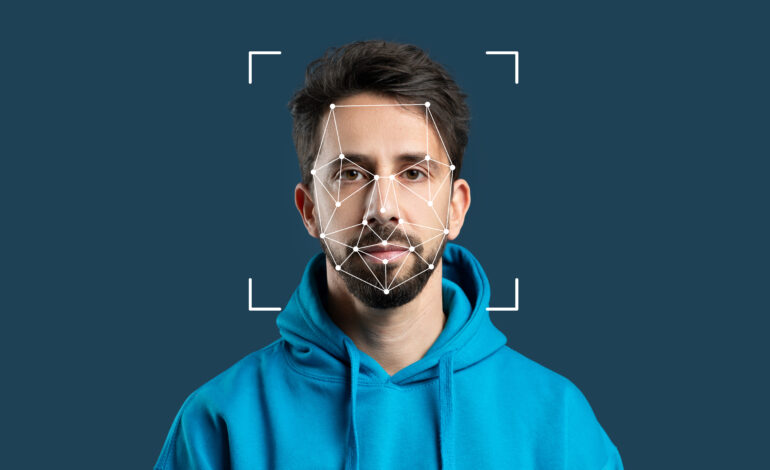
The system then locates important points on the face. These can include the corners of the eyes, nose, mouth, chin, and other structural reference points.
Older facial-recognition approaches used geometric measurements such as distances and angles between facial features. Modern systems can use more sophisticated machine-learning and neural-network techniques to create numerical representations of faces.
3. Creating a Facial Representation
The software converts information from the image into a mathematical representation. This allows the system to compare characteristics without simply treating the photograph as a collection of pixels.
4. Comparing the Two Images
Finally, the system evaluates similarities and differences between the representations. Depending on the application, the output may be a similarity score, a comparison report, or a match/no-match result.
This is why an AI facial matching app can identify patterns that may not be immediately obvious to the human eye.
Why Photo Quality Matters
A sophisticated algorithm cannot completely compensate for a poor photograph. Lighting, camera angle, facial expression, image resolution, and obstructions can all affect what the software can measure.
For the most useful comparison, choose photographs that are:
- Clear and reasonably high-resolution
- Front-facing or taken from similar angles
- Well lit without strong shadows
- Free from heavy filters or digital alterations
- Unobstructed by sunglasses, hats, or other objects
NIST notes that changes in illumination and image conditions remain important challenges for facial-recognition systems.
This is particularly relevant when comparing an old childhood photograph with a recent adult image. Changes in age, hairstyle, weight, expression, and photography quality can make visual comparison more difficult.
Face Comparison App vs. DNA Testing: What Is the Difference?
A face comparison app analyzes appearance. A DNA test analyzes genetic material.
That distinction is essential.
A facial similarity result can show that two people share visible characteristics, but resemblance does not establish a biological relationship. Unrelated people can look remarkably similar, while biological relatives can have noticeably different appearances.
For example, a child may have their mother’s eye shape and their father’s jawline while sharing relatively few obvious features with either parent at first glance. Conversely, two unrelated individuals may have similar facial proportions.
Therefore, facial comparison is best treated as an informational or exploratory tool—not as scientific proof of paternity, identity, ancestry, or another biological relationship.
What Can You Actually Use a Face Matching App For?
This technology may prove handy where the task is to explore the image rather than identify an individual. Some examples that may apply in this case include comparison of photographs of parents and children, siblings, and grandparents and grandchildren, as well as photographs of the same individual at different times in his life and even facial similarities among individuals in different generations in a family.
The important question is not simply “How high is the similarity score?” but “What does this particular score actually measure?” A percentage generated from facial appearance should not automatically be interpreted as a probability of biological relatedness.
Privacy Matters When Uploading Facial Images
Facial photographs are personal information, so privacy should be considered before using any online facial comparison service.
Check the policies of the provider about storage, deletion, sharing, encryption, and use of photographs provided by you for other purposes apart from the comparison of faces.
People should also be careful when they are asked to provide photographs of children and other people without taking into account the aspect of their privacy.
It should be ensured that any reliable service provides you with information about what happens to the photographs you provide and not leave you guessing about what will happen to your facial data.
Considering a Reliable Facial Recognition Service Provider
Laboratories such as Face DNA Test in Fort Worth, Texas, provide a facial comparison service through photographs based on visible features like the distance between the eyes, nose, jawline, and facial shapes. They clearly differentiate between the facial comparison service and the DNA test, similar to how a face comparison app is designed to assess visual resemblance.
A user testimonial-style comment might describe the experience simply as an easier way to organize and examine family resemblance rather than relying on subjective visual judgment alone. That distinction is important because even a detailed facial report cannot replace laboratory DNA testing when biological confirmation is required.
Conclusion
The face-matching app uses image processing, facial features, mathematically based measurements, and advanced AI techniques to compare the physical characteristics in images. Although the technology could facilitate your search, its results should not be misunderstood because of the limitations that exist.
In case you just want to satisfy curiosity or compare family photos, facial analysis can give you a different visual perspective on the matter. However, if you have the task of proving the biological relationship of people, you should consider taking DNA tests in a laboratory rather than depending only on faces.
Before sending any pictures, look for the methodology, privacy policies, and limitations used by the provider. That will be the right approach to the use of facial comparison technology.