How Skilled Barbers Help You Choose the Best Hairstyle for Your Face Shape
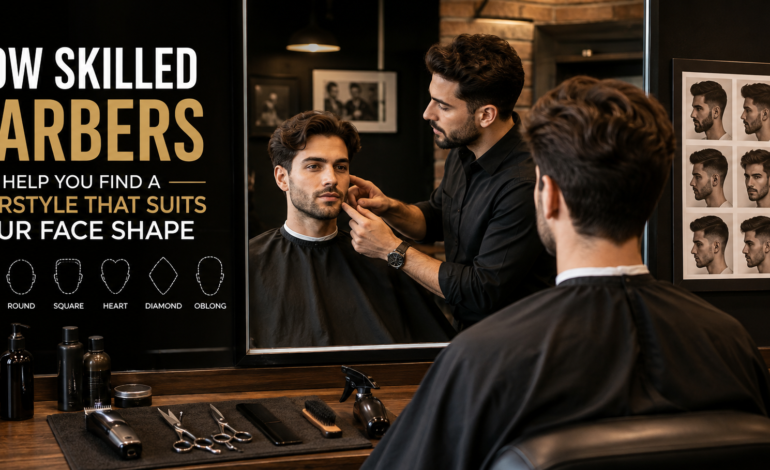
Most guys can point to one haircut that never quite felt right. Not a bad cut, exactly the lines were clean, the fade was even, it just didn’t look like them. Nine times out of ten, that’s not a technique problem. It’s a face problem, or more precisely, a “nobody actually looked at my face before they started cutting” problem.
This is a more common experience than it might seem. In a 2025 survey of 2,000 U.S. men commissioned by Sport Clips Haircuts, one in five men admitted they still get nervous asking a stylist for a specific style, and 23% said they’d held back from requesting the haircut they actually wanted.Face-shape mismatch is one of the biggest, and most fixable, reasons a haircut disappoints.
A skilled barber doesn’t just cut hair to a length. They read your features first, the width of your forehead, the line of your jaw, how your hair actually grows off your head and build the cut around that. At MVP Modern Barbers, that step happens before the clippers ever come out.
Why Face Shape Is the Foundation of a Good Haircut
Every face is built a little differently: how wide the forehead is, where the jaw sits, how long the face runs from hairline to chin. Those measurements quietly decide which haircuts flatter you and which ones fight you. More height on top can sharpen a round face and look wrong on a long one. A tight fade might define a soft jawline on one guy and make a strong jaw look heavier on the next.
This is also why the exact same haircut can look great on one person and fall flat on another, a frustration confirmed by industry research. Barbers typically work from a handful of general shape categories oval, round, square, heart, diamond, and oblong (sometimes grouped as rectangle or triangle) as a starting point, then adjust based on the person actually in the chair.
Determining Your Face Shape: The Six Categories Barbers Use
Most professional guides rely on four basic measurements: jawline, cheekbones, forehead width, and total face length, measured from hairline to chin.Comparing those four numbers is what tells a barber (or you, in the mirror) which of the six general shapes you’re closest to.
| Face Shape | Key Characteristics | Cuts That Tend to Work |
| Oval | Balanced proportions, slightly longer than wide | Most styles — the most versatile shape |
| Round | Similar width and length, soft edges | Height on top, tighter sides for definition |
| Square | Strong jaw, forehead about the same width as the jaw | Textured crops or fades that soften the angles |
| Heart | Wide forehead, narrower chin | Fringe or side-swept styles to balance the lower face |
| Diamond | Narrow forehead and jaw, wide cheekbones | Layered, textured tops that soften the cheekbones |
| Oblong | Longer face, narrower overall, high forehead | Shorter styles or volume on the sides rather than the top |
This table is a starting point, not a rulebook. Nick Hall, a certified barber and Editor-in-Chief at Man of Many, notes that very few men fit neatly into a single category, and that hair texture and personal taste can shift the recommendation from one shape to the next.A beard changes the equation too facial hair can add structure to a round face or soften a sharp one, so a barber worth trusting treats hair and beard as one overall shape, not two separate decisions.
What Happens During a Real Consultation – Before the Clippers Come Out
A good barber isn’t winging it. There’s a quick, mostly invisible process that should happen in the first few minutes of any appointment.
Reading Your Face Shape
An experienced eye can usually place a face into one of the six general categories within moments, just by noticing where it’s widest and how the jaw, forehead, and cheekbones line up relative to each other.
Reading How Your Hair Actually Grows
Face shape is only half of it. Curl pattern, cowlicks, and the direction hair naturally sits all change how a style looks once it’s finished. A cut that photographs perfectly on someone else doesn’t always survive contact with your actual hair.
Matching the Cut to Your Real Routine
A style that needs product and ten minutes with a blow-dryer every morning isn’t realistic for someone who wants to roll out of bed and leave. Hall has written candidly about this from personal experience: after committing to a slicked-back style that needed 10–15 minutes of styling each morning, he abandoned the routine within about a week and started showing up looking more disheveled than before the haircut. The lesson: the right haircut for your face still has to fit your actual mornings, not just look good in a single photo.
Why Bringing In a Photo and Saying “This One” Doesn’t Always Work
This happens constantly in barbershops: someone walks in with a photo of an actor or athlete, convinced they share a similar face. Forrester has described clients regularly showing him a photo of a celebrity and asking for the identical cut, only for him to have to explain as gently as possible that their bone structure isn’t actually a match.
It’s a small moment, but it points at something bigger: you can’t borrow a haircut from someone else’s face. Interestingly, the same 2025 Sport Clips survey found that showing a stylist a reference photo does work reasonably well when paired with a proper consultation 88% of men who used a reference photo said their stylist still nailed the version that suited them.The photo is useful as a reference point for taste, not as a literal blueprint to copy a good barber’s real skill is figuring out why that haircut worked on someone else, then applying the same underlying logic to the face actually in the chair.
Why Training and Credentials Matter
A face-shape chart is only as useful as the person applying it. In Canada, becoming a licensed barber typically requires completing a seven-month to one-year apprenticeship or equivalent barber program, and trade certification is mandatory in Ontario (voluntary in most other provinces and territories).Barbers can also pursue a Red Seal endorsement by passing the interprovincial exam, a national benchmark recognized across Canada.
That kind of structured, hands-on training is where real judgment gets built through repetition, correction, and feedback on real heads, not a textbook. Execution matters as much as the plan: a few millimetres in where a fade starts can change how a jawline reads, and a slightly different part can shift how balanced an entire face looks.
A Consultation Checklist: What a Good Barber Should Cover
If a barber drapes the cape and starts cutting within thirty seconds, that’s usually a sign of habit, not attention. A thorough consultation should touch on:
- What you liked and didn’t like about your last haircut
- Your face shape and how your hair naturally grows
- Honest pushback if a reference photo won’t translate to your features or hair type
- How much daily upkeep you’re actually willing to do
- A recommendation that comes with a reason, not just an instruction
This is the process built into MVP Modern Barbers‘ Hall of Fame Haircut: a consultation first, followed by a hot towel and scalp massage, then a wash, cut, and style tailored to face shape and hair growth, with complimentary neck trims between visits to maintain the shape.
The Value of Sticking With One Barber
There’s real, measurable value in a barber who’s cut your hair before. Survey data backs this up: more than half of men (57%) say they have one specific person they go to for a haircut, and 74% say trust in that stylist directly affects how good the end result is A separate YouGov poll found that more than a third of Americans always return to the same person for a haircut, regardless of gender.
Once a barber knows your face shape, your hair’s quirks, and how much effort you’ll realistically put in, every visit after the first gets faster and more accurate which is the practical case for settling on one shop instead of bouncing between different barbers every few months.
Beyond the Haircut: Related Services Worth Knowing About
Face-shape matching isn’t the only thing worth knowing before you book. A few services commonly paired with a regular cut at MVP Modern Barbers:
- Hot Straight Shave — shave oil, hot towels, a moisturizing lather shave, finished with a cooling lotion.
- Colour & Camouflage — long-lasting colour application for covering grey or changing things up.
- Digital check-in via the MVP app — available on the App Store and Google Play, so you’re not stuck waiting on a walk-in.
MVP Modern Barbers currently operates shops in Toronto, Halifax, Moncton, Saskatoon, and Fort McMurray.
The Bottom Line
A haircut is one of the few style choices you can’t take off at the end of the day, which is exactly why it’s worth getting right. Face shape isn’t the only variable, but it’s the foundation everything else texture, lifestyle, personal taste builds from. The data backs up what a good barber already knows instinctively: trust, consultation, and matching a cut to the real person in the chair consistently beats copying a photo off someone’s phone.
If you’re due for a refresh, the shortcut isn’t a better reference photo, it’s finding a barber who reads your face before they ever pick up the clippers.
Frequently Asked Questions
How do I know which hairstyle suits my face shape?
The experienced barbers at MVP Modern Barbers begin every appointment with a consultation, assessing your face shape, hair texture, and natural growth pattern before recommending a style that complements your features and lifestyle.
Can the same haircut look different on different people?
Yes. Face shape, hair density, and hair texture all affect the final result. That’s why MVP Modern Barbers customizes every haircut instead of simply copying a reference photo.
Should I bring a reference photo to my barber?
Absolutely. A reference photo helps explain the look you want, while your barber adapts it to suit your face shape, hair type, and daily styling routine for the best results.
Why is a haircut consultation important?
A consultation ensures your haircut matches your facial features, hair growth, and maintenance preferences. At MVP Modern Barbers, this personalized approach is part of the signature Hall of Fame Haircut experience.
How often should men get a haircut?
Most men benefit from a haircut every 3 to 6 weeks to maintain their style. MVP Modern Barbers also offers complimentary neck trims between visits to help keep your haircut looking fresh.
Why choose MVP Modern Barbers?
MVP Modern Barbers offers more than just haircuts. From personalized consultations and precision cuts to hot towel treatments, scalp massages, and professional styling, every service is designed to help you look and feel your best.
Read this article, 10 Top-Rated Medical Spas in Mississauga You Should Know in 2026.