
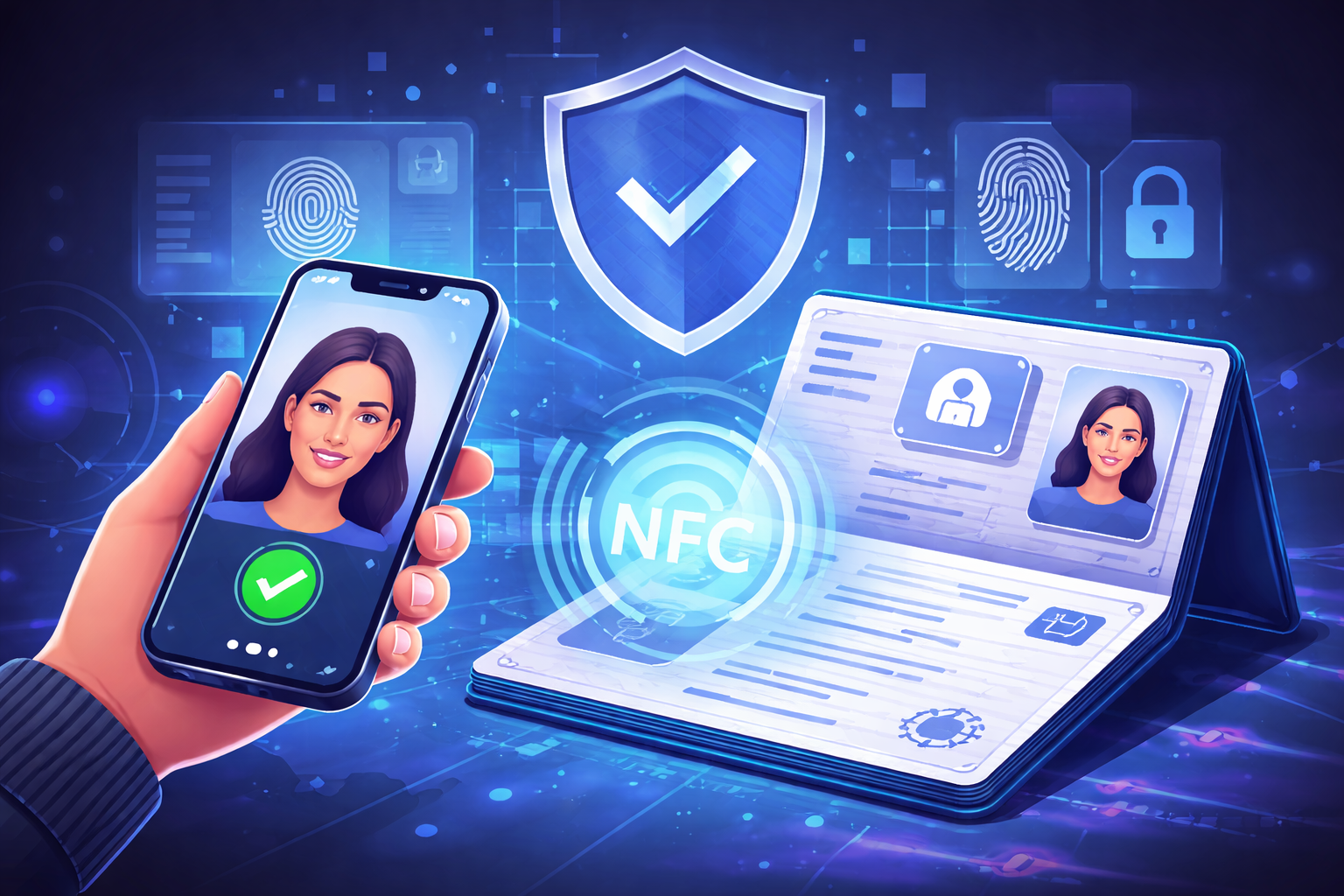
In today’s digital world, businesses are rapidly adopting secure and intelligent identity verification solutions to protect customers and prevent fraud. Two technologies that are transforming the onboarding and authentication process are KYC verification services and NFC identification. Together, they help organizations streamline customer verification while maintaining high levels of security, compliance, and user convenience.
From banking and fintech to telecom and healthcare, modern businesses rely on advanced verification systems to ensure trusted digital interactions.
What Are KYC Verification Services?
Know Your Customer verification services are digital solutions used by organizations to verify the identity of customers before providing access to services or financial transactions. KYC processes are essential for preventing fraud, money laundering, identity theft, and other illegal activities.
Traditional KYC methods involved physical document checks and manual verification, which consumed time and resources. Today, AI-powered digital KYC systems automate the entire process with high accuracy and speed.
Key Features of KYC Verification Services
- Real-time identity verification
- Document authentication
- Face matching and biometric verification
- AML screening and compliance checks
- OCR-based data extraction
- Liveness detection technology
- Multi-device accessibility
Businesses implementing KYC verification services can reduce onboarding time while improving customer trust and regulatory compliance.
Understanding NFC Identification
Near Field Communication identification is an advanced identity verification method that reads encrypted data stored in NFC-enabled identity documents such as e-passports, national IDs, and smart cards.
NFC technology allows mobile devices to securely extract information directly from the embedded chip inside an identity document. This process significantly improves authenticity checks and minimizes the risk of document forgery.
How NFC Identification Works
The NFC verification process usually includes:
- Scanning the NFC-enabled ID document
- Reading encrypted chip data
- Matching chip data with visible document information
- Comparing facial biometrics with a live selfie
- Performing liveness detection to prevent spoofing
Because the data is digitally signed and encrypted, NFC identification provides a much higher level of trust compared to traditional document verification methods.
Benefits of Combining KYC Verification Services with NFC Identification
Integrating NFC identification into KYC verification services offers several advantages for businesses and users.
Enhanced Fraud Prevention
NFC-enabled documents contain secure chip-based information that is difficult to tamper with or duplicate. This helps organizations detect fake or altered documents instantly.
Faster Customer Onboarding
Automated KYC workflows combined with NFC technology enable customers to complete identity verification within minutes using their smartphones.
Improved User Experience
Customers no longer need to visit physical branches or submit paperwork manually. The entire verification process becomes seamless and user-friendly.
Stronger Regulatory Compliance
Financial institutions and regulated industries must comply with strict KYC and AML regulations. NFC-supported identity verification helps businesses meet compliance standards efficiently.
Higher Verification Accuracy
Chip-level data extraction reduces manual errors and improves identity matching accuracy, ensuring reliable authentication results.
Industries Using KYC Verification Services and NFC Identification
Many industries are adopting these technologies to strengthen security and digital transformation efforts.
Banking and Fintech
Banks and fintech companies use KYC verification services for account opening, loan applications, and transaction monitoring.
Cryptocurrency Platforms
Crypto exchanges implement NFC identification and digital KYC to reduce identity fraud and comply with global regulations.
Telecom Sector
Telecom providers use digital identity verification during SIM card registration and customer onboarding.
Travel and Hospitality
Hotels and travel platforms use NFC-enabled passport verification for fast and secure guest check-ins.
Healthcare and Insurance
Healthcare providers use identity verification to secure patient records and reduce fraudulent claims.
Why Businesses Need Advanced Identity Verification Solutions
As cybercrime and digital fraud continue to increase, businesses must adopt smarter verification technologies to stay secure and competitive. Manual verification systems are no longer sufficient for handling modern security challenges.
Advanced KYC verification services combined with NFC identification offer businesses:
- Secure digital onboarding
- Reduced operational costs
- Better customer trust
- Improved compliance management
- Scalable identity verification processes
Organizations that invest in intelligent verification systems can build stronger customer relationships while protecting sensitive data.
Future of Digital Identity Verification
The future of identity verification lies in AI-driven automation, biometrics, and chip-based authentication technologies. NFC identification is expected to become more widely adopted as governments continue issuing smart identity documents worldwide.
Combined with AI-powered KYC verification services, NFC technology will continue improving fraud detection, customer onboarding speed, and digital security standards across industries.
Conclusion
KYC verification services and NFC identification are reshaping the future of secure digital onboarding and identity authentication. Businesses that implement these advanced technologies can reduce fraud risks, enhance customer experiences, and maintain strong regulatory compliance.
As digital transformation accelerates globally, adopting secure and intelligent identity verification solutions is becoming essential for organizations seeking long-term growth, trust, and operational efficiency.