Reducing Misidentification Risks in Fisheries Research Through Reliable Fish Tags
Introduction: When Wrong Identity Derails Conservation Science
Imagine spending three field seasons collecting migration data, only to discover that a significant percentage of your recapture records belong to the wrong fish. Misidentification in fisheries research is not a hypothetical risk — it is a documented, recurring problem that distorts population estimates, corrupts survival models, and ultimately leads to flawed management decisions that affect entire ecosystems.
The consequences reach far beyond academic inconvenience. Misidentified fish in stock assessment datasets have contributed to overestimated population recoveries, triggering premature reductions in fishing restrictions. In commercially sensitive species like Atlantic cod and Pacific chinook salmon, even small errors in individual fish identification cascade into significant policy miscalculations.
Reliable fish tags for accurate individual identification have become the scientific community’s most effective defense against these risks. By assigning each fish a permanent, machine-readable unique identity, modern tagging technologies eliminate the human error, tag loss, and code duplication that plague older identification methods. Understanding the sources of misidentification — and how advanced fish tags address each one — is essential for any research program where data integrity is non-negotiable.
The Root Causes of Misidentification in Fisheries Research
Visual Mark Degradation
Fin clips, dye marks, and anchor tags were the workhorses of fisheries identification for decades. All share a common vulnerability: they degrade. Fin clips regenerate within weeks to months in many species, eliminating the distinguishing mark entirely. Dye injections fade under UV exposure and metabolic activity. Anchor tags — externally attached plastic or wire markers — are shed at rates that commonly exceed 20–30% within the first year of deployment, according to studies published in Fisheries Research.
When a mark disappears or becomes ambiguous, a recaptured fish either goes unrecorded or, worse, gets assigned to the wrong study cohort. Both outcomes corrupt the dataset.
Code Duplication in Batch Marking Systems
Batch marking systems — where groups of fish receive identical marks rather than individual identifiers — are widely used in hatchery programs due to their speed and low cost. Coded wire tags (CWT), for example, assign a group code rather than a unique individual identifier. When fish from different release groups intermingle in a population, distinguishing individuals becomes statistically impossible. Recovery data represents groups, not individuals, introducing aggregation errors that mask behavioral variation and survival heterogeneity within cohorts.
Human Error in Field Recording
Manual recording of tag numbers, visual mark descriptions, or physical measurements during high-volume sampling events introduces transcription errors that are difficult to detect and nearly impossible to correct retroactively. Studies examining data quality in large-scale mark-recapture programs have found transcription error rates ranging from 1–5% — rates that seem small until multiplied across tens of thousands of records.
Tag Loss and Physical Failure
External fish tags are subject to snagging on substrate, predator attacks, and growth-related displacement. Each lost tag represents either a missed detection or a misattributed identity if the tag is subsequently found and scanned without its original host animal.
How Modern Fish Tags Eliminate Misidentification at the Source
Permanent Unique Individual Identification
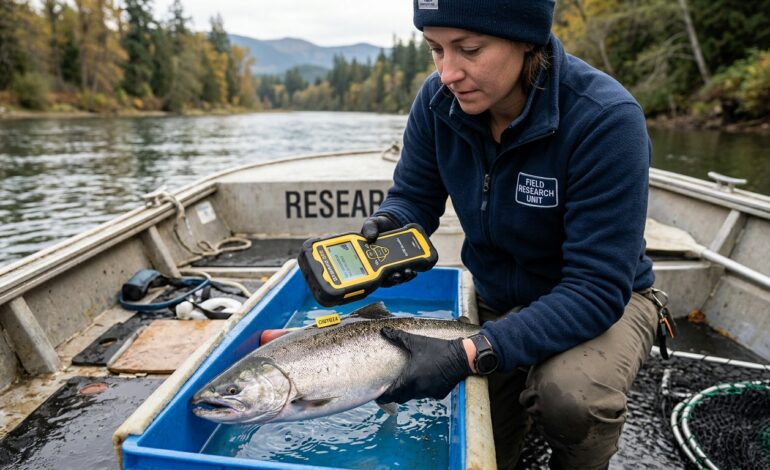
Passive integrated transponder fish tags assign each animal a globally unique 15-digit ISO code that is electronically encoded during manufacture and cannot be altered, duplicated, or accidentally reassigned. Unlike visual marks that require human interpretation, this code is machine-read — eliminating observer subjectivity entirely.
The uniqueness guarantee embedded in ISO 11784/11785 manufacturing standards means that no two fish tags produced to this specification share the same identification number. Across a research program involving hundreds of thousands of tagged individuals spanning multiple agencies and geographic regions, code collision — the assignment of identical codes to different animals — is structurally prevented.
Internal Implantation Eliminating External Loss Risks
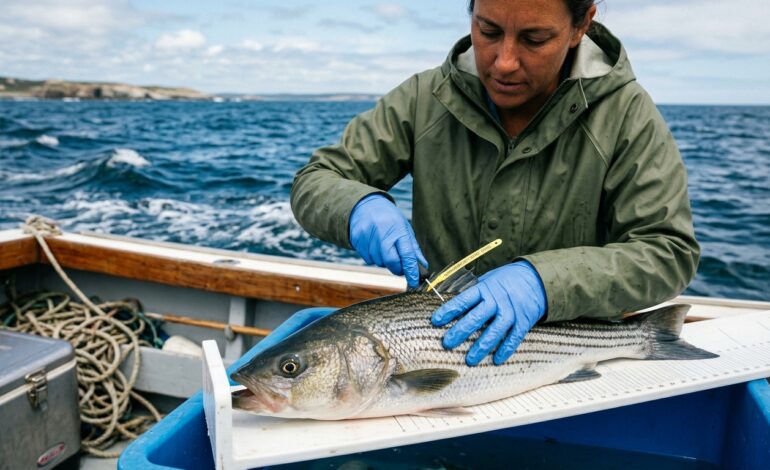
Unlike anchor tags or T-bar tags attached to fins or body surfaces, PIT-based fish tags are implanted internally in the body cavity or muscle tissue. Internal placement removes the snagging and abrasion vectors that drive external tag loss. Retention studies across multiple salmonid and non-salmonid species consistently document retention rates above 95% over multi-year monitoring periods when implantation follows species-appropriate protocols.
High retention rates directly translate to lower misidentification risk — a fish that retains its tag is a fish that can always be correctly identified.
Automated Detection Reducing Human Transcription Errors
Fixed antenna arrays and automated detection systems scan passing fish tags and record identification codes, timestamps, and location data electronically — without human involvement in the data capture step. This automation eliminates the transcription error vector entirely for detections occurring at fixed monitoring stations.
Even in mobile scanning scenarios using handheld readers, modern equipment transmits tag data directly to digital field data systems via Bluetooth or USB, bypassing manual note-taking and the errors it introduces.
Species-Specific Considerations for Reliable Tagging
Juvenile Fish and Size Thresholds
Misidentification risk is highest in programs that tag juvenile fish and then attempt to detect them as adults. Juveniles present tagging challenges because small body size limits acceptable tag dimensions. The American Fisheries Society recommends a minimum fish weight of approximately 10 grams before implanting standard 12mm PIT fish tags, with smaller 8mm micro-tags extending tagging viability to fish as small as 3–5 grams.
Selecting appropriate tag sizes for juvenile fish is not merely a welfare consideration — undersized fish implanted with oversized tags experience growth disruption and elevated tag loss, directly increasing misidentification risk in long-term datasets.
Multi-Species Programs and Code Management
Large monitoring programs tracking multiple species across shared waterways must implement rigorous code management protocols to prevent database-level misidentification. When fish from different species are tagged using the same manufacturer’s tag series, institutional database administrators must enforce species-level metadata fields that prevent cross-species record contamination.
VodaIQ, VodaIQ, provides integrated tagging and data management solutions that incorporate species metadata management protocols, supporting multi-species programs in maintaining clean, audit-ready identification records across large datasets.
Hatchery vs. Wild Fish Differentiation
One of the most consequential misidentification risks in Pacific salmon management is the failure to distinguish hatchery-origin from wild-origin fish in mixed-stock fisheries. PIT-based fish tags combined with hatchery-specific code series and database flags provide a reliable mechanism for maintaining this distinction — a capability that directly informs selective fishery management decisions worth millions of dollars annually to commercial and recreational fishing industries.
Real-World Impact of Misidentification Prevention
Snake River Salmon Recovery Accuracy
The PTAGIS database, which manages PIT detection records for Columbia and Snake River salmon and steelhead, maintains data quality protocols specifically designed to prevent misidentification at the database level. Duplicate detection records, antenna malfunction flags, and species verification checks are built into the data pipeline. This institutional commitment to identification integrity has made PTAGIS survival rate estimates credible enough to directly inform federal dam operation decisions affecting billions of dollars in hydropower and fisheries management economics.
Commercial Aquaculture Traceability
Beyond wild fisheries research, reliable fish tags are increasingly deployed in commercial aquaculture settings where individual fish traceability supports disease management, selective breeding programs, and regulatory compliance. Salmon farming operations in Norway and Scotland have implemented PIT tagging systems that allow individual growth tracking, vaccination records, and mortality attribution — capabilities that depend entirely on misidentification-free identification systems.
Endangered Species Recovery Programs
For critically endangered species where individual animals represent meaningful fractions of total population size — such as European sturgeon or White sturgeon in the Kootenai River — misidentification of a single individual can measurably distort population viability assessments. Fish tags providing guaranteed unique identification are not optional in these programs. They are the scientific standard on which recovery decisions rest.
Best Practices for Minimizing Misidentification Risk
Research programs seeking to maximize identification reliability should implement:
- Pre-implantation tag verification — scanning each tag before implantation to confirm code readability and uniqueness within the program database
- Duplicate detection screening — automated database checks flagging any detection record where a tag code appears at physically impossible locations within implausible time windows
- Field protocol standardization — written implantation and detection protocols reducing procedural variation across field teams
- Regular reader calibration — ensuring detection equipment maintains consistent read rates that prevent missed detections misattributed to tag loss
- Chain of custody documentation — tracking tag batches from manufacturer to implantation to database entry, maintaining audit trails that support data integrity verification
Conclusion: Reliable Fish Tags as the Foundation of Trustworthy Science
Fisheries research carries real-world consequences. Population assessments inform harvest limits. Survival estimates guide dam operation schedules. Species distribution data shapes habitat protection decisions. When misidentification corrupts the data underlying these decisions, the consequences ripple outward through ecosystems, economies, and communities.
Reliable fish tags — particularly those using passive integrated transponder technology with ISO-standardized unique coding — address misidentification at its root causes: mark degradation, code duplication, human transcription error, and tag loss. By replacing fallible visual marks and batch codes with permanent, machine-readable individual identities, modern fish tags deliver the data quality that consequential science demands.
In an era when fisheries management faces mounting pressure from climate change, habitat loss, and increasing harvest demand, the integrity of the identification systems underpinning research programs has never mattered more.